

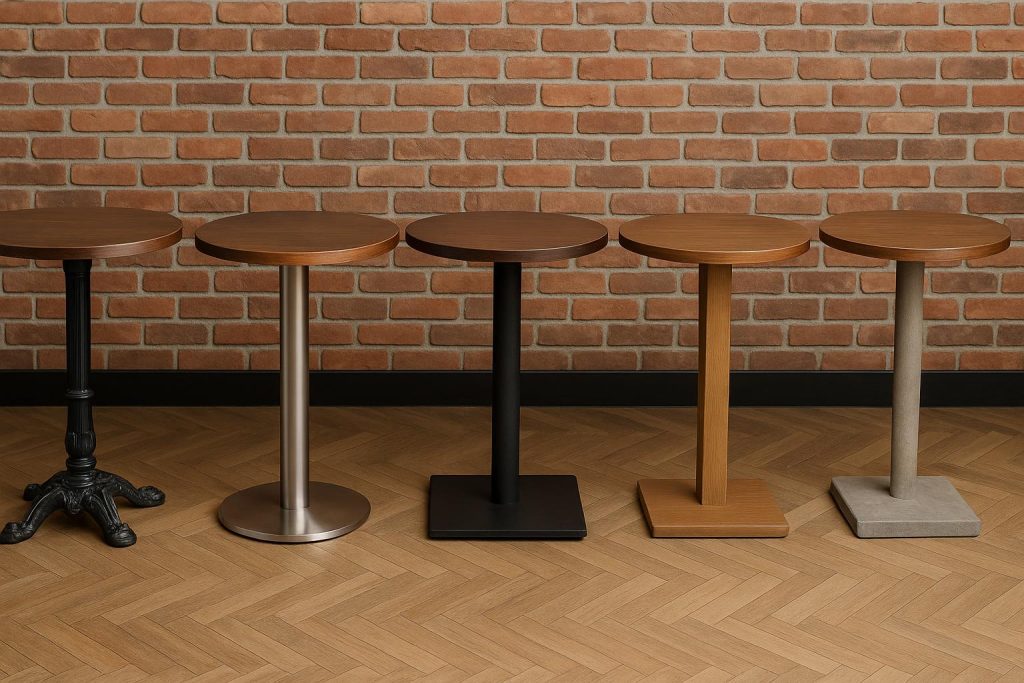
A table base is one of the easiest pieces of restaurant furniture to underestimate. Owners usually notice the tabletop first. Guests notice the chair, booth, lighting, menu, and overall mood of the room. The base sits below eye level, doing a simple job: holding the table steady.
In a real restaurant, that job is not simple at all.
A table base deals with constant pressure. Guests lean on the edge of the table. Servers bump into corners during busy shifts. Chairs hit the lower column. Mop water collects around the floor plate. Cleaning products touch the finish night after night. Tables are pushed together for groups, pulled apart for smaller parties, and sometimes dragged instead of lifted.
This is exactly why table bases restaurant buyers should look beyond appearance and focus on how the material performs under daily commercial pressure.
When a base performs well, nobody talks about it. When it performs poorly, everyone notices. A wobbly table can make even a beautiful dining room feel careless. A rusting base can make the space feel older than it is. A base that is too light for the tabletop can create a safety and comfort problem. That is why material choice matters.
This ranking examines five common tabletop materials through the lens of real-world restaurant use: durability, maintenance costs, cleaning demands, stability, and long-term value.
Table of Contents
How the Materials Were Ranked
The best table base material is not always the most expensive one. It is the one that fits the restaurant’s daily rhythm.
A fine-dining room, a fast-casual café, a sports bar, and a patio all place different demands on furniture. Some spaces need weight and stability. Others need corrosion resistance. Some need a clean, modern finish. Others need bases that staff can move quickly.
For this ranking, each material was judged by practical restaurant conditions:
- How stable it feels during guest use
- How well it resists moisture and cleaning products
- How easily can staff clean around it
- How likely it is to chip, dent, rust, or stain
- How much maintenance it may need over time
The result is not a beauty contest. It is a practical ownership ranking.
First Place: Cast Iron
Cast iron ranks first because it offers the strongest overall balance of durability, stability, and cost control for most indoor restaurants. It has the weight needed to keep tables steady, especially in dining rooms where guests constantly lean, shift, and move chairs.
That weight is a major advantage. A properly sized cast iron base helps reduce wobbling and gives the table a grounded feel. This matters in casual restaurants, diners, cafés, pubs, and family dining spaces where tables are used heavily throughout the day.
Cast iron also offers good long-term value. It is often less expensive than stainless steel while still providing excellent strength. For owners buying many bases at once, that difference can matter.
The main concern is rust. Cast iron needs a protective finish. If the finish chips and moisture sits on the exposed area, corrosion can start. This is usually manageable with normal care. Staff should avoid leaving wet mop water around the base and should report visible chips before they spread.
For most indoor dining rooms, cast iron is the safest material choice because it is strong, stable, and dependable without becoming too costly.
Second Place: Stainless Steel
Stainless steel is second-best because it performs really well in wet, muddy, and high-intensity cleaning conditions. It resists stains better than many other metals and can be easily wiped down, which makes it handy in restaurants where spills are prevalent.
This material is very powerful around bars, beverage stations, seafood restaurants, modern cafes, and dining rooms where hygiene and a clean look are essential. It doesn’t absorb moisture and, with careful maintenance, it can hold a crisp, professional appearance.
The cost is the downside. Stainless steel will normally cost more up front than either cast iron or powder-coated steel. It may also be more prone to exhibiting fingerprints, smudges, and surface marks, particularly if the finish is polished.
That doesn’t always mean upkeep is fixing. Sometimes it’s about the look. Staff may need to clean stainless steel more regularly to keep it looking sharp during service.
Stainless steel is a sensible investment due to its moisture resistance, hygiene, and modern look. It costs more but can help decrease corrosion-related problems down the road.
Third Place: Powder Coated Steel
Our third choice is powder-coated steel. It’s durable, available in a range of finishes, and delivers good value for the price. It’s a favorite in restaurants because it accommodates numerous design styles while still withstanding frequent use.
Spray coating forms a protective layer on the steel surface. It helps resist scratches, dampness, and general wear better than ordinary paint. It also gives owners more visual choices. The base can be finished to mix into the dining room idea with black, bronze, gray, and other finishes.
Weakness is superficial harm. If the coating chips, it might expose the steel below to rust. This is particularly true in humid conditions or when the place is scrubbed vigorously nightly.
Powder-coated steel is preferable if tables are handled with some care by workers. Banging, dragging, or striking bases with cleaning equipment might reduce the life of the finish.
For restaurants that desire a clean look, good durability, and a controlled cost, powder-coated steel is a good middle ground.
Fourth Place: Aluminum
Aluminum ranks fourth because it is lightweight, corrosion-resistant, and useful in flexible layouts. It can work well for patios, cafés, quick-service spaces, and restaurants that frequently move tables.
The biggest advantage is easy handling. Staff can move aluminum bases more easily than cast-iron or heavy steel bases. This helps when a restaurant changes layouts for events, shifts tables between indoor and outdoor areas, or needs quick setup and breakdown.
Aluminum also resists rust well, which makes it useful in humid or outdoor conditions. That gives it an advantage over materials that require more protection from moisture.
The main issue is stability. Because aluminum is lighter, it must be carefully matched to the tabletop. A large or heavy top on a lightweight base can feel unbalanced. Guests may notice movement when they lean on the table or shift their weight.
Aluminum is a smart choice when movement and corrosion resistance matter most. It is less ideal when the restaurant needs a heavy, grounded table feel.
Fifth Place: Wood
Wood is fifth because it’s the most finicky in demanding restaurant conditions. It’s lovely, warm, and sophisticated, but it’s more sensitive to moisture, impact, and cleaning chemicals than metal.
A wood table foundation is a great choice for boutique restaurants, hotel dining rooms, rustic decor, and slower-paced areas where the mood is important. It works wonderfully with wood chairs, upholstered booths, and natural design accents.
The problem is location. Table bases are near the floor and are exposed to mop water, shoes, fallen food, chair legs, and cleaning tools. Wood can chip, discolor, expand, or lose finish quality over time if not properly sealed.
That’s not to say wood is a bad choice. That is to say, wood needs the correct setting. With careful upkeep, it may maintain a rich, memorable look in a magnificent dining area. They can be expensive to keep around in a harsh, high-turnover restaurant.
Wood is best selected for design value, not for minimal maintenance.
The Practical Ranking
When durability and maintenance cost are considered together, the materials rank this way:
- Cast iron: best overall balance of strength, stability, and value
- Stainless steel: best for moisture resistance and easy cleaning
- Powder-coated steel: best for a variety at a controlled cost
- Aluminum: best for lightweight movement and outdoor flexibility
- Wood: best for warmth and style, but the highest care needs
Each material has a place. The right choice depends on how the restaurant actually operates.
The Smarter Buying Decision
Before ordering table bases, owners should think beyond the product photo. The important questions are practical. Will the tables be moved often? Will they sit indoors or outdoors? Are the tabletops heavy? Will staff mop around them every night? Do guests often push tables together? Is the dining room fast-paced or more controlled?
A cast-iron base may be ideal for a busy indoor restaurant. Stainless steel may make more sense in areas prone to moisture and spills. Powder-coated steel may suit a modern, branded interior. Aluminum may solve layout flexibility problems. Wood may support a warmer, more premium atmosphere.
The best table base is the one that reduces daily friction. It should keep the table steady, clean easily, resist wear, and support the dining room’s pace without creating hidden maintenance costs.
A stable table makes the meal feel better. A durable base makes staff work easier. A smart material choice protects the restaurant from small problems that become expensive over time.