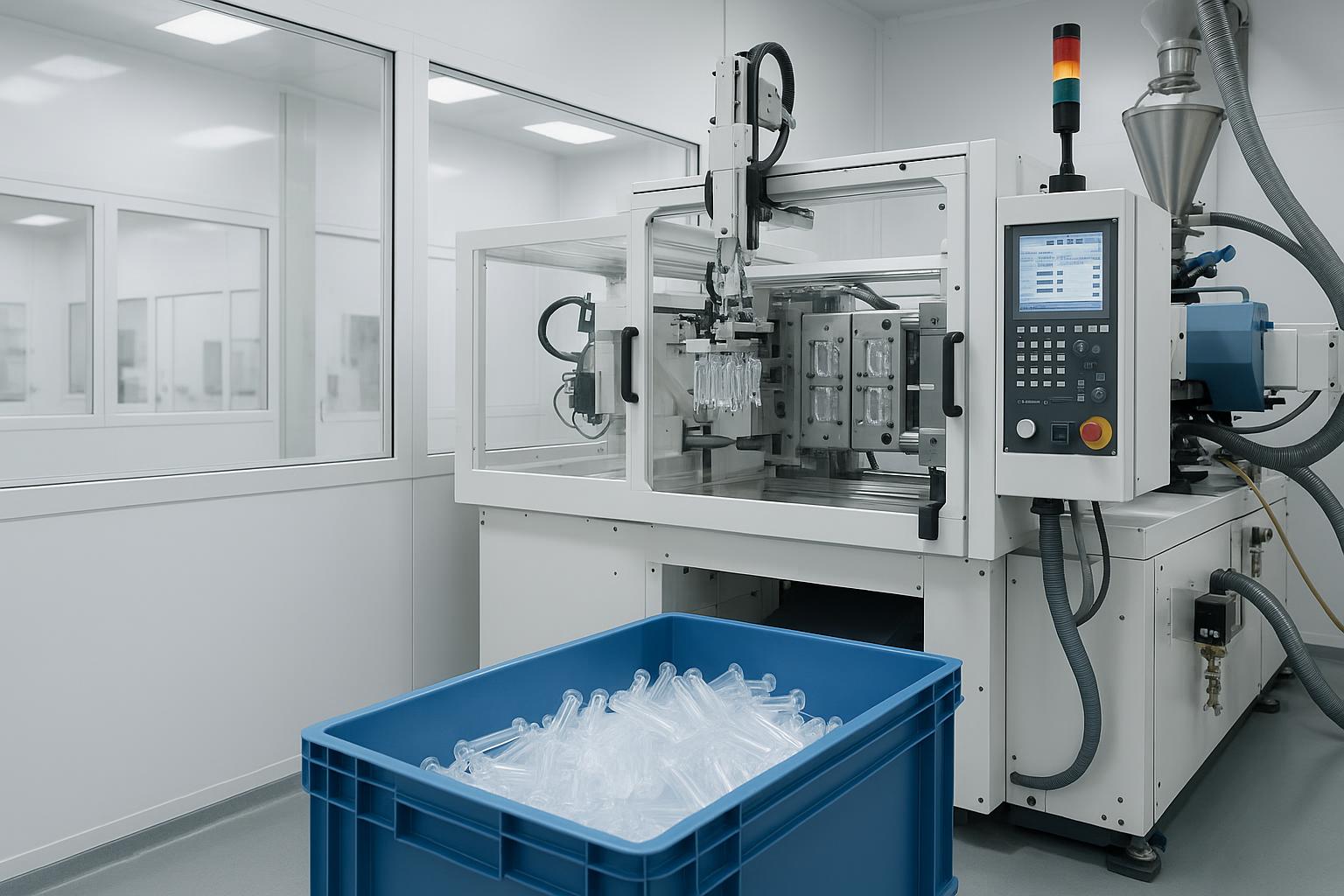
In the world of medical manufacturing, the margin for error is essentially zero. When a surgeon reaches for an IV connector or a technician prepares a diagnostic housing, they aren’t just looking for a plastic part; they are relying on a component that has been shielded from every possible environmental threat. This reality has shifted the conversation for product developers across the Southeast. It is no longer enough to simply find a capable molder. Today, the focus has moved toward a specialized, highly controlled environment that ensures safety long before a product ever reaches a sterile pouch.
Clean room manufacturing has transitioned from a niche requirement to an absolute baseline. For businesses operating in high-stakes industries like healthcare, pharmaceuticals, and life sciences, the environment where a part is born is just as important as the resin it is made from. This is particularly true in regional hubs like the Research Triangle and the Piedmont Triad, where the density of innovation demands a corresponding density of quality control.
Table of Contents
1. Understanding the Invisible Stakes
To the naked eye, a standard manufacturing floor might look clean, but for a medical device, “looking clean” is a dangerous metric. In a traditional shop, the air is filled with microscopic hitchhikers: skin cells, dust, oil vapors, and lint. While these are harmless in the production of a car bumper or a toy, they are catastrophic for a medical component.
If a single microscopic speck of dust becomes embedded in the wall of a thin-gauge medical tube, it creates a structural weak point. If a stray airborne microbe finds its way onto a surgical instrument during the cooling process, it can be trapped under a secondary coating or within an assembly. Clean room injection molding North Carolina has become the primary defense against these invisible risks. By controlling the air quality, temperature, and humidity, manufacturers ensure that the integrity of the polymer remains uncompromised from the moment the pellet melts to the moment the part is packaged.
2. The Distinction of ISO Class 7 Environments
Not all controlled environments are created equal. In the hierarchy of cleanliness, the ISO Class 7 clean room (often referred to as a Class 10,000 room) stands as the workhorse for serious medical production. To put it in perspective, a typical office building might have hundreds of thousands of particles per cubic foot of air. An ISO 7 environment restricts that to no more than 10,000 particles.
This level of control is achieved through high-efficiency particulate air (HEPA) filtration systems that cycle the air dozens of times every hour. For manufacturers, this isn’t just a badge of honor; it is a functional requirement for parts that will eventually come into contact with human tissue or fluid paths. Utilizing a facility that offers ISO 7 standards means that the production line is physically separated from the rest of the plant, often featuring interlocked airlocks and specialized gowning protocols that prevent human-borne contaminants from entering the zone.
3. All-Electric Precision and Contamination Control
One of the more recent shifts in high-end molding is the move away from hydraulic machinery toward all-electric presses. In a clean room setting, this is a game-changer. Hydraulic machines, while powerful, rely on oil to operate. Oil represents a constant risk of leaks, vapors, and fine mists that can settle on parts.
All-electric machines eliminate this risk entirely. They are cleaner, quieter, and significantly more precise. When producing complex medical devices with tight tolerances, the repeatability of an electric press ensures that the first part of a 100,000-unit run is identical to the last. This consistency is vital for validation processes where even a fraction of a millimeter of deviation can lead to a failed assembly or a rejected shipment.
4. The Power of Integrated Assembly
The most vulnerable moment for a clean-molded part is the moment it leaves the clean room. If a component is molded in a controlled environment but then moved across a dirty warehouse floor to be assembled or packaged, much of the initial effort is wasted.
The most efficient operations solve this by integrating assembly directly into the clean room footprint. This “one-roof” approach allows for:
- Sonic Welding: Joining plastic components without the use of adhesives that could introduce chemicals.
- Precision Labeling: Applying critical tracking information or branding in a sterile setting.
- Final Inspection: Using high-resolution metrology tools to verify dimensions before the part is ever exposed to the outside world.
- Immediate Packaging: Sealing the product in medical-grade pouches immediately after it leaves the mold.
5. Validation: The IQ, OQ, and PQ Framework
For medical OEMs, a manufacturer’s word isn’t enough; they need data. This is where the validation trio—Installation Qualification (IQ), Operational Qualification (OQ), and Performance Qualification (PQ)—comes into play. This rigorous process proves that the equipment is installed correctly, operates within its intended parameters, and consistently produces a part that meets every specification under actual production loads.
When a facility commits to these protocols, they are essentially providing a roadmap of reliability. It allows the customer to sleep better at night, knowing that the “process” is the hero, not just a lucky day on the production floor. This level of transparency is what separates a vendor from a true manufacturing partner.
6. Bridging the Gap with 3D Printing and Prototyping
Modern manufacturing moves fast, and the bridge between a digital design and a physical medical device can be a treacherous one. Many companies are now utilizing advanced 3D printing technologies to create end-use parts or functional prototypes that mimic the properties of injection-molded plastics.
This is particularly useful for “bridge production”—the phase where a company needs a few thousand parts to begin clinical trials or market testing while the permanent steel mold is still being cut. By having 3D printing and high-volume molding under the same umbrella, a business can transition from a concept to a full-scale launch without the friction of switching suppliers or retraining teams on the nuances of the design.
7. Why Location and Capacity Matter
In an era of global supply chain volatility, proximity has become a form of insurance. Having a partner within driving distance of major research centers allows for faster site audits, more collaborative engineering sessions, and a significant reduction in lead times.
Furthermore, capacity is a silent killer of growth. A molder might have a clean room, but if they only have one or two machines, a single equipment failure can halt an entire product launch. Facilities that maintain a fleet of machines—ranging from small 40-ton units for delicate components to massive 1,500-ton presses for large-scale housings—provide the scalability that growing medical companies require. This redundancy ensures that even if one machine needs maintenance, the production schedule remains unshaken.
8. The Human Element in a Tech-Driven Space
Despite all the automation and filtration, manufacturing remains a human endeavor. The technicians who operate in a clean room must be trained in more than just machine operation; they must understand the “why” behind gowning, the importance of bioburden control, and the weight of the responsibility they carry.
A culture of quality is often felt the moment you walk into a facility. It’s visible in the organization of the tool room, the clarity of the documentation, and the way the team discusses “patient safety” rather than just “part counts.” In the medical sector, the best manufacturers don’t just see themselves as part-makers; they see themselves as an extension of the healthcare provider’s team.
Final Reflections
Navigating the complexities of medical manufacturing requires more than just a purchase order; it requires a commitment to a standard that ignores the easy path in favor of the right one. Clean room injection molding is the physical manifestation of that commitment. It is the assurance that when a product is called upon to perform in a critical moment, it is free of the microscopic defects and contaminants that could compromise its mission.
For those looking to bring a medical innovation to life, the choice of environment is the first and most important decision. By prioritizing facilities that invest in ISO 7 standards, all-electric technology, and rigorous validation, manufacturers aren’t just meeting a regulation—they are building a foundation of trust that extends all the way to the end user. In a landscape where precision is everything, the standard is something no one can afford to ignore.