There’s a moment every caseworker knows.
You open your laptop to “quickly update a file”… and suddenly it’s 45 minutes later. You’ve clicked through five systems, rewritten the same note twice, and you’re still not sure if everything is logged correctly.
Meanwhile, the actual work—the human part—is waiting.
Administrative overload doesn’t announce itself. It just quietly takes over.
Table of Contents
When Paperwork Becomes the Job
Human services were never meant to revolve around data entry.
But somewhere along the way, documentation multiplied. Compliance requirements expanded. Reporting expectations grew. And now, a significant portion of a caseworker’s day is spent recording work instead of doing it.
It’s not inefficient by accident—it’s inefficient by design.
Unless the system changes.
One Platform Instead of Five (And a Notebook)
Let’s start with the obvious fix.
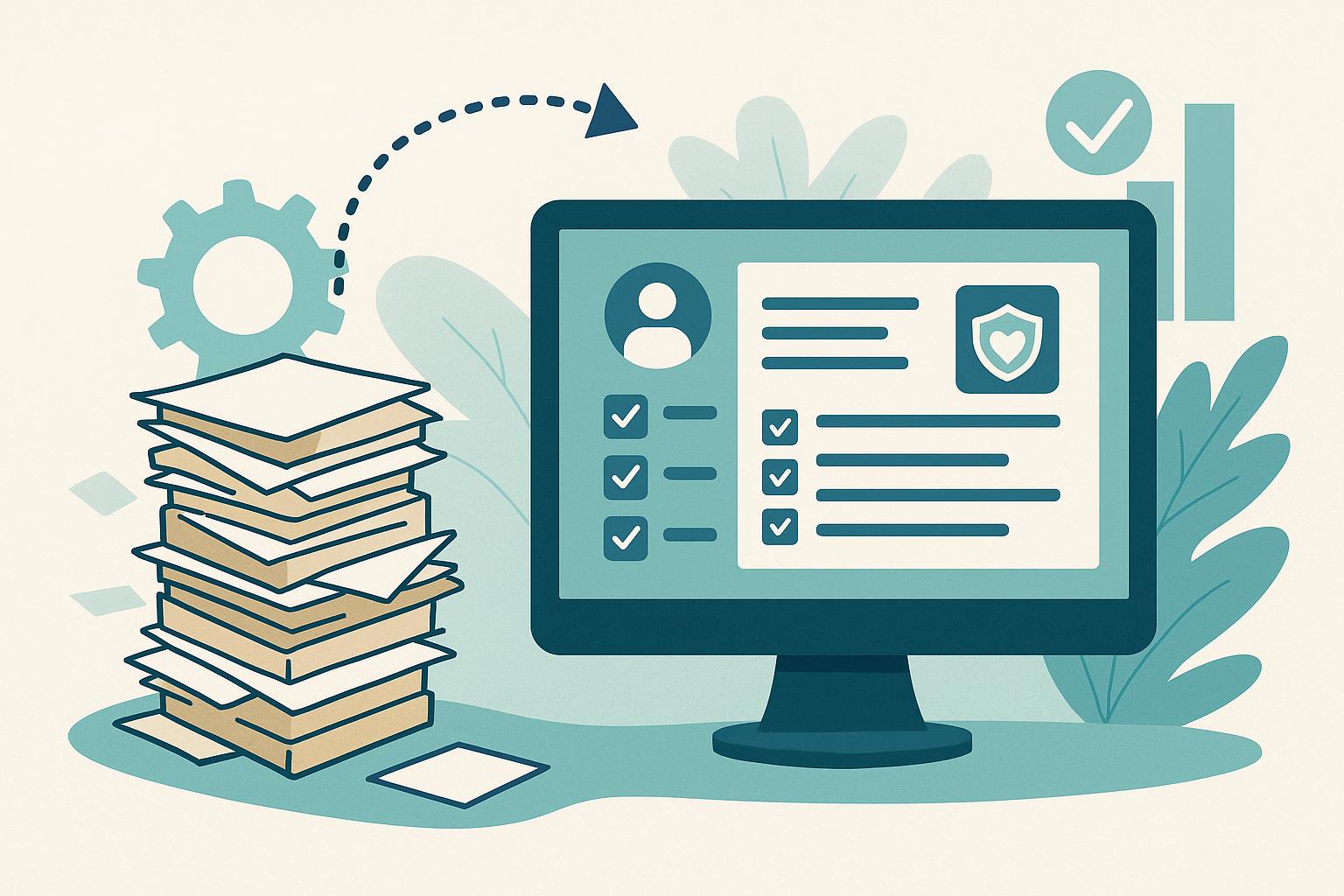
Modern human services case management software replaces fragmented tools with a single, unified platform. Client records, service plans, notes, documents—they all live in one place.
No toggling between tabs. No duplicate entries. No mental gymnastics trying to remember where something was saved.
This kind of centralized data management has long been recognized as essential for improving operational efficiency and service delivery outcomes .
And yet, many organizations still operate without it.
Automation That Handles the Repetitive Stuff
Here’s where things get interesting.
What if follow-ups didn’t rely on memory?
What if reports built themselves?
What if routine tasks… just happened?
Automation in modern systems does exactly that.
- Scheduled reminders for client check-ins
- Auto-populated forms based on existing data
- Triggered workflows when case statuses change
It’s not flashy. But it’s effective.
And over time, it gives hours back to teams who didn’t realize how much they were losing.
Documentation That Doesn’t Feel Like a Chore
Documentation isn’t going anywhere. Nor should it.
But the way it’s done? That’s up for debate.
Modern platforms streamline note-taking with structured templates, voice-to-text options, and real-time syncing. Caseworkers can log updates quickly—sometimes even during interactions—without needing to “circle back later.”
Because let’s be honest: later often turns into tomorrow. Or next week.
Real-Time Reporting (Without the Spreadsheet Spiral)
Reporting is where admin work tends to pile up.
Monthly reports. Grant requirements. Outcome tracking. It’s a lot.
Traditional systems require manual compilation—pulling data, formatting it, double-checking accuracy. Modern systems flip that process.
Reports generate automatically. Dashboards update in real time. Metrics are always current.
This mirrors broader trends in performance systems, where real-time visibility significantly improves both efficiency and accountability .
Translation: fewer late nights wrestling with spreadsheets.
Fewer Errors, Less Rework
Manual processes invite mistakes.
A missed field. A duplicated entry. An outdated document. Small errors that lead to bigger problems—especially in compliance-heavy environments.
Human services case management software reduces these risks by standardizing workflows and ensuring data consistency across the system.
Less fixing. Less backtracking. More confidence in the work being done.
Mobility That Matches the Work
Caseworkers aren’t desk-bound.
They’re in the field. In communities. In conversations that don’t happen neatly between 9 and 5.
Mobile-friendly systems allow updates to happen on the spot—notes logged immediately, forms completed in real time, information accessed when it’s needed most.
No more scribbling notes to enter later. (And hoping handwriting is legible.)
The Bigger Shift: From Admin-Heavy to People-Focused
Here’s what all of this adds up to:
Less time on admin. More time on impact.
When systems handle the operational load, caseworkers can focus on what actually matters—supporting individuals, building relationships, delivering services that make a difference.
It’s a shift that doesn’t just improve efficiency. It improves outcomes.
For organizations ready to reduce administrative drag and refocus their teams, exploring solutions like human services case management software offers a clearer path toward that balance.
Final Thought: Admin Work Isn’t the Enemy—But It Shouldn’t Be the Main Character
Documentation, reporting, compliance—they all serve a purpose.
But they were never meant to dominate the story.
The right system doesn’t eliminate administrative work.
It right-sizes it.
And in doing so, it gives human services back to humans.
