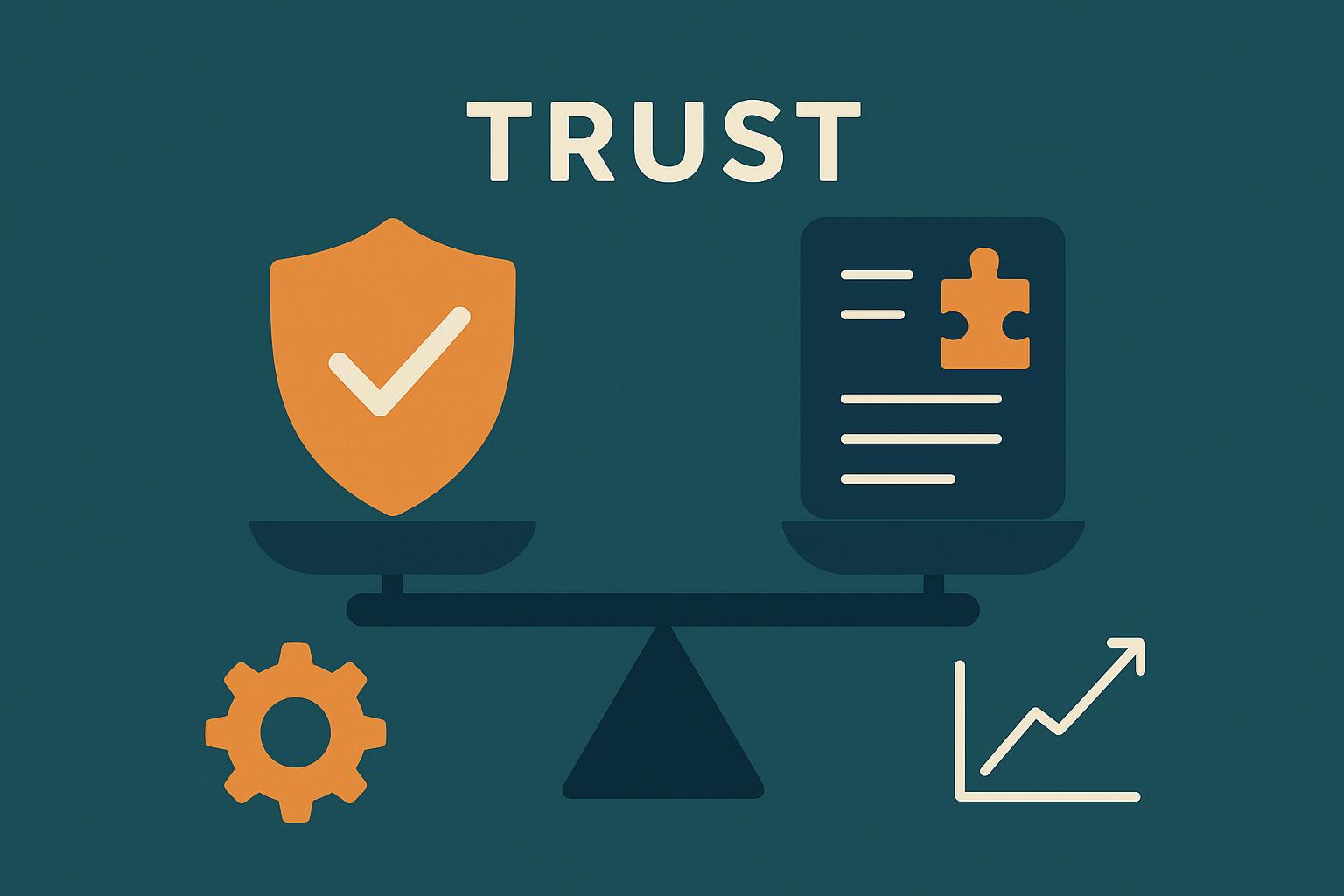
Some decisions carry more weight than others. They shape health outcomes, financial stability, family wellbeing, and deeply personal life moments. In these situations, the stakes are high, the margin for error is small, and the emotional pressure is significant.
What determines whether people feel confident making those decisions?
More often than not, it comes down to trust. Trust is not a soft, abstract concept in high-stakes environments. It is a critical factor that directly influences outcomes, behaviours, and long-term impact.
Table of Contents
Trust Shapes Whether People Take Action at All
In high-stakes situations, hesitation can be costly.
When people lack trust in professionals or services, they are far more likely to delay important decisions or actions. In contrast, trust encourages timely action, which can significantly improve outcomes.
This highlights something crucial. Trust does not just influence how decisions are made. It influences whether they are made at all.
Confidence Reduces Emotional Overload
High-stakes decisions are rarely made in calm conditions. They are often made under stress, uncertainty, or emotional strain.
Trust acts as a stabilising force.
When people trust the service or professionals they are working with:
- They feel less overwhelmed by options
- They are more confident in the process
- They experience less decision fatigue
In contrast, a lack of trust creates doubt. Doubt leads to second-guessing, delays, and added emotional pressure.
Trust Enables Better Communication
Clear communication is essential when decisions matter most. Communication only works when trust exists.
When trust is present, people are more likely to:
- Share their concerns openly
- Ask questions
- Engage in decision-making processes
This leads to better outcomes because decisions are made with fuller understanding and alignment. Without trust, communication becomes guarded. Important details may be withheld, misunderstood, or overlooked.
Trust Balances Guidance and Control
One of the challenges in high-stakes decision-making is balancing expert guidance with personal control. People want support, but they also want to feel that their voice matters.
Trust makes this balance possible.
When trust exists:
- People feel comfortable relying on expert advice
- They remain engaged in the decision-making process
- They are more confident in the final outcome
Without trust, this balance breaks down. People may either disengage completely or resist guidance altogether.
It Builds Resilience in Difficult Moments
High-stakes decisions are often tied to difficult life events. Moments of uncertainty, change, or loss.
Trust provides emotional resilience during these times.
It creates a sense of:
- Stability in uncertain situations
- Support when decisions feel overwhelming
- Reassurance that the right steps are being taken
This is particularly important in services that guide individuals through sensitive or complex life moments, where both practical and emotional support are needed.
The Role of Trust in Personal Decision-Making Services
In deeply personal areas of life, trust becomes even more important. Decisions around care, planning, and life transitions require not just expertise, but empathy, transparency, and reliability.
People are not just choosing a service. They are placing confidence in someone to guide them through moments that matter. Services provided by the likes of https://www.exithere.com/ are designed to support individuals through these decisions, offering clarity and guidance when trust is essential.
Building Trust Is Not Instant
Trust is not created through a single interaction. It is built over time through consistent actions.
It grows when services:
- Communicate clearly and honestly
- Respect individual needs and preferences
- Provide reliable, transparent information
- Demonstrate empathy and understanding
In high-stakes environments, even small breaches of trust can have significant consequences. Consistency matters.
Why Trust Is the Foundation, Not the Bonus
It is easy to think of trust as something that enhances a service. In reality, it is the foundation that everything else depends on.
Without trust:
- Information is questioned
- Decisions are delayed
- Outcomes are weakened
With trust:
- Decisions are clearer
- Communication is stronger
- Outcomes are improved
A Stronger Way to Approach Important Decisions
High-stakes decisions are unavoidable. They are part of life. How those decisions are experienced can vary dramatically. Trust transforms the experience from one of uncertainty and pressure into one of clarity and confidence.
It allows people to move forward, even in difficult situations, knowing they are supported, informed, and guided in the right direction. When the stakes are at their highest, that kind of trust is not just important. It is essential.