If you own a local business, you’ve probably heard that Google reviews are “good for business.” That’s true, but it undersells what’s actually happening. Reviews aren’t just something customers read before they decide to trust you — they’re one of the signals Google itself uses to decide whether your business shows up when someone searches nearby.
In other words, reviews do two jobs at once. They build trust with the person reading your listing, and they help determine whether that person ever sees your listing in the first place. If you’re only thinking about reviews as feedback, you’re missing half the picture.
This guide walks through why reviews matter for visibility, not just reputation, and covers exactly how to get more Google reviews with a simple, realistic plan — no marketing background required.
Table of Contents
Reviews Are a Ranking Input, Not Just Social Proof
When someone searches “plumber near me” or “coffee shop downtown,” Google doesn’t just show a random list of businesses. It ranks them using three main factors: how relevant your business is to the search, how close you are to the person searching, and something Google calls prominence.
Prominence is basically Google’s way of measuring how well-known and well-regarded your business is. Reviews — both how many you have and how positive they are — are a major part of that score. A business with 150 reviews and a 4.8 average is going to look more prominent to Google than a nearly identical business down the street with 12 reviews and a 3.9 average, even if both businesses are the same distance from the searcher.
That means two businesses can offer the exact same service, be located a block apart, and still show up very differently in the local map pack — the group of three businesses Google displays at the top of local search results — simply because one has more recent, positive reviews than the other.
So when you’re building a review strategy, you’re not just polishing your reputation. You’re directly influencing whether people find you at all.
Why This Matters for Every Type of Local Business
This isn’t just relevant if you run a restaurant or a salon. It applies to contractors, dentists, auto shops, law firms, gyms, pet groomers, accountants — any business that depends on people nearby finding you through a search or a map. If your customers are local and your growth depends on being found, reviews affect you.
The businesses that consistently show up at the top of local search results are almost never the flashiest ones. They’re usually the ones with a steady stream of recent, genuine reviews.
What Actually Makes a Review “Count”
Not all reviews carry the same weight. A few things matter beyond just the star rating:
- Recency. Google favors businesses with a steady flow of new reviews over businesses that got a burst of reviews two years ago and nothing since. A trickle of new reviews every month looks healthier than one big push.
- Volume. More reviews generally signal more trust, both to Google and to customers. There’s no magic number, but consistently adding a few new ones each month builds momentum.
- Rating. This one’s obvious, but worth stating: a high average rating matters more than a huge quantity of mediocre ones.
- Content. Reviews that mention specific services, products, or locations (for example, “great oil change service in [neighborhood]”) can help reinforce relevance for related searches, not just your business name.
- Responses. Whether you reply to reviews — especially negative ones — signals that your business is active and engaged, which matters to both customers and, to some extent, Google.
A Simple, Realistic Plan for Getting More Reviews
You don’t need software or a big budget to start. You need a system, even a basic one, so that asking for reviews becomes a habit instead of something you only remember to do occasionally.
1. Make sure your Google Business Profile is fully set up
Before you ask anyone for a review, confirm your Google Business Profile (this is the free listing that shows up in Search and Maps) is claimed, verified, and filled out completely — hours, categories, photos, website link, the works. A thin or unclaimed profile makes everything else harder.
2. Ask at the right moment
The best time to ask for a review is right after you’ve delivered something good — right after the haircut, right after the repair is finished, right after the meal, right after the invoice is paid and the customer seems happy. Waiting a week and sending a generic email gets far fewer responses than asking in the moment.
3. Make it easy — really easy
Every extra step between “yes, I’ll leave a review” and actually leaving one loses you customers. Get your direct Google review link (you can generate this for free from your Business Profile) and:
- Text or email it directly after service
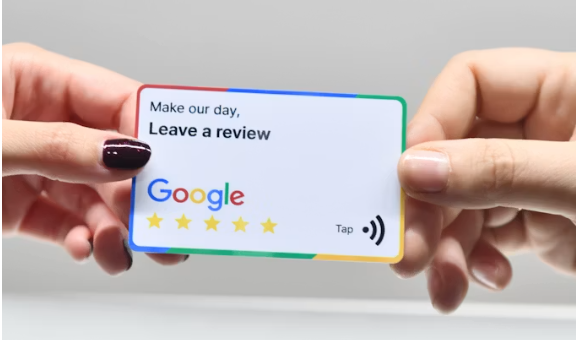
- Put it on a printed card or receipt
- Create a QR code customers can scan on the spot
- Add it to your email signature
The fewer clicks and the less searching required, the more reviews you’ll actually get.
4. Train your team to ask, not just you
If you have employees who interact with customers, they should know how to ask for a review naturally — something as simple as, “If you have a minute, we’d really appreciate a Google review, it helps a lot.” Most customers are happy to help when asked directly; they just rarely think to do it on their own.
5. Follow up once, politely
If someone said they’d leave a review and didn’t, one polite follow-up text or email a few days later is fine. More than that starts to feel like pressure, which can backfire.
6. Respond to every review — good and bad
Replying to reviews shows future customers (and Google) that someone is actually paying attention. For positive reviews, a short thank-you is enough. For negative ones, stay calm, acknowledge the issue, and offer to make it right — ideally by taking the conversation offline (a phone number or email) rather than arguing in the comments.
7. Never buy or fake reviews
This one matters more than it might seem. Google actively looks for patterns that suggest fake reviews — a sudden spike, reviews from accounts with no other activity, incentivized reviews in exchange for discounts. Getting caught can mean reviews being removed or, in serious cases, your entire listing getting suspended. It’s not worth the risk, and it’s also not necessary — a slow, steady stream of real reviews works better long-term anyway.
Common Mistakes That Quietly Hurt You
- Asking everyone the same generic way. A canned message that doesn’t feel personal gets ignored more often than a quick, human ask.
- Only asking happy customers. It’s tempting, but Google notices patterns, and a business with zero critical feedback can actually look less credible to customers than one with a few honest 4-star reviews mixed in.
- Going silent after a bad review. An unanswered negative review sits there indefinitely. A thoughtful response often does more to build trust than the negative review does to hurt it.
- Treating reviews as a one-time project. A rush of reviews in January followed by silence for the rest of the year doesn’t help you nearly as much as a steady trickle every single month.
When It Makes Sense to Get Help
If you’re running the business day to day, it’s easy for review generation to fall to the bottom of the list, even when you know it matters. That’s where a structured system helps — automated review requests, response templates, and tracking so you’re not relying on memory alone.
This is also why review generation is usually built into a broader local SEO strategy rather than handled as a one-off task. Agencies like Consultus Digital, which offers SEO Services Ontario business owners can lean on, fold review generation together with things like Business Profile optimization, citation building, and local content, since reviews work best as part of a bigger visibility plan rather than an isolated to-do. If you’d rather not manage the process yourself, that kind of support can take the habit-building off your plate while still keeping it consistent.
The Bottom Line
Reviews aren’t just a nice-to-have for your reputation — they’re one of the clearest, most controllable ways to influence whether your business shows up when someone nearby searches for what you offer. The businesses that win the local map pack aren’t necessarily the biggest or the flashiest. They’re usually just the ones that made asking for a review a habit instead of an afterthought.
Start small: fix your profile, get your review link, ask a happy customer today, and respond to what comes in. Do that consistently for a few months, and you’ll likely notice the difference in both your listing’s visibility and the trust customers place in you before they’ve even walked through the door.