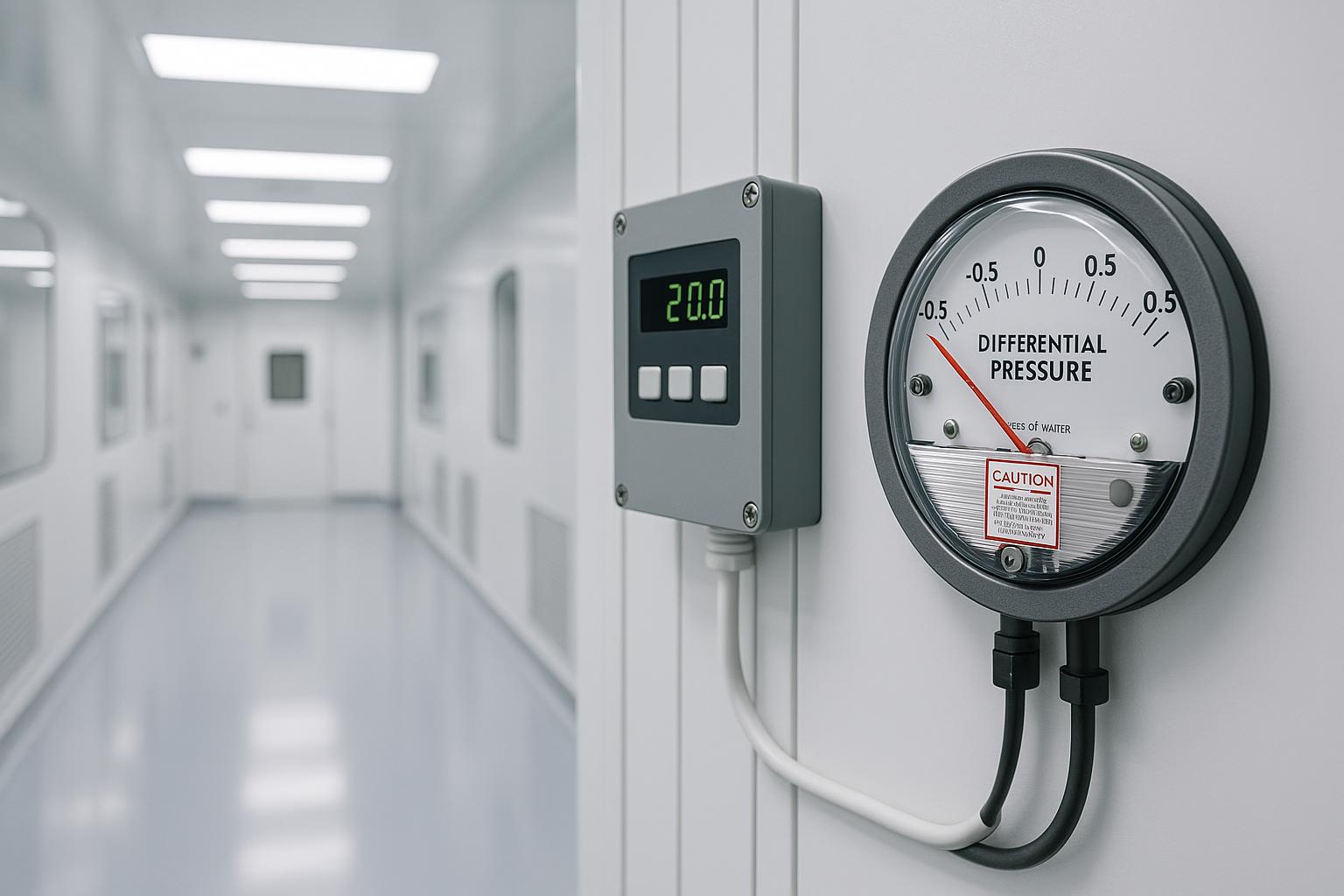
A cleanroom pressure control purchase should define the relationship between rooms, the operating conditions that can disturb it, and the evidence required at acceptance. Give suppliers a pressure-boundary schedule, an airflow basis, a control narrative and a test plan. These inputs connect sensors and software with the ventilation system and the way people actually use the facility.
The buyer’s first task is to turn a broad request such as “maintain positive pressure” into a set of observable requirements. Engineering, operations and quality teams should agree on those requirements together. Otherwise, a control contractor may deliver the requested display while important assumptions about doors, exhaust equipment or alarm response remain unresolved.
Table of Contents
Map the boundaries that matter
List each controlled room and the space used as its reference. Explain whether the boundary serves product protection, containment or a combination that needs specialist design. Show the intended direction on a drawing and have the process owner approve it.
Hurricane Techs’ cleanroom pressure differential guide explains how supply, return, exhaust and room leakage interact. Use that relationship to frame questions for the project engineer. A pressure requirement should identify the two spaces being compared and the operating condition under which the requirement applies.
For sterile medicinal-product manufacturing, EU GMP Annex 1paragraph 4.14, gives a minimum 10 Pa guidance value between adjacent rooms of different grades and recognises that containment needs can require modified arrangements. That context matters. The process, applicable requirements and design assessment must determine the project’s pressure schedule.
Compare control approaches against actual disturbances
Ask the engineer to describe what changes during a normal shift. A room may have stable ventilation, frequently used doors or process exhaust that varies with equipment operation. Give every bidder the same operating scenarios, including planned future equipment.
The ASHRAE Clean Spaces chapter discusses direct pressure control, differential airflow tracking and hybrid arrangements. It also explains that room airtightness affects the relationship between airflow offset and pressure. The purchasing decision therefore needs a reasoned choice of control method, supported by the project’s conditions.
Ask each supplier to explain its proposed response to a door event, an exhaust change and a sensor fault. Require the explanation in plain language alongside the equipment schedule. This helps the owner identify assumptions that might otherwise remain buried in controller programming.
Define the monitoring and software interfaces
Create an instrument schedule linking every sensor to its room pair, range, accuracy requirement and calibration arrangements. Specify the data and alarms that must reach the building management or environmental monitoring system. Assign responsibility for network configuration, point naming and end-to-end checks.
Vaisala’s cleanroom monitoring guidance identifies low-pressure measurement, reference selection, tubing layout and alarm strategy as relevant design issues. Ask the installation team to document those choices so that future technicians can understand what each measurement represents.
The owner should also define who receives alarms, who can change settings and how configuration changes are recorded. Request a readable export of the final settings and an agreed backup procedure. These deliverables help the operating team maintain the installed system after the commissioning specialists leave.
Make equipment responsibilities explicit
An air handling unit, room controller and monitoring system may come from different suppliers. Prepare an interface schedule assigning responsibility for airflow measurements, actuators, sensors, wiring, software and acceptance testing. Name the party responsible for resolving a disagreement between room performance and equipment operation.
When assessing cleanroom air handling unit options, confirm the required duty and controls with the supplier. Hurricane Techs describes configurable airflow and control logic on its product page. The final order should state the agreed configuration and how it will connect to the room-level control design.
Request separately priced commissioning support, operator training and later adjustments. A clear scope makes these services easier to compare and gives the project manager a way to plan attendance at the required tests.
Write acceptance scenarios before ordering
Agree on the test conditions while the design is still open to change. ISO 14644-3 describes cleanroom performance testing across defined occupancy states. Identify the relevant state and operating modes in the project protocol rather than leaving the test team to infer them on site.
The following purchasing checklist helps turn the design into a reviewable handover:
- Provide approved room pairs, pressure direction, limits and the associated operating modes.
- Record the agreed sensor locations, calibration evidence and independent verification method.
- Define tests for routine door use and representative process exhaust changes.
- Challenge alarm delivery, acknowledgement and the agreed response to a fault.
- Verify the approved restart sequence and any permitted standby mode.
- Deliver the final control narrative, settings, drawings, trend records and training materials.
Specify a responsible reviewer for each test and a process for closing exceptions. Where performance changes require retesting, record the affected scope and the final accepted settings.
Frequently asked questions
Does every cleanroom need the same pressure target? No. The target depends on the boundary, process, applicable requirements and containment strategy. Record the design basis for each relationship.
Can an accurate sensor guarantee stable pressure? Measurement accuracy is one part of the system. The ventilation capacity, room envelope, operating events and control response also require coordinated design and verification.
What if the system passes with all doors closed? Review whether that test covers the approved operating scenarios. Additional event tests may be needed to demonstrate the performance specified for daily use.
Buying pressure control becomes more manageable when the order describes how the whole room must behave. Suppliers can then propose equipment against a shared requirement, and the owner can accept the result using evidence agreed in advance.