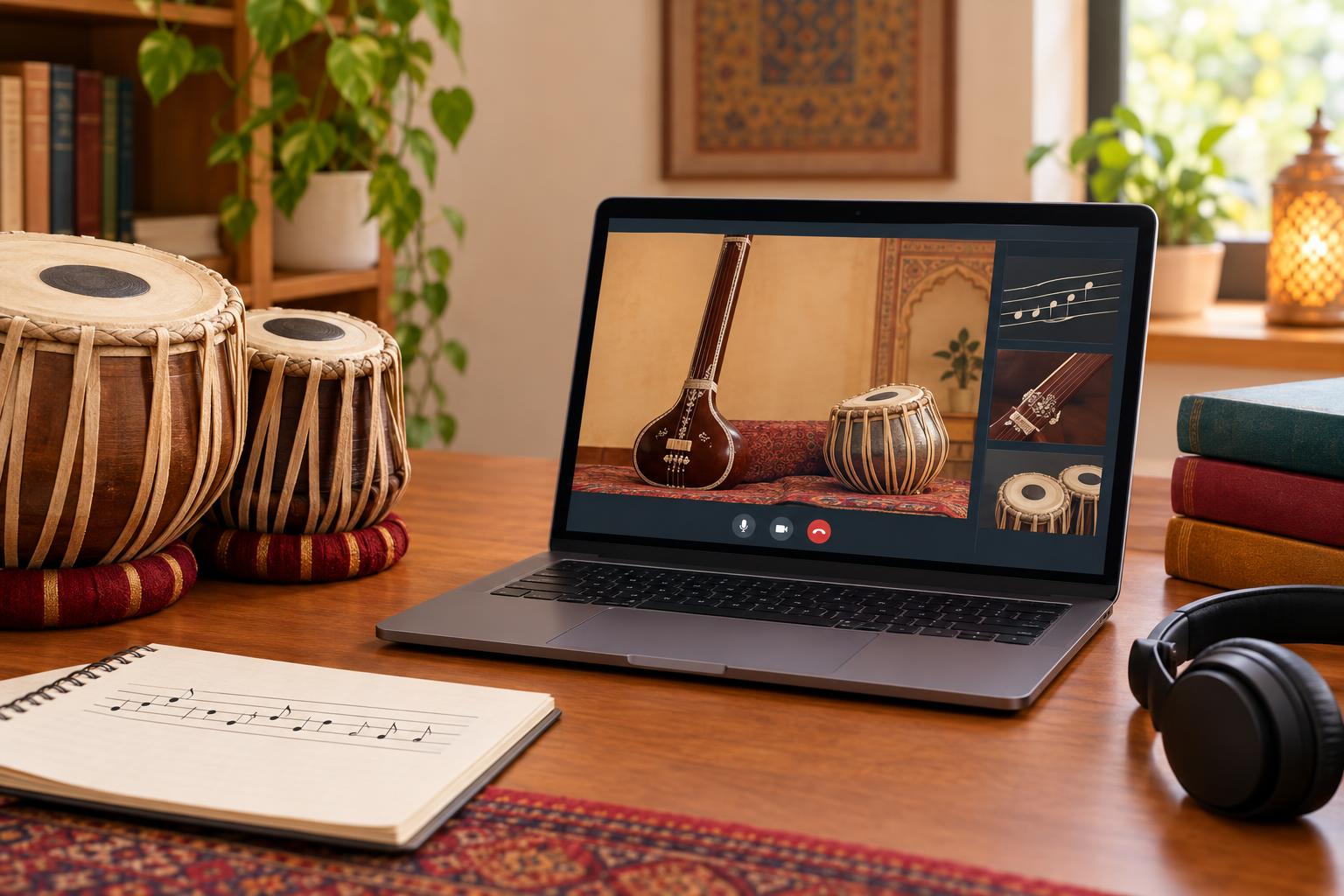
Does your child keep singing the same tune around the house, sometimes making up their own words? Rather than asking them to sing perfectly, you could introduce them to Hindustani classical music and see where their interest takes them.
Learning classical music is no longer as challenging, thanks to the internet. With the availability of online music classes for kids, children can now explore their interest in Indian music from home, even when a suitable teacher isn’t available nearby.
Table of Contents
It’s Not Just About Learning Songs
When children learn a popular song, they often remember the words before noticing the individual notes. Hindustani classical music takes a different approach. It introduces swaras, such as Sa, Re and Ga, which form the foundation of melodies.
For instance, a teacher might sing “Sa-Re-Ga-Re-Sa” and ask your child to repeat it. If one note sounds different, they try again. Over time, children become more familiar with recognizing notes, rather than simply copying an entire song.
What Can Children Learn From a Raga?
A raga is not just a collection of notes played in any order. It has its own musical character and particular ways of moving between notes. Children usually begin exploring these patterns through short, manageable singing exercises.
During Hindustani classical music online classes, a beginner might practice a few phrases from a simple raga before learning a composition. This gives children time to recognize the melody instead of struggling to remember everything at once.
Rhythm Can Begin With Something as Simple as Clapping
You may have seen children clap along to music without knowing anything about rhythm. Hindustani classical training builds on this familiar activity by introducing taal, where beats follow a repeating pattern that singers learn to recognize.
Try clapping to maintain a steady rhythm/tempo while your child sings or practices an instrument. Ask them to notice if the bar finishes before or after the final clap. Some teachers also introduce metronome-assisted practice sessions as your child slowly gains confidence.
What If Your Child Is Shy About Singing?
Not every child enjoys singing in front of others. Some may happily sing at home but become quiet when someone asks them to perform. Individual lessons can give these children a more comfortable place to begin.
With live online music classes for kids, teachers can start with small exercises and encourage children to respond at their own pace. Parents can help by avoiding constant corrections and allowing their children to enjoy the activity.
Choosing a Course That Keeps Children Interested
Before making the final decision to enroll, find out whether the teacher uses teaching methods and music theory that match your child’s age and current skill level. A blend of video tutorials, listening games and traditional practice sessions works best to improve skills in the long run.
Platforms like Artium Academy offer personalized classes from trained, certified and experienced teachers. When considering Hindustani classical music online classes, check how teachers introduce new concepts and whether children receive individual feedback without being rushed through the syllabus.
Conclusion
Hindustani classical music offers children a chance to discover how melodies and rhythms work, while becoming familiar with an important musical tradition. They don’t need to become professional singers for these lessons to be worthwhile.
What matters is whether your child enjoys returning to music, recognizing familiar notes and trying something new. Give them room to explore, and let their interest develop naturally rather than measuring progress by how many songs they know.