

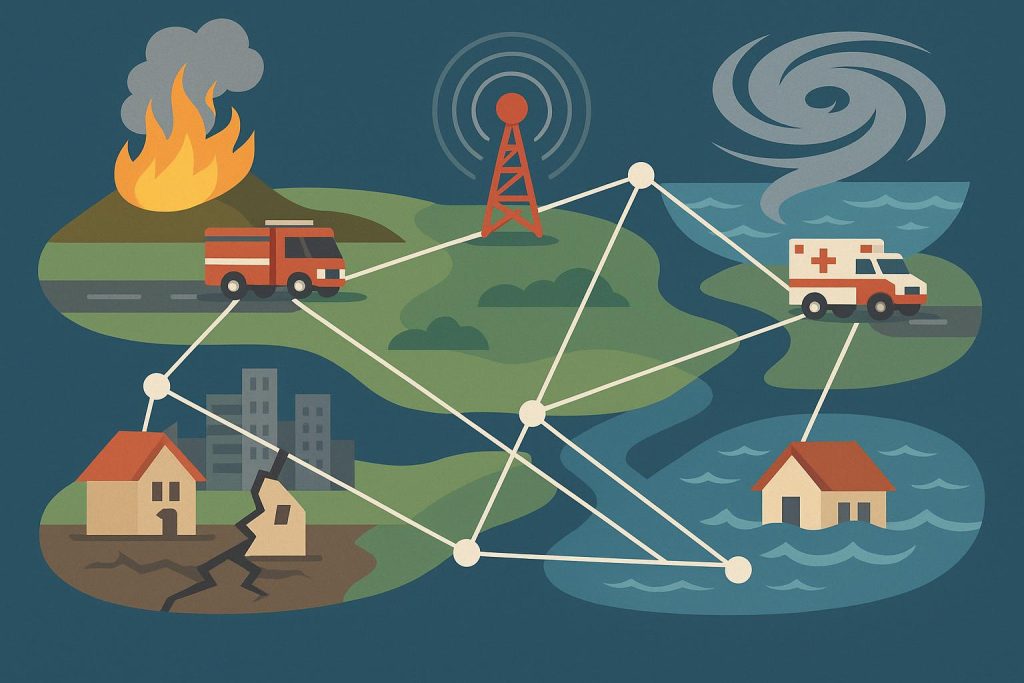
Disaster response today isn’t handled by a single organization. It’s a coordinated system of local responders, governments, global networks, and digital tools working together under pressure. Understanding how these networks function helps explain why some responses are fast and effective, while others face delays or inefficiencies.
Table of Contents
Local Response Is the Starting Point
Every response begins at the community level. Local authorities, emergency services, and volunteers are always first on the scene. They understand the geography, the infrastructure, and the immediate risks better than anyone else.
Strong local systems are often the difference between rapid stabilization and prolonged disruption. When communities are well prepared, they can act quickly, reduce initial damage, and create a foundation for wider support to build upon.
How Global Networks Step In
When a disaster exceeds local capacity, international organizations and coordinated networks provide additional support. These systems are designed to scale quickly, bringing in funding, expertise, and resources from across regions.
Global humanitarian networks operate through partnerships between national and international teams, allowing them to respond flexibly depending on the situation. Supplies are often pre-positioned, and trained responders can be deployed at short notice. If you want to explore how these systems operate in real-world scenarios, you can learn more about organizations like the American Red Cross online.
Coordination Is Everything
The success of disaster response depends heavily on coordination. With multiple organizations working simultaneously, clear communication and defined responsibilities are essential.
Modern response frameworks divide efforts into key areas such as healthcare, shelter, food distribution, and logistics. This structure helps prevent duplication and ensures that critical needs are met efficiently. Without strong coordination, even well-resourced responses can become fragmented and less effective.
Why Specialist Response Teams Are Essential
Speed is critical in the early stages of a disaster. That’s why many response networks rely on specialist teams that can deploy quickly and operate in difficult conditions.
These teams provide essential services such as emergency medical care, clean water systems, and temporary shelter solutions. Their ability to integrate with local responders ensures that support strengthens existing efforts rather than replacing them.
Technology Is Changing the Game
Digital tools have transformed how disaster response networks operate. Real-time data, satellite imagery, and mapping platforms allow responders to assess situations quickly and prioritize actions.
Technology also enables collaboration across borders. Remote teams can analyze information, support logistics planning, and contribute to decision-making without being physically present. This has significantly improved both the speed and precision of modern responses.
Preparedness Makes the Difference
One of the most important elements of disaster response happens before any crisis occurs. Preparedness includes training responders, developing response plans, and positioning resources in strategic locations.
When these systems are in place, responses are faster, more organized, and more effective. Preparedness reduces uncertainty and allows organizations to act with confidence when time is critical.
Why It All Matters
Modern disaster response networks are complex, but their purpose is straightforward: protect lives and support recovery. They rely on strong local foundations, global collaboration, and continuous improvement.
Understanding how these systems work highlights a key reality. Effective disaster response is never the result of a single organization acting alone. It’s the outcome of connected efforts working together to respond quickly, adapt to changing conditions, and help communities recover when it matters most.