

Alpha Seven Energy is a privately held energy development and management company established in 2017, with operations in Dallas, Texas and Sydney, Australia. The company focuses on identifying and developing conventional and unconventional oil and gas reserves while providing accredited investors with direct working interests in producing wells. Through its co ownership profit sharing structure, Alpha Seven Energy aligns operational performance with investor participation in monthly production revenue. With more than seven years of verified operations and a growing international investor base, the company emphasizes regulatory compliance, operational transparency, and long term asset development. As industrial demand patterns continue to influence global energy consumption, organizations like Alpha Seven Energy operate within a sector where petrochemical manufacturing plays a significant role in sustaining oil demand beyond traditional transportation fuels.
Table of Contents
Petrochemicals Keep Oil Demand High
When energy analysts and investors discuss oil demand today, they often focus on how gasoline consumption changes as electric vehicle use expands. That is a timely question, but only covers fuel. In this context, “petrochemicals” means oil and gas-based ingredients for plastics, packaging, synthetic fabrics, and other factory-made materials. Because demand for these materials moves with manufacturing rather than driving it, many long-term outlooks still project that industrial demand will keep oil use elevated even as vehicles become more efficient.
Petrochemicals appear in everyday products many people do not associate with oil. Plastic bottles, food containers, medical tubing, insulation, and synthetic fabrics rely on these inputs, and manufacturers purchase them through routine supply chains. Because manufacturers order these materials in sync with demand for consumer goods and construction materials, petrochemical demand rises and falls with factory output more than with how many miles people drive.
When populations grow and economies produce more consumer goods, building materials, and household products, chemical producers increase their purchases of oil-based feedstocks. Chemical feedstocks are the raw oil-derived inputs used to make resins and industrial chemicals. Even if passenger vehicle fuel use slows, manufacturers can still expand their demand for these inputs as production grows.
Emerging markets often consume more petrochemicals during rapid urban expansion because cities require new housing, utilities, and distribution networks. Builders use petrochemical-based materials in piping, insulation, coatings, adhesives, and protective layers in both residential and commercial construction. Retailers also depend on plastic packaging to move products safely through long-distance shipping and storage systems, where durable, lightweight materials support large-scale distribution.
Agriculture also depends on large-scale chemical inputs, including fertilizers that support modern crop yields. Food producers rely on these inputs to stabilize output across large growing regions. This ties part of global chemical demand to essential supply needs, not just discretionary consumer spending.
Recycling and material substitution can reduce growth, but progress remains uneven in practice because many countries still lack the collection systems and processing capacity needed to recycle large quantities of plastics. Some industries also require packaging that meets strict safety standards, such as sterile medical supplies and food-grade containers. These constraints slow the pace at which alternatives can replace petrochemical-based materials.
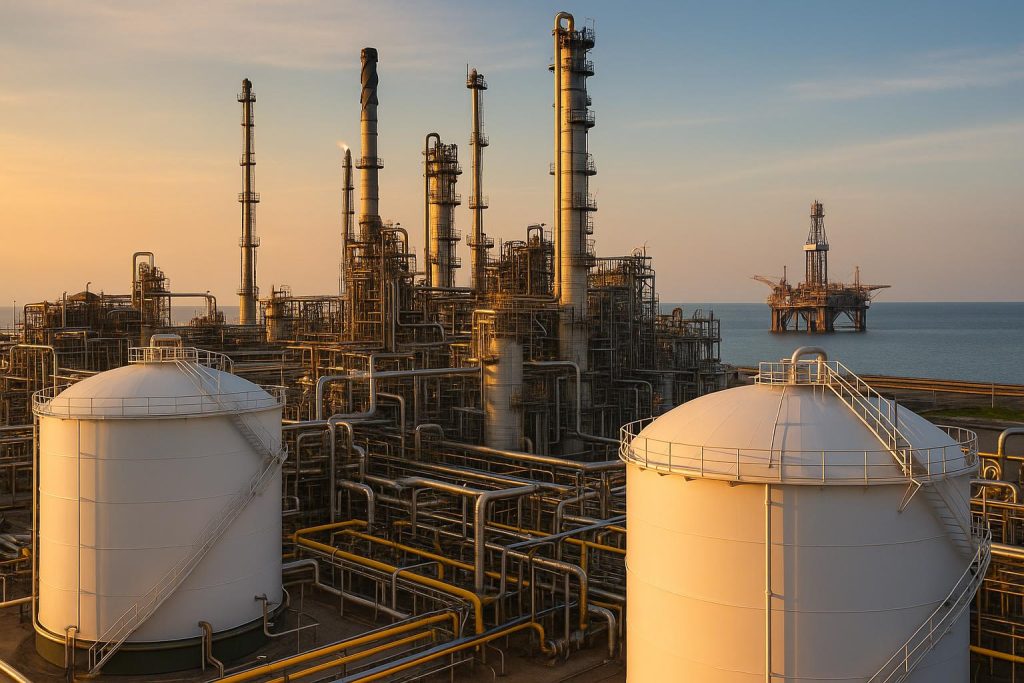
These structural patterns shape industrial investment decisions. Refineries and chemical producers build facilities that convert oil into chemical inputs, not just into fuels. These plants produce key plastic and industrial building blocks at scale. Companies that build them commit funds to long-life assets meant to operate for decades, not short-term market-based strategies.
For investors, this does not mean petrochemicals are risk-free. Demand can weaken during recessions when manufacturing slows, and profit margins can tighten if too many new plants come online at once. Feedstock price swings can also pressure margins and delay new projects. The long-term demand case reflects structural industrial use, not a guarantee of returns, and it still moves through normal economic and policy cycles.
Companies reveal some of the clearest demand signals through their spending and operating decisions. When chemical producers keep expanding capacity and existing plants run close to full capacity, they are responding to real orders, not just optimistic forecasts. Capacity utilization, meaning how much of a plant’s potential output is actually being used, offers one of the simplest indicators of whether demand is absorbing supply. For professionals evaluating long-term oil exposure, these signals explain why investment pressure is shifting toward industrial supply chains, rather than consumer fuel markets.
About Alpha Seven Energy
Alpha Seven Energy is a Texas based energy development and management company founded in 2017, with operations in Dallas and Sydney. The company focuses on developing conventional and unconventional oil and gas reserves while offering accredited investors direct working interest in producing and development wells. Through its co ownership profit sharing model, Alpha Seven Energy aligns investor participation with operational performance, supported by regulatory compliance, transparent reporting, and more than seven years of verified operations in the United States energy sector.