

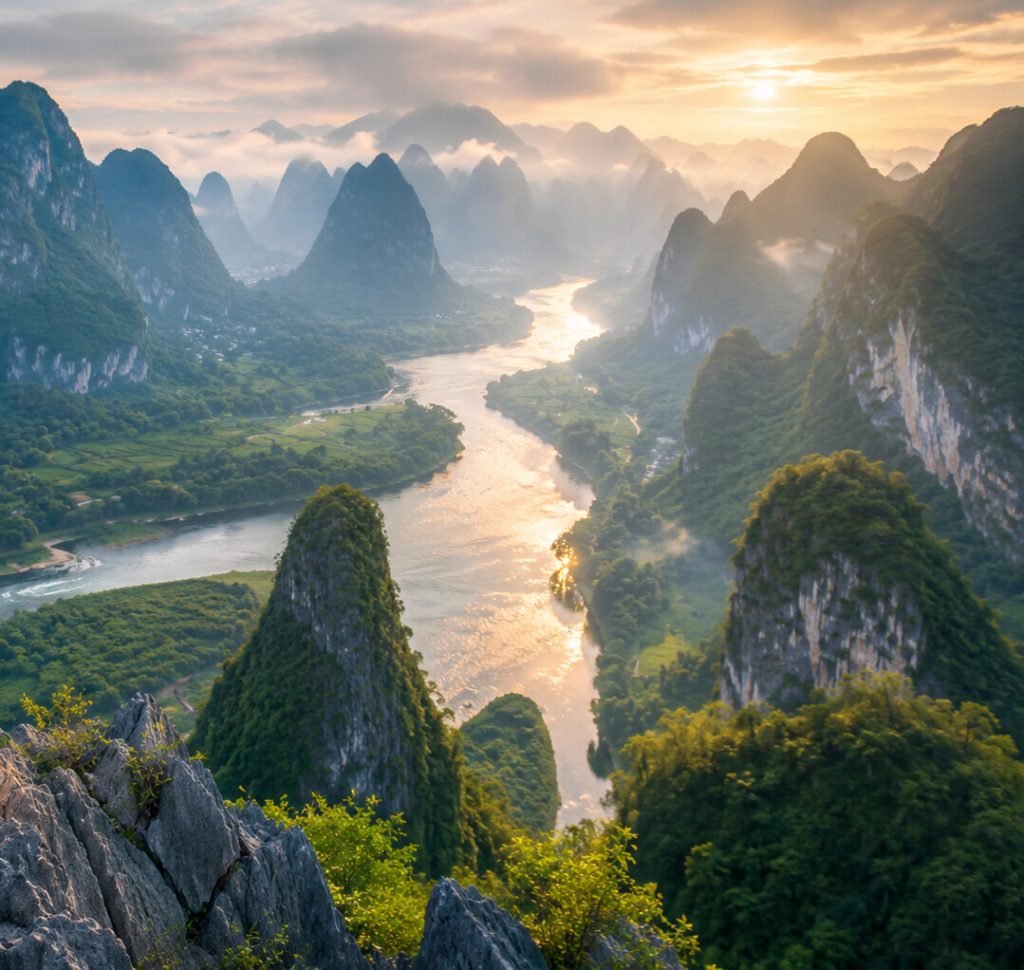
China tourist attractions can make planning your trip both exciting and challenging. You may want to walk along an ancient wall, explore an imperial palace, see dramatic mountain scenery, and experience a modern city. However, long travel distances, advance ticket requirements, and unfamiliar transport systems can make it difficult to build a balanced itinerary.
A practical way to begin is to explore China tourist attractions according to the type of experience you want. Some destinations explain imperial history, while others reveal local traditions, natural landscapes, or contemporary urban life. When you combine these elements, your journey becomes more than a list of famous places. It becomes a connected story about how China’s past and present continue to shape each other.
Table of Contents
Why China Tourist Attractions Offer More Than Photo Opportunities
A landmark becomes more meaningful when you understand why it was built, how people used it, and what surrounds it today. China is especially suited to this type of travel because many important historic sites are located near active neighborhoods and modern transport networks.
You might begin your morning inside a centuries-old courtyard, take a high-speed train in the afternoon, and finish beneath an illuminated skyline. This contrast is one of the main reasons a journey through China can feel so varied.
A balanced itinerary can help you:
- Connect architecture with the people and events behind it
- Avoid spending every day in crowded headline attractions
- Mix walking-intensive visits with slower scenic experiences
- Notice regional differences in food, design, and daily life
Historic Landmarks That Give Your Journey Context
Choose a Great Wall Section That Matches Your Travel Style
The Great Wall is an extensive system of defensive walls, watchtowers, passes, and fortifications developed over many centuries. Much of the form recognized today is associated with construction and rebuilding during the Ming period.
Different sections offer different experiences. Badaling is well preserved and supported by established visitor facilities, making it suitable when accessibility is a priority. Other sections may appeal to you when you prefer quieter scenery, longer walks, or more demanding terrain.
Before choosing a section, compare travel time, walking difficulty, cable-car availability, and expected crowd levels. The best choice should match your fitness level, schedule, and interest in history or scenery.
Understand Beijing’s Imperial Layout at the Forbidden City
The Forbidden City rewards slow observation. Its courtyards, halls, walls, gates, and pathways were designed to control movement and express order.
The complex served as the imperial palace and political center of the Ming and Qing dynasties for about five centuries. Its layout reflects ceremony, hierarchy, and authority, with major halls positioned along a carefully organized central route.
Begin with the main axis, then explore selected side halls and smaller courtyards. This approach helps you understand the overall structure without rushing through the complex.
See Individual Variation in the Terracotta Army
Near Xi’an, the Terracotta Army turns large-scale history into a detailed visual experience. Rows of figures may appear similar from a distance, but closer viewing reveals differences in facial expression, hairstyle, clothing, posture, and military rank.
The figures were assembled using separately made components and then individualized with differences in facial features, clothing, posture, and rank. This production method allowed large numbers of figures to be created while still giving many of them a distinctive appearance.
Give yourself enough time to compare the excavation areas rather than focusing only on the largest display hall. Because the site is outside central Xi’an, include transport time in your schedule.
Natural Landscapes Change the Pace of Your Trip
Historic cities can involve long hours of walking through dense and crowded spaces. A nature-focused stop gives you a different rhythm and prevents your itinerary from becoming repetitive.
Experience the Vertical Scenery of Zhangjiajie
The wider Wulingyuan scenic area, which includes Zhangjiajie National Forest Park, contains more than 3,000 narrow quartz-sandstone pillars and peaks, along with ravines, streams, caves, and waterfalls.
Before visiting, decide whether your priority is hiking, photography, easier transport-assisted sightseeing, or a combination of these activities. Weather can affect visibility, so keep some flexibility in your itinerary.
You should also avoid treating every Zhangjiajie attraction as one compact site. The wider area includes multiple scenic zones, and reaching them may require separate transfers and substantial travel time.
Slow Down Beside West Lake
West Lake in Hangzhou offers a gentler experience. Its causeways, islands, gardens, temples, and surrounding hills create a cultural landscape that has inspired generations of artists and writers.
Walk or cycle through selected sections, take a short boat ride, and pause at scenic viewpoints. Hangzhou works well when you want to combine relaxation with modern convenience, including cafés, shops, and transport services.
Modern Cities Add a Different Travel Experience
Compare Historic Streets and New Skylines in Shanghai
Shanghai brings several periods of urban development together. Historic waterfront architecture faces modern towers, while gardens, residential lanes, art spaces, shopping streets, and restored neighborhoods reveal different sides of the city.
A practical day could begin in a historic district, continue with a garden or cultural site, move to a modern commercial area, and finish near the waterfront at sunset. This structure prevents the skyline from becoming your only impression of Shanghai.
Prepare for Fast Transport and Digital Services
High-speed trains connect many major cities, giving you more flexibility when planning a multi-stop journey. Large stations can be busy, so arrive early, keep your passport accessible, and confirm the correct terminal.
Set up a mobile-payment app with an eligible international card before departure, but also carry a physical bank card and some cash as backups. Save your hotel address in Chinese, download offline maps, and keep screenshots of important booking details.
| Travel Element | Historic-Focused Stop | Modern-Focused Stop | Planning Tip |
| Main experience | Palaces, walls, and archaeology | Skylines and city life | Include both |
| Typical pace | Slow observation | Faster movement | Leave flexible time |
| Preparation | Tickets and background reading | Apps and payment setup | Prepare early |
| Common challenge | Crowds and long walks | Scale and transfers | Group nearby places |
How to Build a More Rewarding Route
A strong itinerary does not need every famous destination. It needs a clear purpose. Choose one or two main experiences, then add places that create contrast.
You could combine Beijing’s imperial landmarks with Shanghai’s contemporary cityscape, or pair Xi’an’s archaeological sites with Hangzhou’s lakeside scenery.
Use these planning principles:
- Reserve high-demand attractions early.
- Avoid two physically demanding days in a row.
- Keep transfer days light.
- Allow time for meals and neighborhood walks.
- Check weather and closure information.
For additional destination ideas and visual travel coverage, CGTN can help you explore how historic landmarks, natural scenery, and modern travel experiences fit into a wider view of China.
Conclusion
China’s strongest travel experiences often come from contrast. You can trace defensive history along mountain ridges, study imperial design in Beijing, examine ancient craftsmanship near Xi’an, slow down beside West Lake, and finish beneath a modern skyline.
Plan around your interests instead of trying to collect every major landmark. Choose routes that balance history, nature, city life, and recovery time. With thoughtful preparation, you can move beyond familiar images and understand how each destination contributes to the larger story of China.