

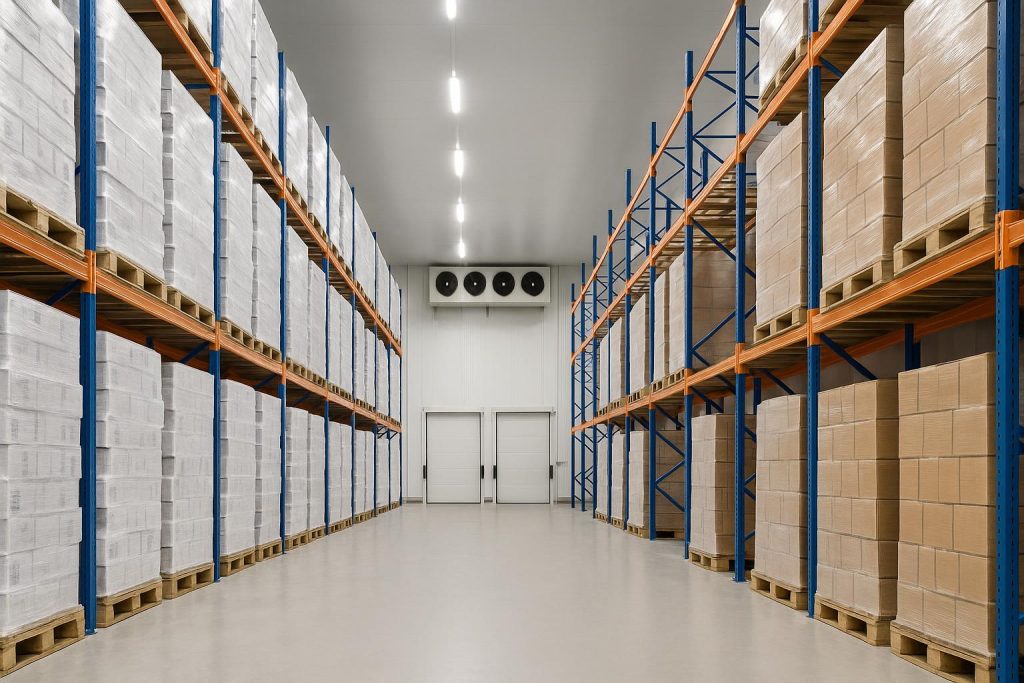
Perth’s position as Western Australia’s primary logistics hub, and its role as the distribution gateway for mining, agricultural, and general commercial supply chains serving the state’s population and industries, has produced a substantial cold storage and logistics refrigeration sector. From purpose-built temperature-controlled distribution centres and cold stores serving the major grocery and food service supply chains, through to the pharmaceutical cold storage facilities, the floriculture coolrooms, and the seafood processing facilities that serve Perth’s export economy, the range of large-scale commercial refrigeration in Perth metropolitan area is considerable and growing.
For the operators of these facilities, the refrigeration infrastructure is the core of the business rather than a supporting service. A cold store operator whose refrigeration fails loses product, loses clients, and potentially faces contractual liability. The financial stakes of refrigeration failure in a large-scale logistics setting are categorically different from those of a restaurant coolroom or a retail display case failure, and the management approach to the refrigeration infrastructure must reflect this.
Table of Contents
The Scale and Complexity of Logistics Refrigeration Systems
A purpose-built cold storage facility in Perth may house several hundred thousand cubic metres of temperature-controlled storage across multiple temperature zones: ambient controlled storage, chilled storage at 0 to 4 degrees, fresh produce storage at specific temperature and humidity conditions, and blast freezing capability for rapid temperature reduction of incoming product.
The refrigeration plant serving this facility is industrial-scale: large-capacity ammonia or HFC refrigeration systems with multiple parallel compressors, evaporative condensers or cooling towers for heat rejection, complex control systems managing capacity staging and temperature control across many refrigeration circuits, and extensive insulated pipe networks distributing refrigerant or secondary coolant through the facility.
This is not a commercial refrigeration system in the sense of a restaurant coolroom or a retail display case system. It is an industrial refrigeration plant that requires the engineering expertise, regulatory compliance, and maintenance infrastructure of an industrial facility.
Regulatory Compliance for Large-Scale Refrigeration in WA
Large-scale refrigeration systems in WA are subject to regulatory requirements that smaller commercial systems do not face, principally because they typically involve refrigerant charges large enough to create safety obligations under the WA Work Health and Safety framework.
Dangerous goods licensing for high-refrigerant-charge systems. Refrigerant is classified as a dangerous good when the quantity on site exceeds specified thresholds. Cold stores and logistics refrigeration facilities using ammonia systems or large HFC systems are likely to hold refrigerant charges that require dangerous goods licensing from the Department of Mines, Industry Regulation and Safety.
Pressure vessel and plant registration. The pressure vessels and refrigeration plant equipment in industrial refrigeration systems above specified thresholds must be registered with the relevant WA authority and must be operated and maintained in accordance with the applicable Australian Standards for pressure equipment.
Refrigerant handling licensing under the Ozone Protection and Synthetic Greenhouse Gas Management Act. The handling, recovery, and disposal of refrigerants in Australia is regulated under federal legislation, and the contractors who work on refrigeration systems must hold the appropriate refrigerant handling licence for the refrigerant type and system size involved.
For Perth cold storage operators, ensuring that their service contractors hold the appropriate licences for the size and type of refrigeration systems they are maintaining is part of the duty of care associated with operating regulated plant. An unlicensed contractor carrying out work on a regulated refrigeration system creates regulatory exposure for the facility operator, not just the contractor.
Ammonia Refrigeration in Perth Cold Stores: Specific Considerations
Ammonia remains the refrigerant of choice for large-scale cold storage and industrial refrigeration applications because of its thermodynamic efficiency, its zero global warming potential, and its long track record in industrial refrigeration. However, ammonia’s toxicity and flammability create specific safety management requirements that operators of ammonia refrigeration systems must address.
Leak detection systems. Industrial ammonia refrigeration systems are required to have continuous ammonia leak detection systems with audible and visual alarm capability at the plant room and at appropriate locations throughout the facility. These systems must be tested and maintained as part of the facility’s safety management programme.
Emergency response planning. Facilities using ammonia refrigeration above specific thresholds are required to have documented emergency response plans for ammonia leak events. This includes evacuation procedures, emergency services notification, and containment procedures that reflect the specific layout and refrigerant charge of the facility.
Plant room ventilation. The plant room housing ammonia refrigeration equipment must have ventilation that dilutes any ammonia release below flammable and toxic concentrations. The ventilation system for an ammonia plant room is a safety-critical system that must be maintained alongside the refrigeration plant.
Blast Freezing: The Most Demanding Refrigeration Application
Blast freezing, the rapid reduction of product temperature from fresh or ambient to frozen in a controlled cold air environment, is among the most demanding refrigeration applications in a Perth logistics facility. A blast freezer must achieve rapid temperature reduction of large product masses by circulating very cold air at high velocity across the product.
The refrigeration system serving a blast freezer operates at the extremes of its design envelope: maximum compressor capacity, minimum evaporator temperature, and maximum airflow rates. Systems that operate at these extremes for extended periods accumulate wear on compressors, fan motors, and controls more rapidly than systems that cycle between partial and full load.
The blast freezer is accordingly one of the highest-maintenance items in a cold store refrigeration plant, and the consequence of blast freezer failure at high throughput periods, such as harvest season for produce cold stores or pre-Christmas peak for food distribution cold stores, is a production bottleneck with direct commercial consequences.
Monitoring and Control Systems for Logistics Refrigeration
Large-scale Perth cold stores and logistics refrigeration facilities increasingly rely on automated monitoring and control systems that provide continuous visibility of temperature conditions throughout the facility, manage the refrigeration plant’s operation to maintain these conditions at minimum energy cost, and provide alarm notification when conditions deviate from setpoints.
These monitoring systems serve multiple functions:
Food safety documentation. The continuous temperature records generated by a cold store monitoring system provide the documentation base for demonstrating cold chain compliance to customers, to auditors, and in the event of a product quality dispute. A monitoring system that records temperature at defined intervals throughout the facility, with timestamps and alarm histories, is an essential part of the cold chain compliance infrastructure for a commercial cold store operator.
Energy management. The refrigeration plant in a large cold store is the facility’s largest energy consumer, and the control system that manages the plant’s operation has a significant effect on energy efficiency. Demand-controlled defrost scheduling, compressor capacity staging that matches refrigeration supply to actual load, and pre-cooling to take advantage of off-peak electricity tariff periods are all control strategies that reduce energy cost without compromising temperature management.
Predictive maintenance signals. Modern refrigeration control systems generate operating data that, when trended over time, provides early indicators of developing mechanical problems. Suction pressure trending that indicates refrigerant loss, discharge pressure trending that indicates condenser fouling, and compressor current trending that indicates developing electrical or mechanical issues can all be detected through control system data analysis before they cause failures.
For Perth cold store operators whose commercial refrigeration systems, coolroom installation and maintenance are the core of their business operation, the monitoring system investment is justified not primarily by its maintenance value but by the food safety documentation and customer assurance it provides.
The Electrical Infrastructure Behind Large-Scale Refrigeration
The electrical demand of a large Perth cold store’s refrigeration plant is substantial, placing significant demands on the facility’s electrical infrastructure. Multiple large compressor motors, high-capacity condenser fan arrays, blast freezer fan arrays, and the facility’s lighting and ancillary loads all draw from the building’s electrical supply.
The commercial electrical infrastructure for a large cold store must be designed and maintained to handle these loads reliably. Main switchboard capacity, motor protection and starting equipment, power factor correction (which reduces the reactive power component of the large motor loads), and generator transfer for essential loads during a grid supply failure are all electrical infrastructure elements that require specialist commercial electricians expertise to design, install, and maintain.
Power factor correction is worth specific mention for large cold store operators. The large induction motors in refrigeration compressors and condenser fans present a significant reactive power demand to the electricity network. Western Power charges demand tariff customers for reactive power through a power factor penalty when the power factor falls below the specified threshold. Installing appropriate power factor correction equipment reduces or eliminates this penalty charge, with a payback period typically of one to three years depending on the size of the reactive load.
Conclusion
Cold storage and logistics refrigeration in Perth operates at a scale and with a commercial consequence profile that places it firmly in the category of industrial rather than commercial infrastructure management. The regulatory framework, the engineering complexity, the safety management requirements, and the commercial consequences of failure all demand a management approach commensurate with the facility’s role in the supply chain it serves.
Perth cold store operators who invest in appropriately licenced service contractors, continuous monitoring systems, proactive maintenance programmes that reflect the plant’s actual operating demands, and electrical infrastructure capable of supporting the refrigeration load reliably and efficiently, create the operational foundation that protects both their product and their commercial reputation.