

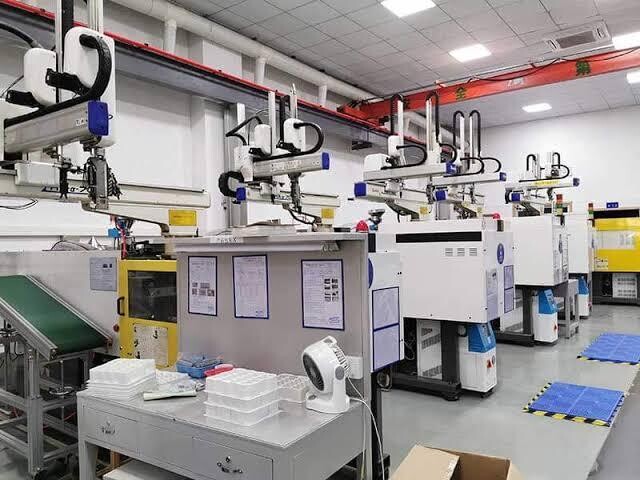
Plastic components are essential to many modern industries, from automotive manufacturing and healthcare to construction, electronics, agriculture, and consumer products. Businesses that require durable, accurately manufactured plastic parts often need solutions tailored to their specific product designs and production requirements. Custom injection molding provides an efficient way to manufacture these components in consistent quantities while maintaining control over dimensions, materials, and product quality.
For companies developing new products or improving existing manufacturing operations, understanding the injection molding process can help identify opportunities to reduce production costs, improve efficiency, and achieve reliable results. Choosing the right manufacturing partner is equally important because successful projects depend on engineering expertise, suitable tooling, material selection, and consistent production processes.
Table of Contents
Understanding the Custom Injection Molding Process
Injection molding is a manufacturing technique used to produce plastic components by injecting heated material into a specially designed mold. Once the plastic cools and solidifies, the mold opens and the finished component is removed.
The process begins with selecting an appropriate thermoplastic material. Plastic pellets are fed into a heated barrel, where they melt before being injected into the mold under controlled pressure. After cooling, the material takes the shape of the mold cavity.
This cycle can be repeated to manufacture large quantities of identical components. Depending on the design and production requirements, manufacturers can use different mold configurations to produce simple parts or components with more complicated geometries.
Custom injection molding is particularly useful when businesses need products that meet specific functional, dimensional, and aesthetic requirements rather than relying on standard, commercially available components.
Why Businesses Choose Custom Injection Molding
One of the main advantages of injection molding is its ability to produce consistent components across repeated production cycles. Once the tooling and manufacturing parameters have been established, manufacturers can produce large quantities with predictable dimensions and repeatable characteristics.
Another advantage is design flexibility. Companies can develop components with different shapes, thicknesses, textures, and integrated features. This makes the process suitable for products that require specific structural or functional properties.
Material selection also provides considerable flexibility. Depending on the application, manufacturers can work with different thermoplastics designed to offer impact resistance, chemical resistance, flexibility, or dimensional stability.
Although mold development requires an initial investment, the cost per component can become more economical when production quantities increase. This makes injection molding an attractive option for businesses with established products and ongoing manufacturing requirements.
The Importance of Product Design and Mold Engineering
Successful injection molding projects begin long before the manufacturing equipment starts operating. Product design and mold engineering play an important role in determining the quality, functionality, and production efficiency of the finished component.
Engineers must consider factors such as wall thickness, material flow, cooling requirements, draft angles, and the overall geometry of the product. Poor design decisions can create problems such as uneven cooling, material shrinkage, warping, or surface defects.
Design for Manufacturability (DFM) reviews help identify potential issues before expensive tooling is produced. During this stage, engineers evaluate the component design and recommend adjustments that can simplify manufacturing and improve consistency.
Mold construction is another essential consideration. Depending on the component’s complexity and expected production volume, manufacturers may recommend single-cavity or multi-cavity molds. The right configuration can influence production speed, tooling investment, and overall manufacturing costs.
Choosing the Right Plastic Materials
Material selection directly affects how a manufactured component performs in its intended environment. Different applications require different combinations of strength, flexibility, durability, and resistance to external conditions.
Some commonly used materials include:
- Polypropylene (PP): Frequently used for lightweight components, packaging, household products, and industrial applications.
- Acrylonitrile Butadiene Styrene (ABS): Known for its impact resistance and suitability for durable housings and consumer products.
- Polyethylene (PE): Commonly selected for applications requiring moisture resistance and flexibility.
- Nylon: Offers useful mechanical properties and is often used in demanding industrial components.
- Polycarbonate (PC): Provides high impact resistance and is suitable for applications requiring strong, durable components.
Businesses should evaluate operating temperatures, exposure to chemicals, mechanical loads, and regulatory requirements before selecting a material. Working with experienced plastics engineers can help identify an appropriate resin for the intended application.
Industries That Benefit from Custom Injection Molding
Custom injection molding supports a wide range of manufacturing sectors because plastic components are used in numerous products and industrial systems.
In the automotive industry, molded parts can be found in interior fittings, protective covers, connectors, and various structural components. Construction businesses use plastic components in building systems, fittings, hardware, and weather-resistant applications.
The medical and pharmaceutical sectors require carefully controlled manufacturing processes and materials suitable for specific healthcare applications. Food and beverage manufacturers also depend on appropriate plastic components for processing equipment and related products.
Other important industries include agriculture, energy, electronics, defense, and consumer goods. Each sector has different technical requirements, making customised manufacturing particularly valuable.
How to Select a Manufacturing Partner
Selecting an injection molding company involves more than comparing prices. Businesses should evaluate manufacturing capacity, engineering experience, quality management systems, and the range of services available.
A manufacturer offering design assistance, tooling development, production, assembly, and finishing services can simplify project management. Having these capabilities under one roof may also reduce coordination challenges between different suppliers.
For companies exploring custom injection molding for businesses, Texas Injection Molding is one example of a manufacturer offering integrated plastic manufacturing services. Based in Houston, Texas, the company provides injection molding, tooling, engineering support, assembly, and additional finishing operations.
Its facility offers molding equipment ranging from 40 to more than 1,350 tons, supporting different component sizes and manufacturing requirements. The company also highlights ISO 9001:2015 certification, engineering support, and in-house tooling resources as part of its manufacturing capabilities.
These capabilities illustrate why evaluating a supplier’s complete production resources is important when selecting a long-term manufacturing partner.
Quality Control and Production Consistency
Quality management is essential throughout the injection molding process. Even minor variations in temperature, pressure, cooling time, or material conditions can influence the dimensions and appearance of finished components.
Manufacturers use inspection procedures and process monitoring to identify inconsistencies and maintain repeatable production conditions. Depending on the application, quality checks may include dimensional measurements, visual inspections, material verification, and functional testing.
Traceability is another useful consideration, particularly for industries with demanding documentation requirements. Recording material batches and production information helps manufacturers investigate problems and maintain better control over manufacturing operations.
Businesses should discuss inspection requirements and acceptable tolerances with their manufacturing partner before production begins.
Managing Costs and Production Efficiency
The overall cost of an injection molding project depends on several factors. These include tooling complexity, material selection, component dimensions, production quantities, and additional finishing requirements.
Although initial tooling expenses can be significant, businesses producing consistent volumes may benefit from lower unit costs over time. Efficient mold design and appropriate material selection can also help minimise waste and improve manufacturing productivity.
It is advisable to provide manufacturers with accurate technical drawings, three-dimensional design files, expected quantities, and material preferences when requesting a quotation. This information helps engineers assess project requirements and recommend suitable production methods.
Conclusion
Custom plastic injection molding provides businesses with a practical manufacturing solution for producing consistent, durable, and application-specific components. Its flexibility, material options, and potential for scalable production make it valuable across numerous industries.