

Based in Princeton, New Jersey, Eric Poe, Esq., CPA, leads CURE Auto Insurance and has helped guide its growth while overseeing areas that include underwriting, claims, loss control, rate filings, reinsurance, litigation, and business strategy. His professional work connects directly to the way car insurance is priced, including public advocacy around fair underwriting standards and the use of driving records rather than income proxies. Poe has testified before federal and state legislative committees on insurance issues and has supported laws in Michigan restricting the use of jobs and education in auto insurance pricing. His background in accounting, law, company leadership, and consumer advocacy provides relevant context for examining how credit-based insurance scores can influence car insurance rates where state law permits their use.
Table of Contents
The Impact of Credit Scores on Car Insurance Rates
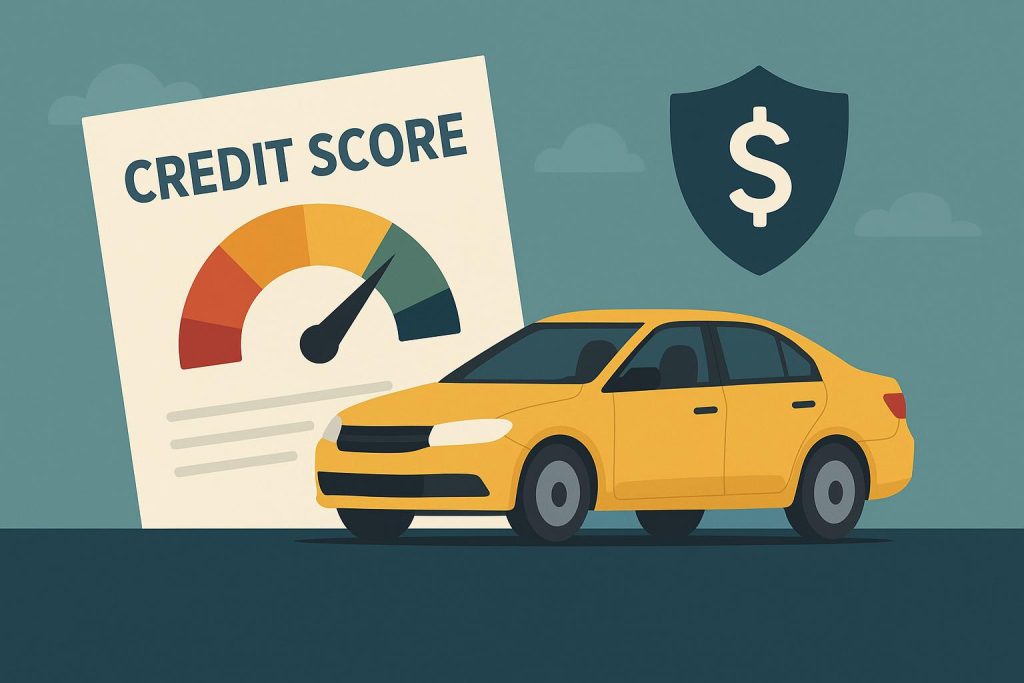
Most drivers are knowledgeable about the basic factors that affect insurance premiums, including vehicle type, driving history, and location. However, financial history can also play an important role. About 95 percent of auto insurers use credit-based insurance scores where state law allows. This practice helps insurers estimate the statistical likelihood of future claims or costly losses.
There is an important difference between the scores lenders use for loan decisions and the scores insurance companies use. A traditional credit score helps lenders judge whether a person is likely to repay borrowed money on time. A credit-based insurance score uses certain credit-report details, such as payment history and credit history length, to assess insurance risk. Insurers rely on this tool because they corollate responsible financial behavior as a sign of lower claim risk.
Insurance providers build each driver’s profile using specific details they derive from their credit information. Payment history is often the most influential element, traditionally accounting for about 40 percent of the final risk calculation. A long record of paying bills by their due dates demonstrates reliability and often leads to better rates today.
Outstanding debt represents approximately another 30 percent of the general score calculation. A high balance relative to a driver’s credit limit can indicate financial strain to underwriters. Providers also look at credit history length, which accounts for about 15 percent of the score and shows how long a person has been using credit.
Importantly, shopping for a policy does not damage a person’s credit standing. Insurers perform soft inquiries that remain invisible to other lenders. These checks are information gathering and should not lower any of the specific scores associated with consumers.
State laws across the United States vary in how companies are, and are not, allowed to use credit information when setting auto insurance prices. California, Hawaii, and Massachusetts ban the use of credit-based insurance scores in auto insurance rating. In these states, access to coverage and pricing cannot depend on credit history in the same way it can in many other states.
Other states allow credit checks, but with strict conditions. Maryland and Oregon, for example, allow insurers to consider credit only when establishing a rate. In Michigan, this data helps determine if a customer qualifies for installment payment options. Utah restricts credit information use to the first days of a new policy.
Federal law, through the Fair Credit Reporting Act (FCRA), grants consumers the right to a free report every 12 months. This transparency ensures people can verify data and provide accurate information to update their records.
There are several proactive steps drivers can take to help improve their standing and secure favorable insurance rates. Paying bills on time is the most effective approach. They should also make best efforts to keep their credit card balances below their limits. This typically signals stability to insurance underwriters. Additionally, if possible, people should avoid opening several new active accounts.
Drivers should regularly review their own credit reports from the three major bureaus: Equifax, Experian, and TransUnion. This helps identify potential errors. If one finds a mistake and has it corrected, they must also notify their current insurer.
That said, life may not always go as planned. Many providers understand that circumstances like military deployment, serious illness, identity theft, or natural disasters can have negative impact on a person’s credit. When these types of situations arise, drivers can request a review and submit supporting documentation. This process ensures that a temporary hardship doesn’t necessarily translate into higher costs on the road.
About Eric Poe
Eric S. Poe, Esq., CPA, is an entrepreneur based in Princeton, New Jersey, and the chief executive officer of CURE Auto Insurance. He has led CURE through growth in the United States and internationally and oversees business strategy, underwriting, claims, loss control, rate filings, litigation, and reinsurance. He holds a bachelor’s degree in accounting from the University of Colorado and a law degree from Seton Hall University School of Law.