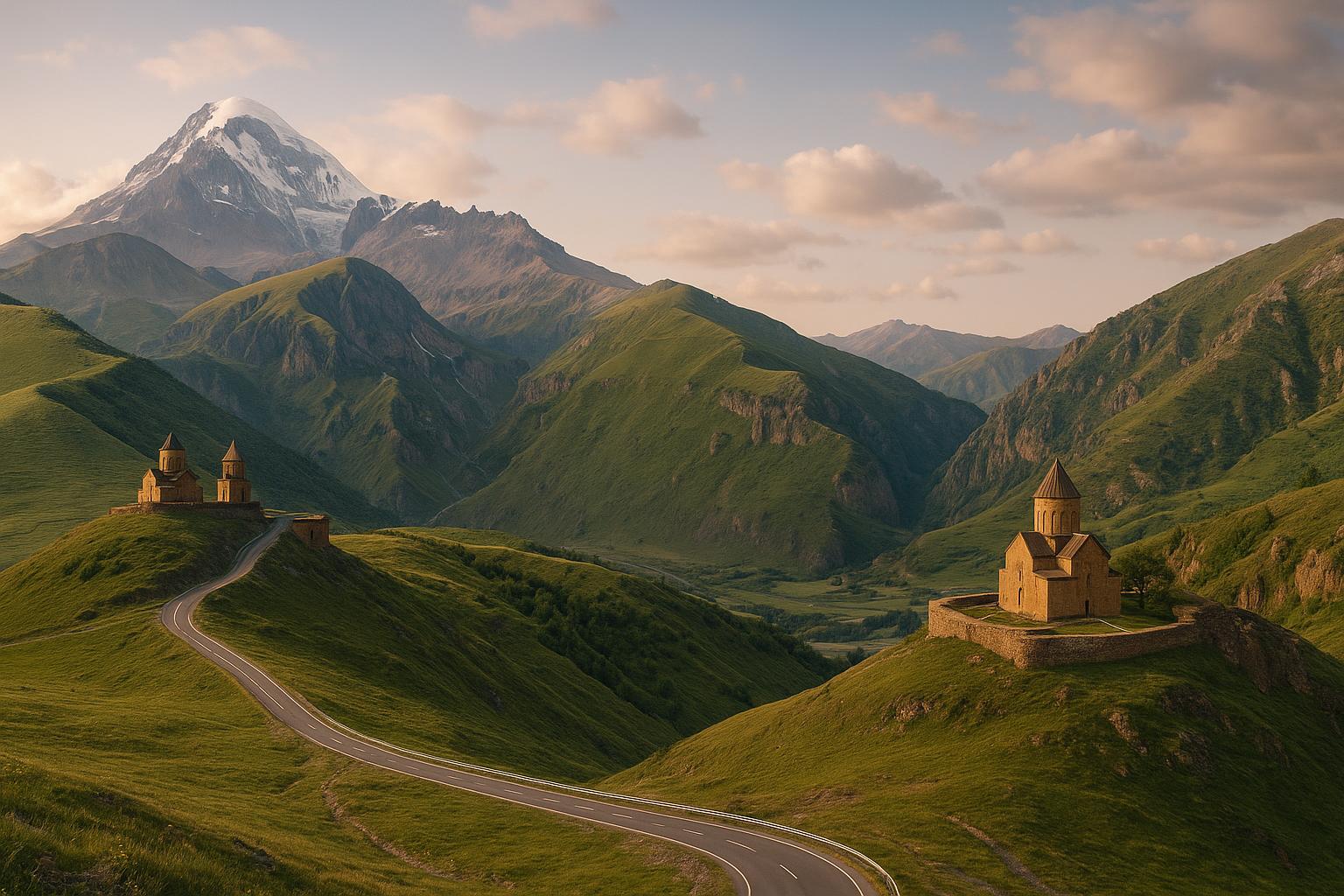
Most people who visit the South Caucasus pick one country, spend a week there, and fly home wondering what the other side looked like. That is a shame, because Georgia and Armenia share a border, sit a single road day apart, and feel nothing alike once you get there. Different alphabets, different church traditions, different bread, different wine culture. Seeing both in one trip costs less than two separate trips and gives you a much better sense of the region.
Here is how the route actually works, based on real drive times, seasons, and costs rather than a wish list. The same planning logic applies whether you put the trip together yourself or book a guided tour georgia armenia itinerary that covers both sides of the border in one go.
Table of Contents
Why the two go together
Both countries are small. Tbilisi and Yerevan are about 250 km apart. You can fly into one capital and out of the other, which means no backtracking and no wasted travel day at the end.
The contrast is the point. Georgian churches lean Orthodox and Byzantine. Armenian monasteries carry Persian and early Christian influence and are often carved into cliffs or canyon walls. Georgia has the stone towers of Svaneti and the green wine valleys of Kakheti. Armenia has the high desert around Khor Virap, the forest around Dilijan, and Lake Sevan sitting at almost 2,000 metres. Even the two alphabets look nothing like each other, and neither looks like anything else on earth.
Food follows the same pattern. Both kitchens use walnuts, herbs, pomegranate, and fresh cheese, but they end up in completely different dishes.
The border is easier than people expect
There are two main crossings between the countries. Sadakhlo to Bagratashen is the faster one and the route most travellers use. Ninotsminda to Bavra is the second option and makes sense if you are coming from southern Georgia.
By road, Tbilisi to Yerevan takes about 5.5 to 7.5 hours depending on the crossing and how many stops you make. There is also a night train that runs around 10 to 11 hours, which is slower but saves you a hotel night.
Many passport holders enter both countries visa free or with a simple e-visa. Armenia allows citizens of many European and other selected countries to stay up to 180 days in a calendar year without a visa. Rules change, so check the official government sites before you book flights.
One tip: do not treat border day as a lost day. The northern Armenian region of Lori sits right past the crossing, and both Haghpat Monastery, which is UNESCO listed, and the frescoed Akhtala Monastery are short detours. Debed Canyon runs through the same area. You can cross the border and still see two of the best sites in the country before dinner.
When to go
The season runs roughly May to October. Outside that window, mountain roads close and a lot of guesthouses shut for winter.
May and June bring 20 to 28°C in the cities, cooler in the mountains, open roads to Kazbegi, Tatev, and Dilijan, and fewer people. Good months for hiking.
July and August are the hottest. Cities hit 30 to 34°C while mountain areas stay around 18 to 24°C. Roads are dry and days are long. Start sightseeing early and plan the afternoon somewhere high.
September and October are the safest bet overall. Temperatures sit around 20 to 27°C, evenings cool to 12 to 16°C, the vineyards are working, and the markets are full.
How many days you need
Eleven to thirteen days is the sweet spot. That covers both capitals, the main monasteries, one or two mountain regions, and a wine area without long driving days.
Eight to ten days is possible, but something gets cut, usually the rural and mountain parts, which are the best parts. Fourteen to sixteen days lets you add rest days and travel at a slower pace.
Keep single drives under about four hours where you can. The roads are fine, but mountain routes are slow, and four hours in a van eats an afternoon.
A route that works
Start in Tbilisi. Give it three days, including a day trip to Kazbegi, which is 3 to 3.5 hours each way, and a day in Kakheti for wine.
Cross at Sadakhlo, stop in Lori for the monasteries, then continue to Dilijan for a night. Dilijan to Yerevan is only 1.5 to 2 hours.
Base yourself in Yerevan for the rest. Garni and Geghard are an easy half day, about an hour of driving plus site time. Khor Virap sits under Mount Ararat. Echmiadzin, Lake Sevan, the Areni wine region, and the Tatev cable car all work as day trips or overnight stops.
Flip the whole thing if your flights are cheaper into Yerevan. The route works fine in either direction.
Money and everyday costs
Georgia uses the lari, Armenia uses the dram. Cards work in both capitals and most towns. Carry cash for villages, roadside cafés, and markets.
In Georgia, a city taxi through Bolt runs about 3 to 7 USD, a simple lunch 8 to 15 USD, and a sit-down dinner with wine 18 to 35 USD. In Armenia, a city ride with Yandex Go or GG is about 3 to 6 USD, lunch 7 to 12 USD, and dinner with a glass of wine 15 to 30 USD.
Tipping is not required but appreciated. Round up or add 5 to 10 percent. In Georgia, note that a service fee on the bill often does not reach the staff, so cash is better.
For SIM cards, Magti has the best coverage in Georgia, with Silknet as a backup. In Armenia, Viva-MTS, Ucom, and Team Telecom all work. Bring your passport to buy one.
Eating well, including without meat
Vegetarians and vegans have an easier time here than they expect. Both countries follow Orthodox fasting traditions that limit meat and dairy for large parts of the year, so plant-based cooking is already built into the local diet rather than added on for tourists.
Try khachapuri and khinkali in Georgia, lavash baked in a clay oven and khorovats in Armenia, and the walnut and herb dishes on both sides. Wine is worth planning around. Georgia ferments in buried clay qvevri, and Armenia’s Areni region has been making wine for thousands of years.
Planning it yourself or booking it
You can absolutely do this trip independently. Marshrutkas connect most towns, ride-hailing apps work in both capitals, and English is common enough in tourism.
The parts that get tiring are the border day, the mountain drives, and coordinating hotels across two countries and two currencies. If you would rather hand that over, a guided package covers transport, border coordination, guides, and entrance fees in one booking, usually as a small group of around a dozen people or as a private car with a driver and guide.
Whichever way you go, learn a few words first. Barev and shnorhakalutyun in Armenia, gamarjoba and madloba in Georgia. People notice, and it changes how the whole trip feels.