Hampton Barringer Luzak is a Jackson Hole based professional whose career spans media production, advertising, independent film, and historic home restoration. Through years of outdoor recreation and residence in Wyoming, Hampton Luzak has developed sustained exposure to the region’s diverse landscapes and wildlife habitats. Her background includes work as an on air reporter and producer, a casting director on award recognized film projects, and a sales and marketing executive in the fashion industry, experiences that emphasize observation, research, and public communication. Outside of her professional roles, she participates in alpine and Nordic skiing, hiking, and snowshoeing, activities that frequently place her in proximity to protected ecosystems. Her philanthropic involvement with animal welfare and conservation organizations further connects her interests to responsible wildlife awareness and environmental stewardship within Wyoming.
Unique Wildlife Sightings in Wyoming
Wildlife enthusiasts living in or visiting the United States should strongly consider planning a trip to Wyoming. Home to Yellowstone National Park, Wyoming features mountain ranges, wetlands, forests, and other natural environments that host a unique array of animal species. While people can find many opportunities to observe these animals in their natural habitats, they should also take precautions to avoid disturbing wildlife or placing themselves in dangerous situations.
Countless bird species live in Wyoming, including the national bird of the US, the bald eagle. People can find bald eagles in many locations throughout the state, including the Yellowstone River and Rocky Mountain sections of northwestern Wyoming, Snake River, and Jackson Hole. Floating slowly down a river offers bird-watchers many opportunities to spot bald eagles perched atop trees or flying over open meadows. Individuals can also look for designated viewpoints, like those at Oxbow Bend and Schwabacher Landing on Snake River. Eagles are most active during the spring and early summer, from April to June, when they are migrating and nesting.
Bald eagles pose very little threat to humans, especially adults. And despite a few reports to the contrary, eagle attacks on small pets are exceedingly rare. On the other hand, humans can easily disturb bald eagles. Humans should never approach an eagle’s nest or handle their eggs. In fact, the Bald and Golden Eagle Protection Act makes it illegal to touch, take, or otherwise disturb an eagle’s nest or eggs, with penalties of up to $100,00 in fines and imprisonment for one year.
Many large predators live in Wyoming, including the black bear and the grizzly bear. Grizzly bears are especially common around Signal Mountain Road and Pilgrim Creek, while black bears typically stick to lakes, such as Phelps Lake and Jenny Lake. Bears are most active between May and June, as they emerge from their hibernation, and from August through September, when they forage for food and bulk up as winter approaches.
While bears are beautiful animals that typically avoid human contact whenever possible, they demand considerable respect and caution. Residents and visitors to Wyoming should only observe bears from a safe distance, ideally from within a secure vehicle. Campers, hikers, and other travelers should always properly store and dispose of food to avoid attracting hungry bears.
The National Park Service website provides a comprehensive breakdown of safe behavior while close to bears. A key point of distinction involves how to respond to aggressive grizzly and black bear encounters. Grizzly bears sometimes ignore humans they no longer perceive as a threat, meaning that “playing dead” can prove an effective technique. This tactic does not work as well with black bears. Faced with an aggressive black bear, humans should either seek refuge, such as a building or car, or fight back with any nearby object, focusing on the bear’s face and muzzle.
Wyoming is home to many other predators, ranging from wolves to bobcats, but other mammals can prove equally awe-inspiring (and potentially dangerous). Bison once faced extinction in the United States, but have since enjoyed a significant recovery. Bison have grazed throughout the Grand Teton and Yellowstone regions since prehistoric times. Unlike seasonal wildlife, bison make their home in Wyoming year-round, though they are most active during the summer, while newborn calves emerge in May.
Like most animals, bison tend to ignore or avoid human interactions. That said, bison can behave very unpredictably, and may become aggressive if they believe a human poses a threat to their young. Bison can reach speeds of up to 35 miles per hour. With this in mind, humans should maintain at least 25 yards of distance from the animals, ideally with rocks, trees, or other barriers between themselves and the bison.
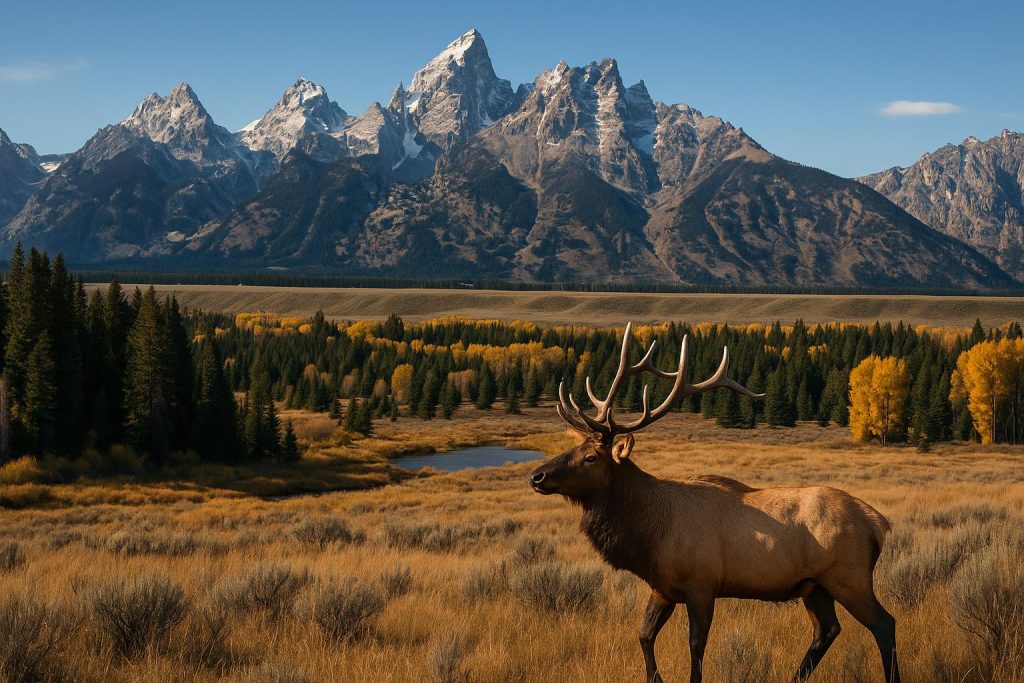
These animals represent only a fraction of the wildlife on display throughout the state of Wyoming. Other species of interest include elk, moose, mountain lions, mute swans, and northern river otters.
About Hampton Luzak
Hampton Luzak is an entrepreneur and former media professional based in Jackson, Wyoming. Her career includes roles in advertising, fashion marketing, independent film casting, and broadcast journalism with MSNBC. She is also involved in restoring historic residences and supports animal welfare and conservation causes. Her long term residence in Wyoming, combined with outdoor recreation interests, has provided ongoing exposure to the state’s natural environments.