

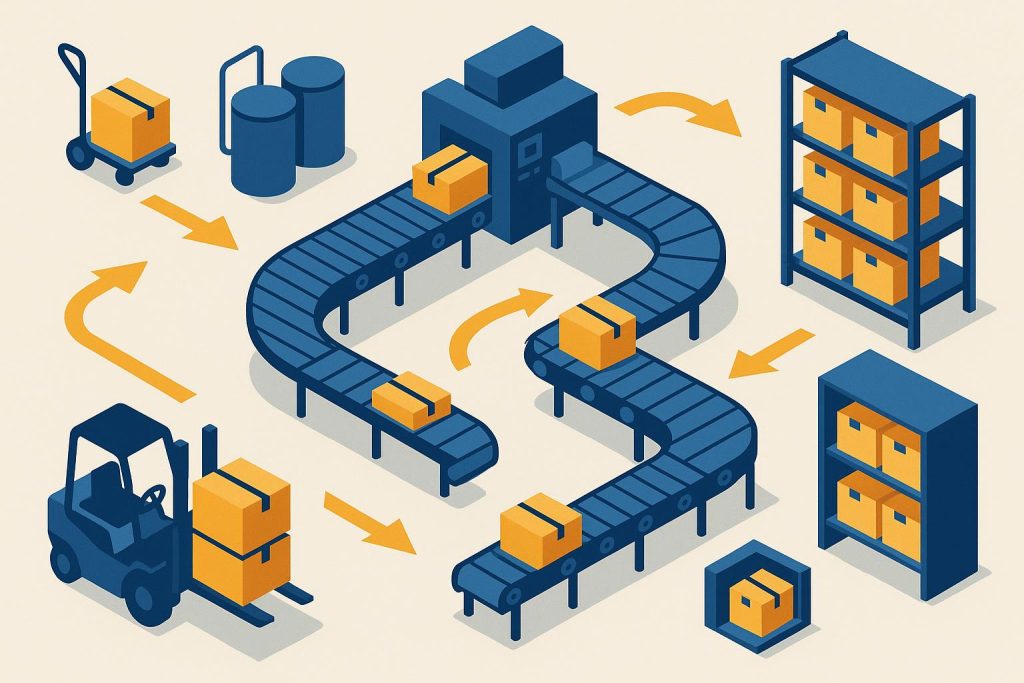
Every business that works with physical goods depends on one basic process: materials need to move safely, stay organized, and arrive where they are needed. This applies to manufacturers, warehouses, construction suppliers, recycling facilities, farms, distribution centers, and many other operations.
When material handling is done well, work moves faster. Employees spend less time searching, lifting, correcting mistakes, or waiting for equipment. Products are easier to track. Space is used more wisely. Deliveries become more predictable.
When it is done poorly, the effects spread quickly. Inventory gets misplaced. Aisles become crowded. Workers face higher safety risks. Equipment breaks down sooner. Orders ship late. Costs rise, often without one obvious cause.
Improving how materials are handled, stored, and delivered does not always require a complete overhaul. In many cases, businesses can make meaningful progress by reviewing their current systems, removing waste, and choosing tools that support the way people actually work.
Table of Contents
Start With a Clear View of Your Material Flow
Before changing equipment, rearranging storage areas, or rewriting procedures, businesses should first understand how materials currently move through the operation.
This means looking at the full path. Where do materials arrive? Who receives them? Where are they stored? How often are they moved? Which departments use them? Where do delays happen? What steps are repeated more than necessary?
A material flow review can reveal problems that are easy to overlook during daily work. For example, employees may be walking too far to retrieve common items. Bulk materials may be stored far from the machines that use them. Finished goods may pass through too many staging areas before shipment.
These small inefficiencies add up.
A clear material flow also helps managers make better decisions. Instead of guessing which area needs improvement, they can see where time, labor, and space are being wasted. The goal is simple: materials should move in a logical path with as few unnecessary touches as possible.
Organize Storage Areas Around Use and Access
Storage is not just about having enough room. It is about making materials easy to identify, reach, protect, and move.
A well-organized storage area should support the pace of daily work. Frequently used items should be placed where employees can access them quickly. Heavy materials should be stored in locations that reduce lifting and awkward movement. Hazardous or sensitive materials should be separated, labeled, and protected according to their requirements.
Clear labeling is one of the simplest ways to improve storage. Labels should be easy to read and consistent across the facility. This includes racks, bins, pallets, containers, aisles, and staging zones. When workers can quickly confirm what something is and where it belongs, errors decrease.
Businesses should also avoid treating storage as a static system. Inventory changes. Demand shifts. Product lines expand. Seasonal materials come and go. A layout that worked two years ago may now be slowing everyone down.
Regular reviews help keep the storage system aligned with real operating needs.
Use the Right Equipment for the Job
Material handling becomes harder, slower, and less safe when employees rely on the wrong tools.
The right equipment depends on the type, size, weight, and movement pattern of the materials. Pallet jacks, forklifts, conveyors, carts, lift tables, bins, cranes, and hoppers all serve different purposes. Choosing the right option can reduce strain, speed up movement, and limit damage to goods.
Equipment should also match the environment. A narrow warehouse aisle may require compact handling tools. Outdoor yards may need rugged containers or machines designed for uneven surfaces. Food, chemical, or pharmaceutical operations may need equipment made from materials that are easy to clean and resistant to corrosion.
In facilities that handle scrap, bulk solids, waste, or loose production materials, self-dumping hoppers can help teams collect, move, and unload materials with less manual effort. They are especially useful when materials need to be transported from workstations to larger containers, compactors, disposal areas, or processing equipment.
The main point is not to buy more equipment. It is to use equipment that fits the task.
Build Safety Into Everyday Handling Practices
Safety should not be treated as a separate program that sits outside normal operations. It should be built into the way materials are received, stored, moved, and shipped.
This starts with training. Employees need to understand how to lift safely, operate equipment, stack materials, use personal protective equipment, report hazards, and follow traffic rules inside the facility. New employees need this guidance early. Experienced workers need refreshers, too.
Storage safety matters just as much. Materials should be stacked securely. Aisles should remain clear. Loads should not block exits, fire equipment, electrical panels, or visibility at intersections. Damaged pallets, broken racks, and unstable containers should be addressed quickly.
Good housekeeping is also a safety practice. Clean, orderly spaces reduce confusion and help employees spot problems before they cause injuries or delays.
Improve Inventory Tracking and Visibility
Materials are easier to manage when people know what is available, where it is located, and when it needs to be moved.
Manual tracking can work for very small operations, but it often becomes unreliable as volume increases. Businesses may need barcode systems, RFID tracking, warehouse management software, or inventory dashboards to keep information accurate.
Better tracking helps prevent overstocking and shortages. It also reduces the time spent searching for materials. When workers can quickly locate an item, confirm its quantity, and understand its status, the entire operation becomes more efficient.
Visibility is also important for delivery planning. If a business does not know whether materials are ready, staged, delayed, or damaged, it cannot give customers dependable timelines.
Inventory accuracy supports better purchasing, scheduling, production, and shipping decisions. It connects the storage area to the rest of the business.
Plan Deliveries With Consistency and Flexibility
Transporting materials is not only about moving goods from one place to another. It is about moving them at the right time, in the right condition, and with the right documentation.
Businesses should create standard procedures for preparing shipments. This may include checking product counts, inspecting packaging, confirming labels, securing loads, preparing bills of lading, and assigning staging areas.
Consistency reduces errors. It also helps employees work faster because they do not need to recreate the process for each shipment.
At the same time, delivery systems need flexibility. Weather, traffic, supplier delays, equipment issues, and customer changes can all affect schedules. A strong delivery process includes backup plans. This might involve alternate carriers, extra staging capacity, flexible routes, or communication procedures for late or changed deliveries.
Communication is critical. Shipping teams, warehouse staff, drivers, sales teams, and customers should have access to accurate updates when timelines change. Silence creates frustration. Clear updates build trust.
Reduce Unnecessary Handling
Every time material is moved, there is a chance for delay, damage, injury, or error. That does not mean movement can be avoided completely. It means unnecessary movement should be reduced wherever possible.
Businesses can start by identifying materials that are handled multiple times before use or shipment. Are items unloaded, stored, moved to staging, moved again for inspection, then moved again for shipping? Could some of these steps be combined?
Reducing handling may involve changing layouts, adding better staging areas, improving packaging, using mobile containers, or placing supplies closer to workstations.
Even small changes can create real gains. For example, placing common materials near production areas can reduce walking time. Using wheeled bins can reduce repeated lifting. Creating dedicated drop zones can prevent confusion and rework.
The best systems make the correct action the easiest action.
Maintain Equipment and Review Processes Regularly
Equipment that is not maintained will eventually slow operations down. Forklifts, carts, conveyors, racks, dock plates, hoists, and containers all need regular inspection. Wear and damage should be reported and addressed before they lead to breakdowns or injuries.
Maintenance should be scheduled, documented, and taken seriously. Waiting until something fails is usually more expensive than fixing it early.
Processes also need maintenance. As business needs change, old procedures can become outdated. Managers should ask employees what is working and what is causing delays. Workers who handle materials every day often see problems before leadership does.
Regular process reviews help businesses adapt. They also show employees that improvement is part of the culture, not a one-time project.
Final Thoughts
Better material handling, storage, and delivery come from practical decisions repeated consistently. Businesses need clear layouts, safe practices, suitable equipment, accurate tracking, and reliable communication.
The goal is not perfection. It is a steady improvement.
When materials are easier to store, safer to move, and simpler to deliver, the whole operation benefits. Employees work with less frustration. Customers receive better service. Space is used more effectively. Costs become easier to control.
A stronger material management system gives businesses more than efficiency. It gives them stability, and that stability supports growth.