

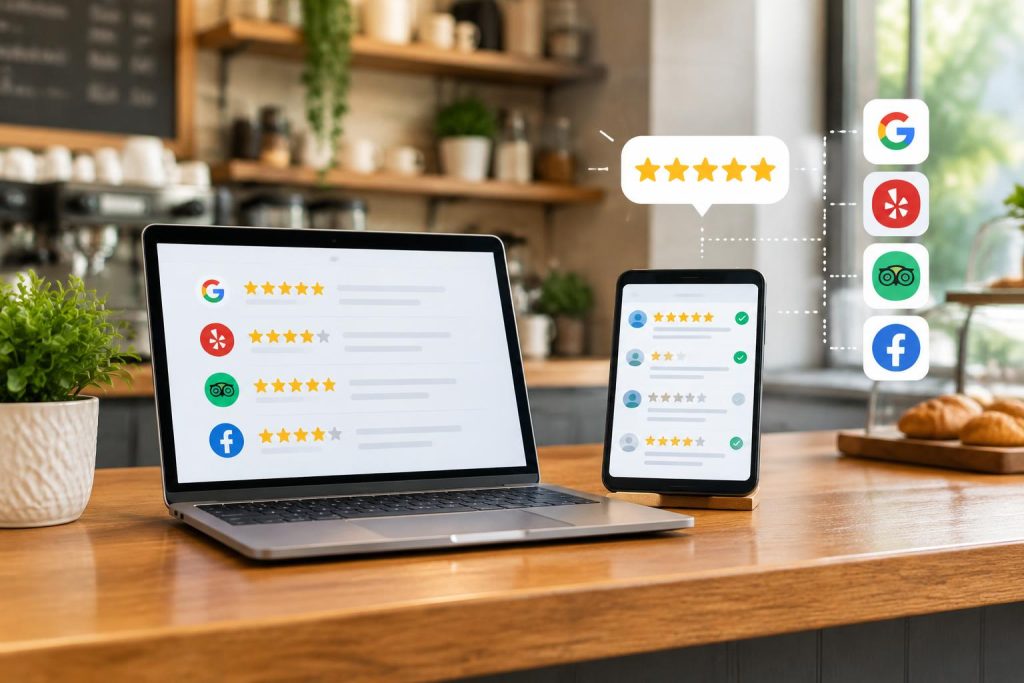
For cafés, restaurants, pubs and small hotels, online reviews are now the shopfront. Before visiting, most customers check star ratings and read recent comments on Google. A run of unanswered complaints can quietly push them towards a competitor.
Reviews also feed search. Google uses review volume, recency and replies as local ranking signals, and AI assistants such as Gemini and ChatGPT draw on them when recommending where to eat or stay.
The good news is that managing reviews no longer needs a dedicated team. A few simple tools do most of the work:
- Review alerts. Turn on Google Business Profile notifications so new reviews reach your phone instantly.
- QR codes. Place codes on receipts, table cards and in rooms that link straight to your review page.
- Automated follow-ups. Many booking and till systems can send a review request by email or SMS after a visit.
- AI-assisted replies. AI writing tools can draft responses, but always personalise them before posting.
- A shared inbox. Route review notifications to one place so nothing slips through when the owner is on shift.
Negative reviews deserve particular care. Reply calmly, apologise where it’s fair, and offer to continue the conversation offline. Future customers read the reply as much as the complaint.
Consistency matters more than volume. A steady flow of fresh reviews, each with a thoughtful reply, signals to Google and AI assistants that a business is active and trusted. One new review a week will usually do more for visibility than twenty that arrived in a single burst two years ago.
For owners who want a structured approach, online reputation management for hospitality businesses brings these tools together into one routine.