

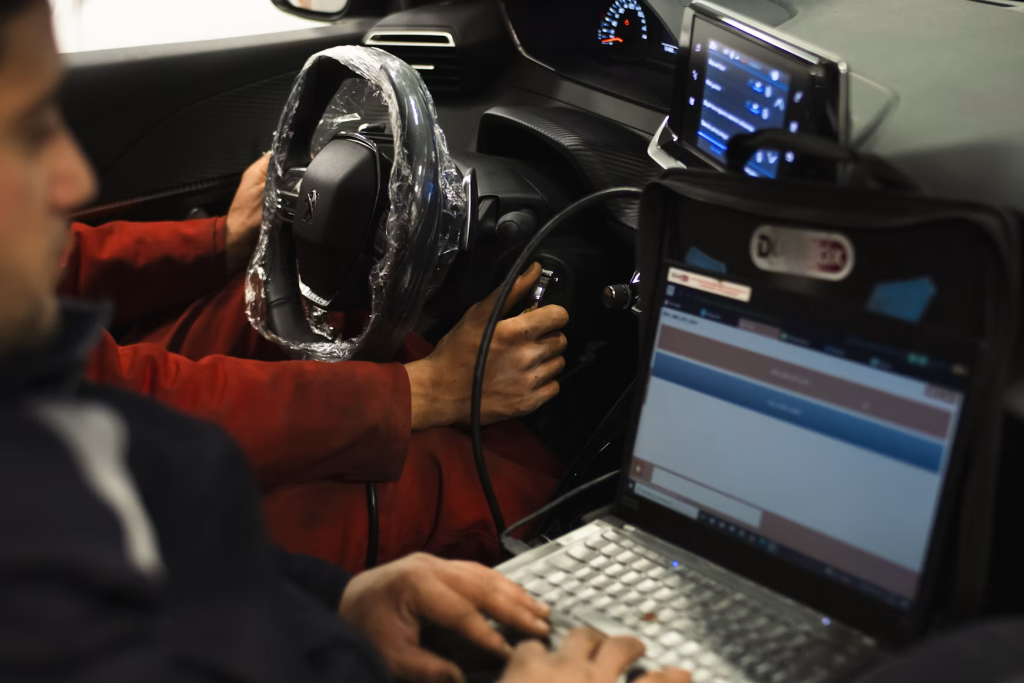
Vehicle recalls used to mean a trip to the dealership for a physical part replacement. Increasingly, they mean something different entirely: a wireless software update sent to a vehicle’s onboard computer to correct issues that could affect braking, acceleration, or steering assist systems. As vehicles become more software-defined, these digital defects are emerging as a new category of potential accident causes that many drivers, and even some legal professionals, are only beginning to fully understand.
As one of the nation’s largest metropolitan areas, Houston has a growing number of connected and software-equipped vehicles on its roads. That makes these issues increasingly relevant in local crash investigations.
For firms like Sutliff & Stout, whose Houston accident attorneys have secured multi-million-dollar verdicts and settlements in serious auto and truck accident cases, investigating newer vehicle crashes may also include determining whether a software update, recall notice, or system malfunction contributed to the collision.
Table of Contents
Why Modern Vehicles Are Essentially Rolling Computers
A modern car can contain more lines of software code than many commercial aircraft, controlling everything from adaptive cruise control to automatic emergency braking. This software occasionally contains bugs, just like any other complex system, and manufacturers increasingly address these bugs through over the air updates rather than requiring a physical dealership visit.
This creates a strange gap for drivers. A safety issue can exist in a vehicle for weeks or months before a fix becomes available, and unlike a traditional mechanical recall that requires an active dealership appointment, a software fix sometimes gets pushed automatically without the driver even realizing a safety issue existed in the first place.
When a Software Bug Contributes to a Crash
Automatic emergency braking systems that trigger unexpectedly, adaptive cruise control that fails to detect a stopped vehicle ahead, or lane keeping assist that steers incorrectly have all been documented issues tied to specific software versions in various vehicle models. When a crash happens and one of these systems behaves unexpectedly, determining whether a software defect contributed becomes a genuinely complex technical question.
This is meaningfully different from a driver simply making an error. If a vehicle’s own safety system contributed to causing a crash rather than preventing one, liability can extend beyond the driver entirely and toward the manufacturer’s software development and testing processes.
Why This Evidence Is Hard to Access
Vehicle software logs exist, but manufacturers generally control access to this data far more tightly than the mechanical event data recorder information that has become standard in crash investigations. Requesting software version history and any known bug reports tied to a specific vehicle often requires formal legal discovery processes rather than a simple records request, since manufacturers are understandably protective of proprietary system data.
This is exactly the kind of technical, document heavy investigation that benefits from attorneys experienced enough to know which records to request and how to compel their release when a manufacturer is reluctant to provide them voluntarily.
Why Reliability in This Process Matters
A software related crash investigation can take considerably longer than a standard case, since it may require expert analysis of vehicle software logs alongside traditional crash reconstruction. Clients navigating this kind of case benefit enormously from working with a firm that provides consistent, reliable updates throughout a process that can stretch on for months while technical evidence gets gathered and analyzed.
From the injured client perspective, understanding early that a case involves this level of technical complexity, rather than being surprised by delays later, helps set realistic expectations from the very start of a claim.
What Drivers Can Do in the Meantime
Registering a vehicle directly with the manufacturer, rather than relying solely on a dealership to maintain contact information, ensures recall notices reach the actual current owner rather than a previous one. Checking the National Highway Traffic Safety Administration’s recall database periodically by vehicle identification number catches issues that might not otherwise generate a direct notification in time.
The Bigger Picture
As vehicles become increasingly defined by their software rather than just their mechanical components, the causes behind serious crashes are shifting too. Understanding that a software bug can now sit alongside a mechanical defect as a genuine contributing factor helps drivers, and the attorneys who represent them, ask the right questions after a crash that does not fit the usual explanations.
Why Manufacturers Face a Difficult Balancing Act
Vehicle manufacturers face genuine tension between pushing safety fixes quickly and thoroughly testing every update before release. A software patch rushed out to address one known issue can occasionally introduce a new, unrelated problem, which is exactly why some manufacturers stage their rollouts gradually rather than pushing an update to every affected vehicle simultaneously.
This staged approach, while generally reasonable from an engineering perspective, means two nearly identical vehicles can be running different software versions at any given time, further complicating any investigation into whether a specific software issue may have contributed to a specific crash.
How This Compares to Traditional Mechanical Recalls
A traditional mechanical recall, like a faulty brake component, is relatively straightforward to investigate, since the physical part either failed or it did not, and that failure can typically be examined directly after a crash. A software related issue offers no equivalent physical evidence to inspect. The code either executed as intended or it did not, and determining which scenario actually happened often requires specialized forensic analysis of the vehicle’s onboard systems rather than a simple visual inspection.
This fundamental difference is part of why software related crash investigations are still a relatively new and evolving area within personal injury law, requiring attorneys to work closely with technical experts who understand both automotive engineering and software forensics.
What This Means for the Future of Vehicle Safety Claims
As vehicles continue adding more advanced driver assistance features, the software behind these systems will only grow more complex, and the potential for subtle bugs affecting safety critical functions will grow alongside it. Building legal and investigative expertise around this evolving category of evidence now, rather than treating it as a rare edge case, positions attorneys to better serve clients as software-related crash causes become an increasingly common part of the broader accident landscape.