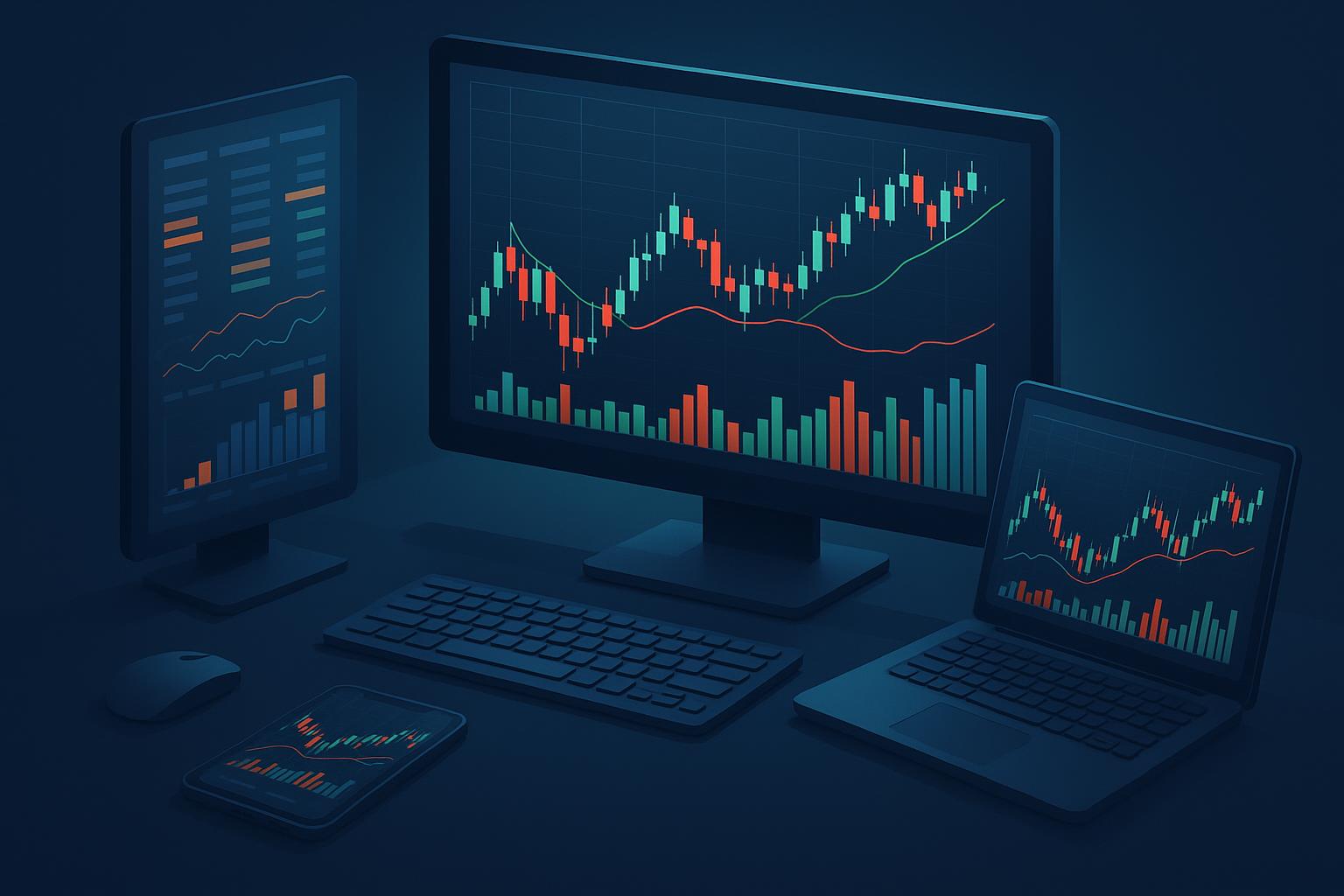
The world of day trading looks nothing like it did two decades ago. What once required a seat on a trading floor, a Bloomberg terminal, and institutional-level connections is now accessible to anyone with a laptop and a reliable internet connection. Technology has dismantled the barriers that once kept retail traders on the sidelines, and the pace of that transformation is only accelerating.
From artificial intelligence to cloud-based execution infrastructure, the tools available to modern traders have fundamentally changed what it means to compete in financial markets. Understanding how these shifts are playing out helps traders make smarter decisions about where they spend their time, capital, and attention.
Table of Contents
The Democratization of Market Access
For most of the twentieth century, day trading was effectively a professional sport. Real-time data feeds, direct market access, and low-commission structures were privileges reserved for institutional players. Retail participants were left with delayed quotes, high spreads, and little recourse when execution went wrong.
The rise of online brokerages in the late 1990s began to crack that system open, but it was the combination of mobile technology, zero-commission trading, and cloud infrastructure that truly leveled the field. Today, retail traders can access the same markets, often on the same terms, as many professionals.
Choosing the right infrastructure matters enormously in this environment. Traders who take time to research and compare the best day trading platforms gain a meaningful edge, not just in cost savings, but in execution quality, data access, and tool availability. The platform layer has become central to trading performance.
Artificial Intelligence and Algorithmic Tools
AI is reshaping how traders analyze markets and execute decisions. Where a human analyst might process dozens of data points per session, machine learning models can evaluate thousands of variables simultaneously, identifying patterns across price action, volume, news sentiment, and macroeconomic signals in real time.
Pattern Recognition at Scale
Modern AI tools can scan entire watchlists for technical setups, alert traders when conditions match predefined criteria, and even backtest strategies across years of historical data within minutes. This kind of capability was once reserved for hedge funds with dedicated quant teams.
Retail traders now have access to AI-assisted charting tools, sentiment analyzers that process social media and news flow, and screening platforms that surface high-probability setups before the open. The result is that human judgment, which remains irreplaceable for reading context and managing risk, can now be applied more precisely and at a higher level.
Automation and Execution Speed
Algorithmic execution has also changed the game. Automated order routing, smart order splitting, and conditional order types allow traders to manage complex positions without being glued to a screen. Speed matters in day trading, and modern platforms have reduced execution latency to milliseconds, a gap that would have been unimaginable to retail participants a decade ago.
Real-Time Data and Information Advantages
Information is the raw material of every trading decision, and technology has transformed how quickly and completely traders can access it.
Level 2 quotes, time-and-sales data, options flow, dark pool prints, and institutional order tracking are now available through retail-facing tools. Traders can monitor multiple asset classes simultaneously, set custom alerts across dozens of tickers, and receive push notifications the moment a position triggers a condition they defined in advance.
This data density creates both opportunity and challenge. The traders who thrive are those who have learned to filter signal from noise, using technology to narrow focus rather than expand distraction. Selecting among the best day trading platforms often comes down to how well a platform handles data presentation and customization, since raw data without good visualization tools creates more friction than value.
Cloud Infrastructure and Mobile Trading
Cloud computing has made professional-grade trading infrastructure portable. Traders are no longer tied to a dedicated workstation running proprietary software. Cloud-hosted platforms offer the same execution quality whether you are at a desk in one city or on a phone in another.
Mobile trading applications have matured considerably. Early versions were barely functional beyond basic order entry. Today’s mobile platforms offer full charting suites, real-time scanning, options chains, and risk management tools that match their desktop counterparts in most respects.
This portability has expanded who can trade and when. It has also raised the bar for what traders expect from their tools. A platform that does not offer a seamless mobile experience is increasingly seen as a liability rather than a minor inconvenience.
Risk Management Technology
One area where technology has made perhaps its most meaningful contribution is risk management. Emotional decision-making remains one of the primary reasons traders fail, and modern platforms have built tools specifically designed to reduce its impact.
Automated Stops and Position Controls
Automated stop-loss orders, bracket orders, and maximum daily loss limits are now standard features across most platforms. Some platforms allow traders to lock themselves out of further trading once a daily drawdown threshold is hit, removing the temptation to revenge-trade after a bad session.
These features are not just conveniences. For newer traders especially, they serve as structural guardrails that allow skill development to happen without catastrophic capital loss.
Performance Analytics and Trade Journaling
Technology has also made it far easier to learn from trading history. Integrated trade journals, performance dashboards, and analytics tools can break down win rates, average risk-reward ratios, performance by time of day, and dozens of other variables. Traders who review this data systematically develop self-awareness that accelerates improvement.
Many of the best day trading platforms now include these analytics natively, reducing the need to export data into spreadsheets and calculate metrics manually. Keeping everything in one ecosystem makes it easier to maintain a consistent review process.
Simulated Trading and Education Technology
The learning curve in day trading is steep and costly when mistakes happen with real capital. Technology has created a meaningful alternative through simulation.
Paper trading environments, where traders execute in real market conditions without actual money at risk, allow beginners to build familiarity with platform mechanics, test strategies, and develop discipline before committing capital. The best implementations use live data rather than delayed feeds, making the simulation experience more realistic and transferable.
Educational content has also transformed. Where traders once relied on books and weekend seminars, they now have access to live trading rooms, recorded screen shares, structured video courses, and community forums where experienced traders share real-time analysis. The knowledge gap between professionals and serious retail traders has narrowed considerably.
The Infrastructure Behind Funded Trading
Technology has also enabled an entirely new category of trading infrastructure: funded trading programs. These programs allow traders to demonstrate skill on simulated accounts and then receive access to significant capital without putting their own money at risk.
The evaluation and risk monitoring processes behind these programs depend entirely on sophisticated technology. Real-time position tracking, automated rule enforcement, and performance analytics make it possible to run these programs at scale.
For traders exploring this path, understanding the platform environment used within these programs is critical. Researching the best day trading platforms compatible with funded programs helps ensure that skills developed in practice translate directly to evaluation conditions. Compatibility between your preferred tools and the funded program’s infrastructure is worth verifying before committing to an evaluation.
What Comes Next
The trajectory of technology in trading points toward greater personalization, faster execution, and deeper integration between data sources. AI models are becoming more capable of adapting to individual trader styles, offering customized alerts and strategy suggestions rather than generic signals.
Decentralized finance is introducing new asset classes and trading mechanics that require traders to engage with blockchain-based infrastructure alongside traditional markets. Regulatory technology is making compliance more transparent and accessible. Social trading platforms are allowing traders to observe and learn from one another in real time.
For the modern trader, staying current with technology is not optional. The market environment itself is shaped by the tools participants use, which means that falling behind technologically often means falling behind in performance.
The good news is that access to these tools has never been more equitable. Whether you are just beginning or refining a professional-level approach, the technology available through the best day trading platforms today gives serious traders everything they need to compete on merit. The differentiator, now more than ever, is not access but execution.