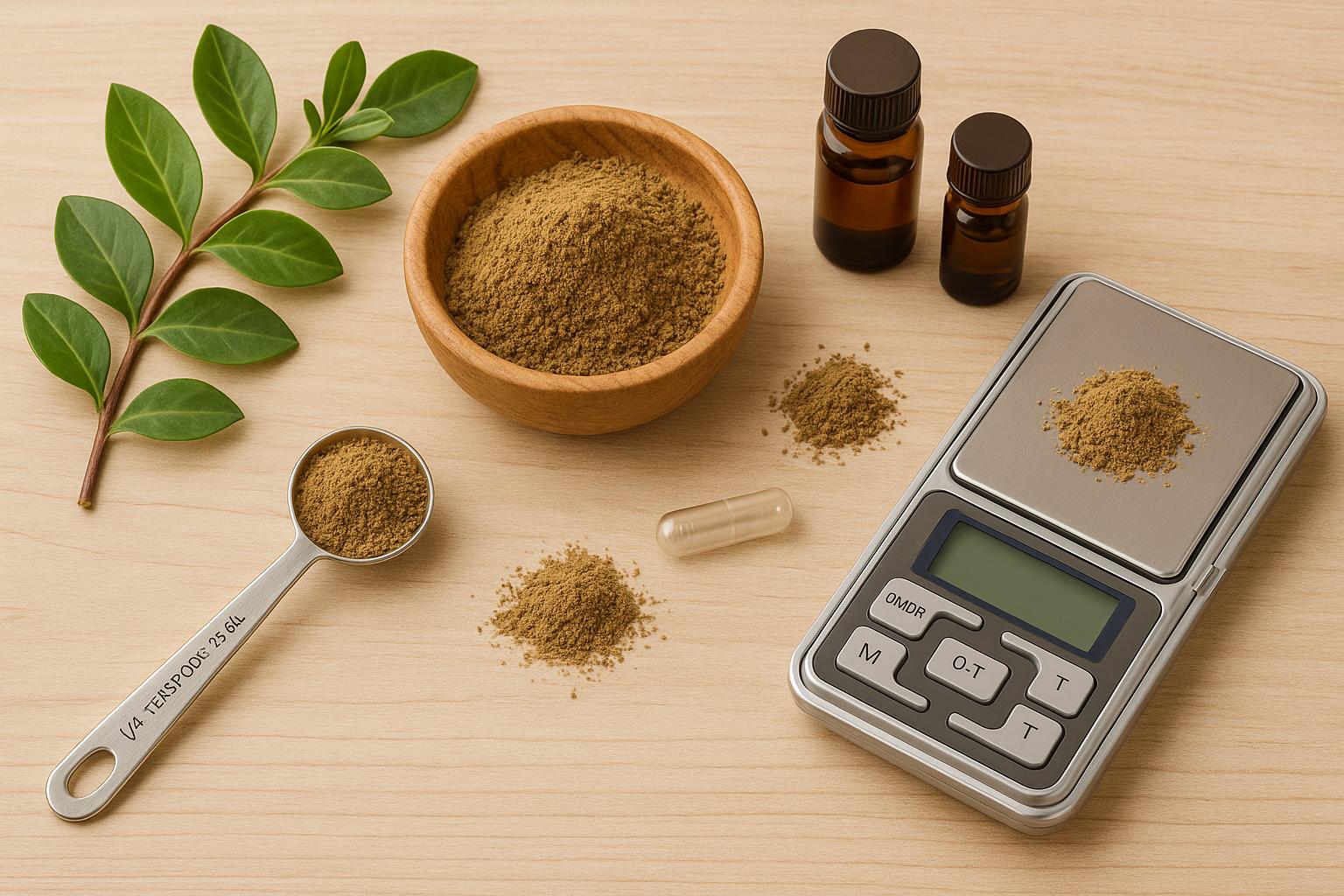
I'll be honest—the first time I tried kanna, I had no idea what I was doing. I'd read a handful of forum posts, skimmed a few wellness blogs, and figured I had enough to go on. I didn't. I took too much, felt jittery and overstimulated, and spent the next hour wondering why anyone raved about this stuff.
That experience sent me down a proper research rabbit hole. And what I found completely changed my relationship with this fascinating plant. Now, a couple of years later, kanna is one of the most useful tools in my wellness routine—but only because I learned how to use it correctly.
If you're curious about kanna and want to avoid the mistakes I made, this post is for you.
Table of Contents
What kanna actually is (and why it's having a moment)
Kanna, known scientifically as Sceletium tortuosum, is a succulent plant native to South Africa. Indigenous Khoikhoi and San peoples have used it for centuries—chewing the fermented plant to lift mood, ease stress, and sharpen focus during long hunts or difficult days.
Today, it's gaining traction in Western wellness circles for many of the same reasons. Researchers believe kanna works primarily by inhibiting the reuptake of serotonin and inhibiting the enzyme PDE4, which together contribute to its mood-lifting and anxiolytic effects. It's not a pharmaceutical, and it's not a psychedelic—it sits somewhere in the category of adaptogens and mild mood-support botanicals.
The form it comes in matters a lot, though. Whole dried plant, tinctures, capsules, powders, and concentrated extracts all behave differently. Understanding those differences is the foundation of dosing it well.
Why the extract form changes everything
Raw dried kanna is relatively mild. Most people chew or brew it as a tea, and the effects are gentle and gradual. Extracts are a different story entirely.
Kanna extract is concentrated—meaning the active alkaloids (primarily mesembrine and mesembrenone) are present in much higher amounts per gram than in the raw plant. A 10:1 extract, for example, is roughly ten times more potent than the same weight of whole herb. This is where a lot of beginners get into trouble. They assume that because kanna is a natural plant, they can take it like a supplement and adjust from there. What they don't account for is just how much concentration changes the equation.
This is also why dosing guidelines that work for raw kanna are essentially useless when you're working with extract.
Starting low: the rule I wish someone had told me earlier
The single most important principle when dosing kanna extract is to start far lower than you think you need to. For a 10:1 extract, most experienced users suggest beginning somewhere between 25–50mg. For higher-concentration extracts (25:1 or above), even 10–15mg can be a meaningful dose. These numbers sound tiny—and they are. That's the point.
Kanna's effects tend to build subtly. Unlike some substances that hit you in a wave, kanna often sneaks up on you. The mood lift arrives quietly, the edge comes off anxiety, focus sharpens. If you're not paying attention, you might not even notice it working—until you realize you've been calm and clear-headed for two hours.
Taking too much doesn't make the good effects stronger. It makes them uncomfortable. At higher doses, some people experience nausea, headaches, or a kind of wired restlessness that isn't pleasant. The sweet spot is usually a modest dose, not a large one.
How you take it changes what you feel
The method of consumption shapes the experience just as much as the dose does.
Sublingual (under the tongue) is one of the most efficient routes. The mucous membranes absorb the alkaloids directly into the bloodstream, which means faster onset—usually 15–30 minutes—and often a cleaner, more pronounced effect. This is a popular method for extract powders.
Oral ingestion (capsules or mixing into a drink) produces a slower, softer onset—typically 45–90 minutes. The effects are more diffuse, which some people prefer, especially during the workday when they don't want anything too noticeable.
Insufflation (snorting) is mentioned in some communities and does produce rapid onset, but it's harsh on the nasal passages and not something I'd recommend, especially for extracts.
If you're new to kanna extract, I'd suggest starting with the oral route simply because the slower onset gives you more time to assess how you're feeling before the full effect arrives.
Timing and context: when kanna works best
Kanna isn't an all-day supplement for most people. It works best with intentionality—taken before a specific situation where you want its benefits.
Many people find it genuinely useful before social events where anxiety tends to flare, or during focused work sessions that require sustained concentration. Others use it as a pre-meditation tool, finding that it quiets mental chatter without making them drowsy.
What I've found personally is that context shapes the experience. Taken in a calm environment, kanna feels grounding and clear. Taken in a chaotic or stressful situation, it can still take the edge off, but the quality of the experience is different.
One important timing note: kanna appears to interact with serotonergic medications, including SSRIs and MAOIs. If you're taking any medication that affects serotonin, please speak with a doctor before experimenting with kanna. This isn't a throwaway disclaimer—it's a genuine safety concern.
How often is too often?
Tolerance and dependence are real considerations with kanna, even though it's a plant. Regular daily use tends to blunt the effects fairly quickly. Most experienced kanna users cycle it—using it two to three times per week at most, with longer breaks built in. Some people use it more occasionally, reserving it for specific situations rather than as a daily ritual.
Anecdotally, frequent high-dose use over extended periods has been associated with some withdrawal-like symptoms when stopped—mostly mood dips and fatigue. These are generally mild and short-lived, but they're worth knowing about. The good news is that occasional, moderate use seems to carry a low risk profile for most healthy adults. The key word there is "moderate."
A few things worth keeping in mind
Before I wrap up, a few practical notes that don't fit neatly elsewhere:
- Set isn't always first, but it matters. Your mood going into a kanna session will influence what you get out of it. This isn't unique to kanna—it applies to most psychoactive plants—but it's worth noting.
- Quality varies wildly. The kanna extract market isn't tightly regulated, and product quality differs significantly between suppliers. Look for vendors who provide third-party lab testing and clear alkaloid content information. A product that just says "kanna extract" without any further detail is a red flag.
- More is rarely better. I keep coming back to this because it's the mistake most people make. With kanna extract, the goal is enhancement—a subtle lift, a quiet calm—not an overwhelming effect. If you're chasing something dramatic, you're likely going to be disappointed and uncomfortable.
A few questions I hear often
Can I take kanna extract every day?
Most experienced users advise against it. Daily use leads to tolerance quickly, and the effects diminish. Cycling—using it a few times a week with regular breaks—tends to preserve its effectiveness.
Is kanna extract legal?
In most countries, yes. Kanna is legal in the US, UK, Canada, and Australia, among others. However, regulations change, and it's worth checking the current status in your specific location before purchasing.
What's the difference between mesembrine and mesembrenone?
Both are key alkaloids in kanna, but they have slightly different effects. Mesembrine is considered primarily responsible for the serotonin-reuptake inhibition (mood lift, anxiety reduction), while mesembrenone is more associated with PDE4 inhibition (cognitive effects, focus). Different kanna extracts may emphasize different alkaloid profiles, which is why two products from different vendors can feel noticeably different even at the same dose.
What should I do if I take too much?
Stay calm, find a quiet space, and don't take more. Hydrate, rest, and give it time. The effects are temporary and will pass. If you experience anything alarming, seek medical attention.
