Table of Contents
Introduction: Why LinkedIn Data Matters in B2B
LinkedIn is the world’s largest professional network, home to over 1 billion members, including executives, hiring managers, founders, and specialists across every industry. For B2B sales teams, recruiters, and partnership developers, this platform isn’t just a social network; it’s a goldmine of actionable intelligence. Accurate, up-to-date professional data enables targeted outreach, smarter hiring, and deeper market insights. Yet manually collecting this information, copying names, titles, and company details one by one, is slow, error-prone, and unsustainable at scale. This is where data scraping emerges not as a shortcut, but as a strategic productivity solution—when done ethically and responsibly.
What Does It Mean to Scrape LinkedIn Data?
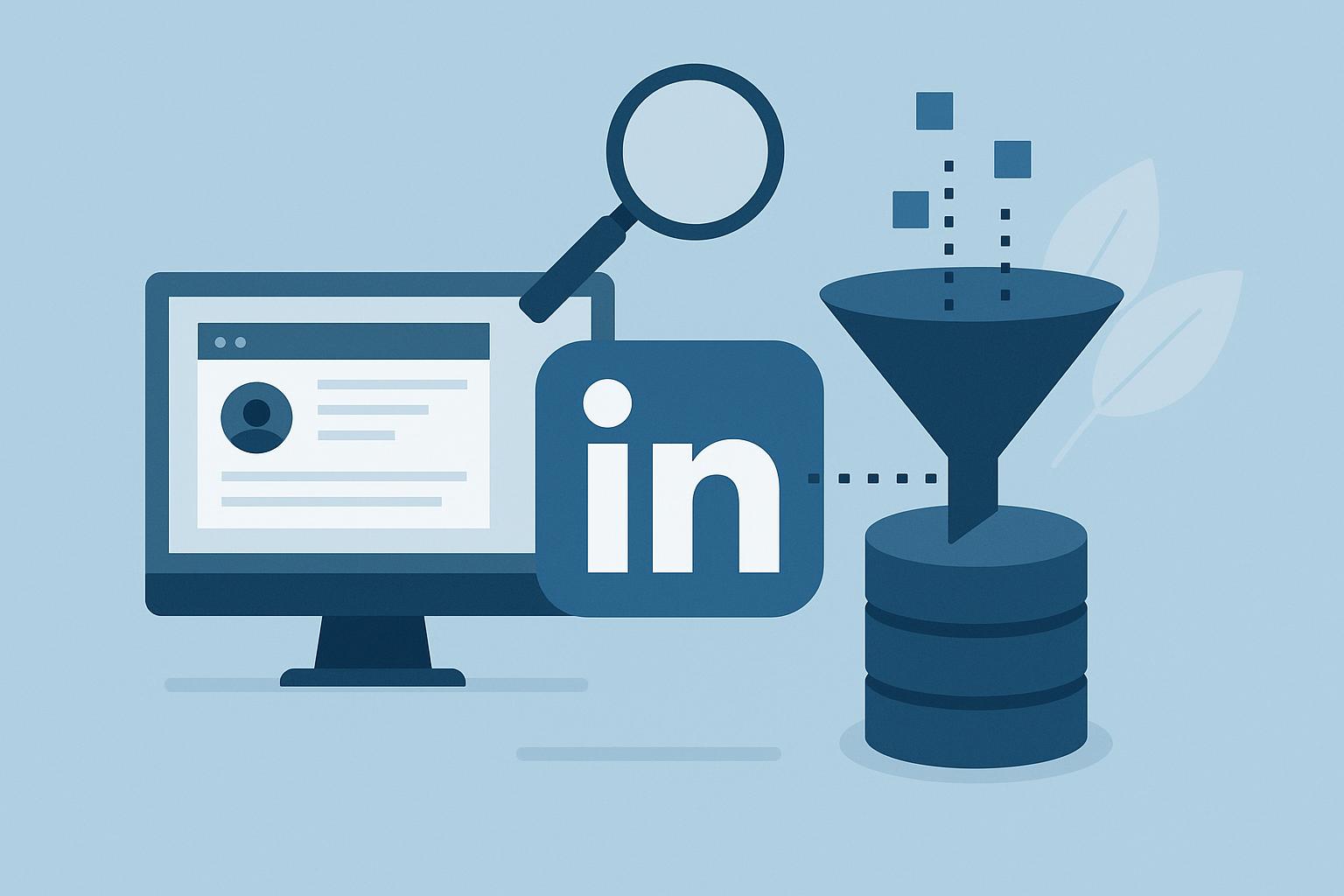
Data scraping refers to the automated or semi-automated extraction of publicly available information from websites. On LinkedIn, this includes profile details like name, job title, company, location, and industry—all of which are visible to logged-in users under normal browsing conditions. Importantly, scraping should only target public data that any user could access manually; it must never involve bypassing login walls, accessing private messages, or violating terms of service.
While manual copy-paste is technically “scraping,” modern tools automate this process with precision and speed. However, automation brings responsibility: ethical scraping respects rate limits, avoids disruptive behavior, and aligns with both platform policies and data privacy regulations like GDPR or CCPA.
Why Businesses Scrape LinkedIn Data
1. Lead Generation
Sales teams use scraped data to build lists of decision-makers at target accounts—filtering by role (e.g., “Head of Marketing”), company size, or tech stack. This enables hyper-relevant outreach that converts better than generic cold emails.
2. Recruitment
Talent acquisition professionals source passive candidates by skills, experience, or past employers. Instead of waiting for applicants, they proactively identify top performers—even those not actively job hunting.
3. Market Research
Analysts track hiring trends, executive movements, or competitor team structures to anticipate market shifts. For example, a surge in AI hires at a rival firm might signal a new product direction.
Manual vs Automated LinkedIn Data Collection
| Method | Pros | Cons |
| Copy-paste | Free, no tools needed | Extremely slow, high error rate, not scalable |
| Browser extensions | Easy to install, real-time extraction | Limited data depth, often unstable, may violate terms |
| Dedicated automation tools | Structured output, CRM-ready, batch processing | Requires investment, must be used responsibly |
Automation shines when volume and accuracy matter—but only if used within ethical boundaries.
Choosing the Right Tool: What to Look For
When evaluating LinkedIn data extraction tools, prioritize:
- Compliance: Tools that mimic human behavior and respect LinkedIn’s activity limits
- Data accuracy: Clean, validated fields (e.g., verified email formats, normalized job titles)
- CRM integration: Direct sync with Salesforce, HubSpot, or Outreach
- Export flexibility: CSV, Excel, or API options
- Ease of use: Intuitive interface, no coding required
Avoid tools that promise “unlimited” scraping or require you to input your LinkedIn password—these often trigger account restrictions.
A Practical Way to Scrape LinkedIn Data
For teams seeking efficiency without compromising ethics, a practical way to scrape LinkedIn data is through purpose-built automation platforms designed specifically for professional networks. These tools allow you to:
- Extract structured prospect profiles (name, title, company, location)
- Enrich data with inferred emails or social links
- Automate workflows like saving leads to Google Sheets or triggering outreach sequences
- Operate within safe usage thresholds to avoid detection
The result? Hours of manual work reduced to minutes, freeing up time for high-value activities like personalization and relationship-building.
Best Practices for Scraping LinkedIn Safely
- Go slow: Limit requests to 100–200 profiles per day per account
- Use secondary accounts: Avoid scraping from your primary business profile
- Focus on relevance: Target specific roles or industries instead of mass harvesting
- Stay public: Never attempt to access non-public data
- Review terms: Understand LinkedIn’s User Agreement and Automation Policy
Responsible scraping isn’t about hiding—it’s about aligning automation with platform norms.
How to Turn Scraped Data Into Results
Raw data alone doesn’t drive growth. To maximize impact:
- Import into your CRM and deduplicate records
- Segment prospects by industry, seniority, or pain point
- Personalize outreach using role-specific messaging
- Track engagement to refine targeting over time
For example, a SaaS company might scrape IT directors at mid-sized fintech firms, then send tailored case studies showing ROI in their sector.
Common Mistakes to Avoid
- Scraping too aggressively: Triggers CAPTCHAs or temporary bans
- Poor targeting: Wasting effort on irrelevant contacts
- Ignoring data hygiene: Duplicate or outdated entries hurt deliverability
- Overlooking compliance: Failing to honor opt-outs or privacy laws
Remember: quality and relevance always trump quantity.
Conclusion: Data as a Growth Lever
LinkedIn data, when extracted thoughtfully, becomes a powerful lever for business growth. It transforms guesswork into strategy, noise into signal, and outreach into relationships. Automation tools amplify this advantage—but only when used with discipline, respect for platform rules, and a focus on value-driven engagement. By combining the right technology with responsible practices, teams can unlock scalable, sustainable growth without compromising integrity. In the world of B2B, that’s not just smart—it’s essential.