


Recent announcements about vaccine success raised hopes of a return to “normal,” but the business world is likely to remain unstable for a while yet.
Massive job cuts and spikes in unemployment left consumers with little disposable cash and businesses clamping down on their expenses. Fears of infection and waves of restrictions and lockdowns made it tough for most businesses to remain on an even keel.
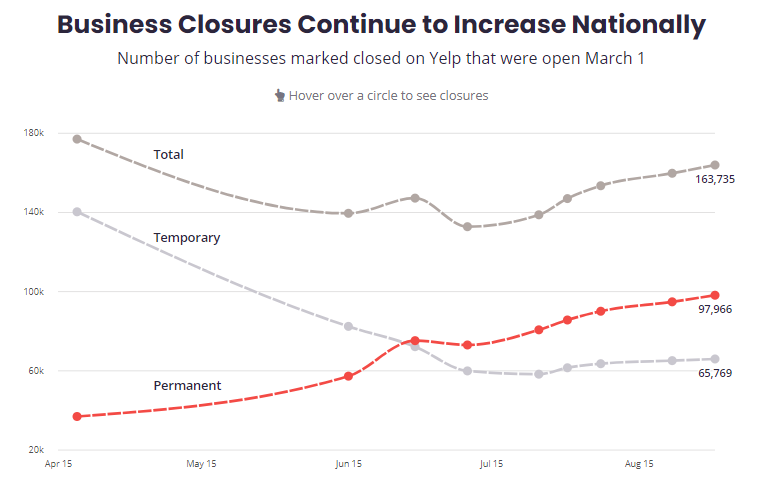
Companies of all sizes have already closed their doors for good. According to Yelp, 163,735 businesses in the US were either permanently or temporarily closed in September, a rise of 23% since July. Additionally, 60% of businesses which closed earlier in the pandemic have since shut their doors for good, totalling 97,966.

Other businesses are trying to ride out the storm, but companies that remain open are seeing large and sustained drops in revenue.
Even the few enterprises that benefited from the pandemic are struggling to remain stable on the bucking horse of the economy. You need a whole-organization approach if you’re to ensure your business survives and thrives.
HR people have been working flat out for months to keep employees safe, maintain communication, manage layoffs and reductions in work hours, and uphold company morale and values, but their impact can go even further. The right HR practices can help stabilize and improve your business for the long term.
Table of Contents
Put the “Human” back into HR
It’s easy to get distracted by shiny tech or new products, but your employees are your most valuable asset. Holding on to them pays dividends for long-term stability, even if it costs you in the short-term in salaries and benefits. There’s no replacement for the knowledge and expertise of experienced employees.
Having to rehire new talent after the pandemic ends (and with 3 vaccines so far, the end is in sight) will be disruptive for your business, plus you’ll waste money on hiring and onboarding costs.
You’ll find it easier to manage the strain of retaining employees if you improve your HR. This could be the moment to outsource your HR procedures, renegotiate your HR contract, or overhaul your tech stack for better automated tools that improve HR processes and make them more user-friendly. streamlined, and transparent.
Support self-serve HR processes
Whether HR is outsourced or in-house, you need to support self-service activities for employees. It’s beyond time to use online automated tools and self-serve portals so that employees can independently update data, check on remaining vacation days, enter work hours, and more.
The issue is even more imperative with the switch to remote work, which isn’t likely to go away any time soon. Self-serve tools make HR processing far simpler and faster, and increases transparency into HR in a way that boosts employee morale.
Improve HR Data Analytics
Now more than ever, your business needs accurate data to shore up decision-making. You need to know exactly who is available at any given moment, which employees are on sick leave, who has been let go due to budget constraints, etc. so that you can plan business strategies accordingly.
Efficient outsourced HR teams and HR software can help speed up data gathering and provide analytical insights into your current business situation. With better data, you can map both longstanding and newly-created skills gaps, strengths, and weaknesses among your workforce, and assign tasks and responsibilities in the most efficient way possible.
It’s especially important in light of the rapid digital transformation that many enterprises rushed through during the pandemic, which may have revealed new areas that need to be addressed.
Strengthen Company Culture
Swingeing staff cuts can leave the remaining employees nervous, rattled, and uncertain, even if you made them in the fairest way possible and everyone understands why they were necessary. There’s no better time to remind employees about your company’s values and vision, to ensure that everyone feels part of the greater whole and committed to its success.
When employees are engaged, they’re more inclined to endure the short term in exchange for the long term. The longer the pandemic lasts, the more jaded and frustrated people will become. You need your employees more motivated than ever, so they’ll pull together on behalf of the entire business.
Improve Communication at Every Level
With so many people still working from home and the situation changing frequently, you need to communicate clearly and well. Edelman research found that people look to employers for a range of virus-related information, as well as updates about colleagues who tested COVID-positive and the organization’s ongoing ability to operate.
Use HR channels to be honest about the challenges ahead and what you expect from employees. Good communication fosters a culture of trust, which has a positive effect on performance and productivity. “If you assume your employees work hard, care about the company’s success, and have integrity, they are likely to act accordingly (as long as they know what’s expected of them).” says Sue Bingham, founder and principal of HPWP Group, writing in the Harvard Business Review.
At the same time, make it clear that you prioritize employees’ safety and wellbeing, and open the conversation around mental health. Businesses are judged on how they treat their workers, so investment into employee satisfaction will pay dividends.
Shore up Company-wide Skillsets
In 2019, fewer than half of all HR managers felt confident that employees had the necessary skills for a digitized workplace, but they comforted themselves that they had time to correct the issue. A year later, time has run out.
Enterprises rushed through a digital transformation, sometimes pivoting key product offerings online simultaneously. HR departments should be using employee training and onboarding platforms to retrain staff to fill skills gaps, adopt new digital tools, and meet the needs of the digital hour. Employee education saves time and money on hiring new talent, and makes your company more agile.
HR could be the Cornerstone of Your Business Stability
During chaotic times, employees look to your HR department for support and guidance. When your HR teams show human concern and communicate clearly, provide self-service tools, strengthen company culture, plug skills gaps, and share useful HR data, you can retain more experienced staff and improve stability across the organization, for long-term survival and business recovery.