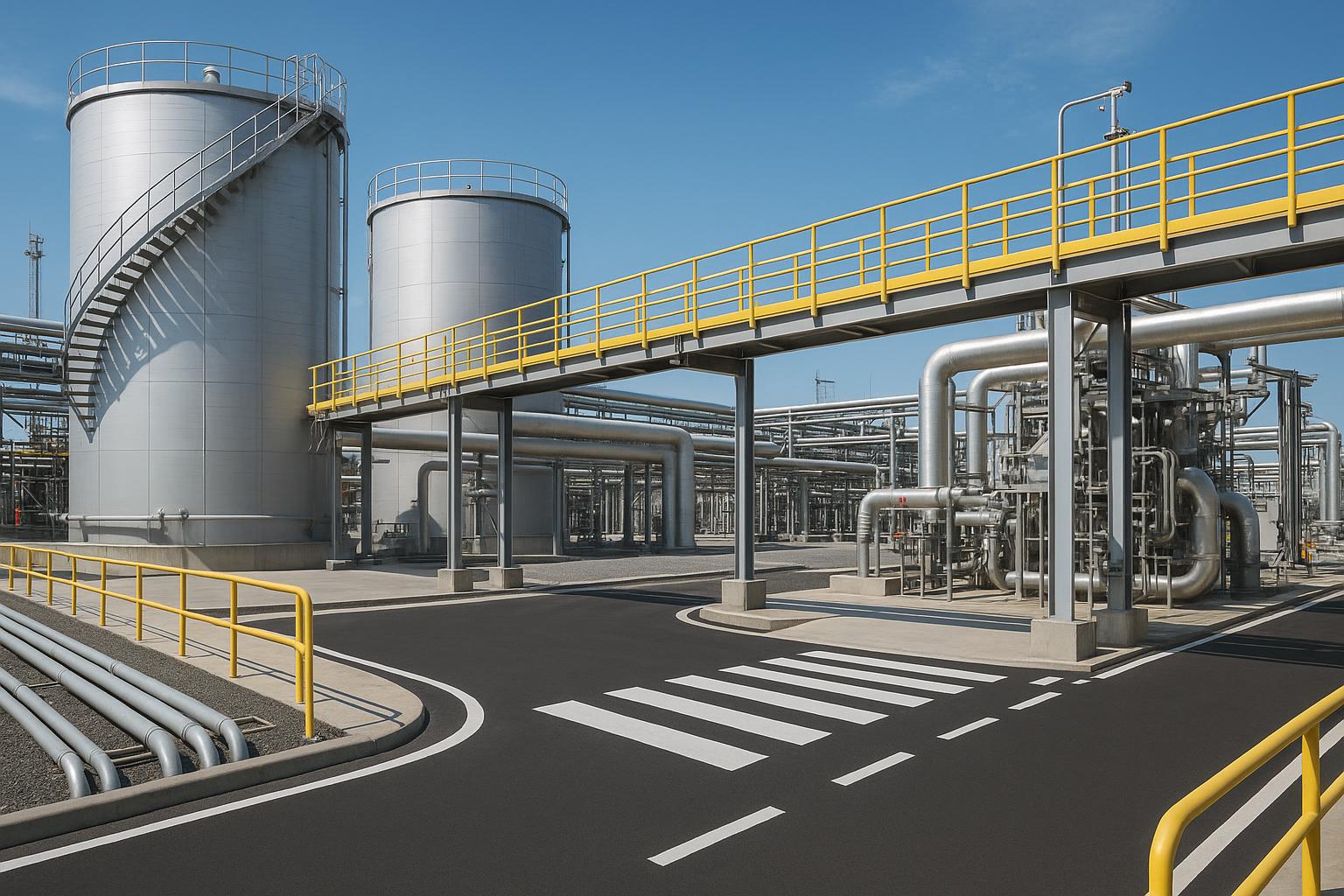
On a busy industrial site, safety often comes down to the way the environment itself has been designed. Employees may be working around machinery, moving vehicles, pipework, changes in floor level and restricted access points, sometimes all within the same area. When the infrastructure supports safe movement and sensible working practices, many everyday risks become much easier to manage.
The good news is that improving site safety does not always require a complete redesign. Targeted infrastructure upgrades can make a significant difference while allowing operations to continue with minimal disruption.
Creating Safer Routes Around the Site
One of the simplest ways to reduce risk is to make it clear where people should walk and where vehicles or equipment should operate. Clearly defined pedestrian routes, physical barriers and visible markings can help prevent workers from accidentally entering higher-risk areas.
Walkways should also be kept clear, well maintained and wide enough for the level of traffic they receive. Where employees regularly need to cross busy operational zones, additional protection such as guardrails or designated crossing points can provide another layer of safety.
Improving Access Over Obstacles
Industrial environments often contain pipes, cables, ducting and other equipment that cannot easily be relocated. Without suitable infrastructure, workers may be tempted to step over these obstacles or take awkward alternative routes.
Purpose-built access solutions can provide a much safer option. For example, businesses can explore solutions from keesystems.com when looking at ways to help employees move safely over low-level obstructions and equipment. Small additions such as step-over platforms can remove the need for risky shortcuts and make frequently used routes more practical.
Upgrading Lighting and Visibility
Poor visibility can turn an otherwise manageable hazard into a serious accident risk. Industrial sites should have suitable lighting around walkways, stairs, loading areas and machinery, particularly in locations that operate during early mornings, evenings or overnight shifts.
Lighting should also be reviewed whenever the layout of a site changes. New equipment, storage systems or partitions can create shadows and blind spots that were not previously an issue.
Protecting Changes in Height
Falls remain a major concern across many industrial environments. Platforms, mezzanines, raised work areas and loading zones all require careful consideration.
Installing appropriate handrails, guardrails and edge protection can help prevent accidental falls, while properly designed stairs and access points make movement between different levels more secure. Even relatively small changes in height should be assessed if workers are regularly passing through the area.
Making Maintenance Easier and Safer
Infrastructure should not only support day-to-day operations. It should also allow maintenance teams to reach equipment without unnecessary risk.
Safe access platforms, designated maintenance routes and suitable barriers can make routine inspections and repairs more straightforward. When equipment is difficult to reach, there is a greater chance that workers will improvise, potentially using unsuitable ladders or climbing over obstacles.
Building Safety into Everyday Operations
The safest industrial sites are often those where good infrastructure quietly supports every task. Workers should not have to think about how to navigate an obstacle, avoid a vehicle route or reach a piece of equipment safely. The environment should make the safest option the easiest one.
By regularly reviewing access, lighting, pedestrian movement, edge protection and maintenance areas, industrial businesses can identify practical improvements before problems develop. Small infrastructure investments made today can help prevent accidents, reduce disruption and create a workplace that operates more confidently and efficiently over the long term.