

From busy Lake of the Ozarks weekends to quiet mornings on Table Rock Lake, the Mississippi River, or a local fishing lake, Missouri boaters benefit from a dependable pre-launch routine. Whether you are comparing boats for sale in Missouri or preparing the vessel already in your driveway, a practical checklist can help prevent avoidable delays, equipment trouble, and stressful moments at the ramp.
Boating in Missouri can involve changing weather, crowded coves, shallow areas, floating debris, and long stretches between fuel stops or sheltered docks. A few minutes of preparation before leaving home gives the operator more time to focus on passengers, navigation, and enjoying the day once the boat is underway.
Table of Contents
Key Takeaways
- A consistent checklist can reveal problems before the boat reaches the launch ramp.
- Safety gear should be accessible, serviceable, and sized for every passenger.
- Boat care includes the hull, engine, battery, trailer, fuel system, and electronics.
- Good ramp etiquette keeps Missouri launch areas safer and less congested.
- Weather planning, a float plan, and a passenger briefing belong in every outing.
Table of Contents
- Why a Boat Checklist Matters
- What to Check Before Leaving Home
- How to Review Safety Gear
- How to Inspect the Engine and Hull
- Trailer and Launch-Ramp Checks
- What Passengers Should Know
- Simple Habits for Safer Boating
- A Basic Boat Care Schedule
- Common Mistakes to Avoid
- Final Check Before Departure
Why a Boat Checklist Matters
A boat checklist is not about making a lake day feel like work. It is a repeatable habit that catches small issues before the boat is even on the water. A low battery, a loose trailer strap, a missing drain plug, a damaged life jacket, or a fuel smell is much easier to address in the driveway than after launching.
For Missouri families, anglers, and weekend cruisers, the checklist also creates consistency when different people help load the boat. It gives everyone a clear order of operations and reduces the chance that essential tasks get skipped during an early start or a busy holiday weekend.
What to Check Before Leaving Home
Start with paperwork, weather, route planning, and supplies. Keep registration information onboard as required, verify your destination and launch location, and tell a trusted person where you expect to boat and when you plan to return. Review current Missouri equipment and documentation requirements before heading out, especially when using a new boat or visiting unfamiliar water.
If you are considering selling my boat, a thorough pre-trip inspection can also help identify maintenance items worth addressing before listing it. Clean records, working equipment, and a well-maintained trailer make it easier to understand the vessel’s condition.
- Check the forecast, wind, visibility, and expected daylight.
- Plan the route, fuel needs, and a reasonable turnaround time.
- Pack drinking water, sunscreen, medications, food, and a first-aid kit.
- Charge phones and communication devices before departure.
- Bring dock lines, fenders, towels, and dry storage for valuables.
How to Review Safety Gear
Safety equipment should be inspected regularly, not simply stored onboard and forgotten. Count life jackets, confirm they fit the people expected to ride them, and look for damaged straps, broken buckles, mildew, or waterlogged material. Keep them easy to reach rather than buried beneath coolers or locked inside a compartment.
Also inspect the throwable flotation device (when required), fire extinguisher, horn or whistle, navigation lights, flashlight, bilge pump, anchor, and first-aid kit. Requirements differ by vessel and activity, so confirm that your boat is equipped for the waters and conditions you intend to use.
How to Inspect the Engine and Hull
Engine and Fuel System
Before launching, look for fuel, oil, coolant, or water leaks. Check fluid levels according to the owner’s manual, inspect visible hoses and wiring, and examine the propeller for dents, fishing line, or other damage. After starting the engine, pay attention to warning lights, unusual sounds, and normal cooling-water flow.
Hull and Drainage
Walk around the hull and inspect for cracks, fresh impact marks, loose fittings, or damage around the transom and cleats. Check the bilge for standing water or unusual odors, secure hatches and lockers, and confirm the drain plug is installed before backing toward the water. Major leaks, steering trouble, overheating, or electrical faults should be evaluated by a qualified marine technician.
Trailer and Launch-Ramp Checks
Many boating problems begin on the road rather than on the water. Inspect trailer tires for proper inflation, cracking, and uneven wear. Test lights, examine the coupler and safety chains, verify the winch works properly, and make sure the bow strap and transom straps are secure before travel.
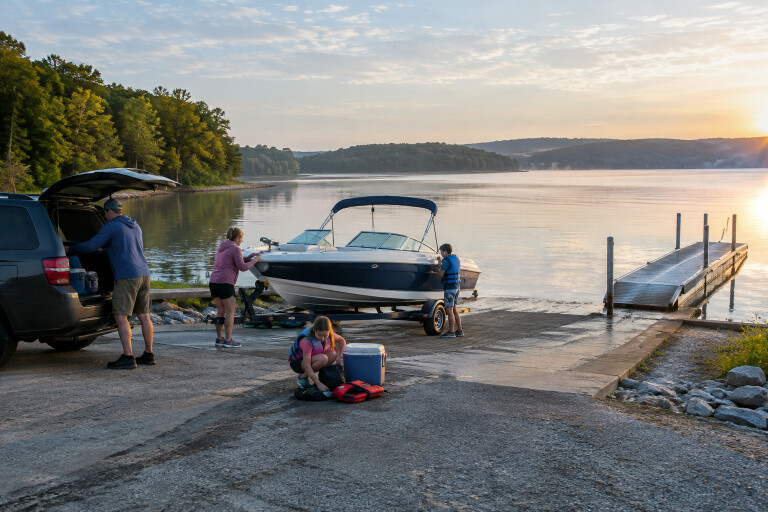
At the ramp, prepare as much as possible before entering the launch lane. Load personal items, remove covers when appropriate, install the drain plug, stage dock lines and fenders, and decide who will handle the vehicle and who will manage the boat. This helps keep traffic moving at popular Missouri ramps.
What Passengers Should Know
A short safety briefing takes little time and can make a meaningful difference if conditions change. Show passengers where life jackets, the fire extinguisher, first-aid kit, anchor, and communication device are located. Children should know where they may sit, when they need to stay seated, and why they should keep hands and feet inside the boat while docking.
Do not assume guests know how your boat works. A family may understand that life jackets are onboard, yet still lose time if no one knows which locker opens, which jacket fits a child, or how to call for help.
Simple Habits for Safer Boating
Once underway, maintain a careful lookout and adjust speed to the conditions around you. Slow down near docks, launch ramps, swimmers, coves, blind turns, paddlecraft, and fishing boats. Missouri waters can become busy quickly, particularly on weekends, during tournaments, and at holiday gatherings.
- Keep the operator free from distractions during close maneuvering.
- Watch for changing clouds, wind, waves, current, and visibility.
- Give smaller craft and swimmers plenty of space.
- Use navigation electronics as support, not as a substitute for observation.
- Avoid alcohol or drugs when operating the boat.
A Basic Boat Care Schedule
Before every outing, check fuel, fluids, steering, controls, batteries, lights, safety gear, bilge pumps, and the propeller. After each trip, remove trash, fishing line, weeds, and standing water. Rinse the boat and trailer when conditions call for it, allow damp compartments to dry, and record unusual sounds or warning lights.
Monthly or seasonally, inspect tires, wheel bearings, electrical connections, hoses, belts, batteries, and safety-equipment expiration dates. Follow the maintenance intervals in the boat, engine, and trailer manuals rather than relying on a generic schedule.
Common Mistakes to Avoid
- Launching without confirming the drain plug is installed.
- Ignoring even a small fuel smell or visible leak.
- Storing life jackets where passengers cannot quickly reach them.
- Skipping a weather check because the sky appears clear at home.
- Loading coolers and gear only after reaching the ramp.
- Towing with worn tires, weak straps, or poorly maintained bearings.
- Assuming every guest understands basic boat safety.
Final Check Before Departure
Use a final five-minute walk-around before pulling away. Confirm the drain plug, fuel level, battery power, safety gear, trailer connections, weather outlook, and seating plan. A calm, consistent routine helps Missouri boat owners spend less time solving preventable problems and more time enjoying the water with confidence.