

Ralph Byer is a Florida-based wealth management advisor and managing director with Merrill Lynch who has built a career focused on long-term financial planning, risk management, and wealth preservation. As head of the Byer Wealth Management Group, he works with families and businesses on matters involving retirement income, tax minimization, philanthropy, and legacy planning. Ralph Byer is also active in charitable and community organizations, supporting causes connected to family care, public service, and cancer research. His professional work often centers on helping clients prepare for uncertainty and manage long-term risks, themes that also connect to personal preparedness during major events such as hurricanes. Alongside his work in financial services, he maintains interests in automobile restoration, motorsports, and woodworking, while remaining engaged in philanthropic initiatives throughout his local community in Plantation, Florida.
Table of Contents
Lessons From a Family’s Survival During Hurricane Sandy
Hurricanes are powerful storm systems that develop over warm ocean waters and feature sustained winds exceeding 74 mph, storm surges, and torrential rain, such as Hurricane Sandy. Proper preparedness helps individuals safely weather hurricanes, with the degree of precaution depending on the location and the hazards posed by the property.
Coastal, water-adjacent, and low-lying zones are particularly vulnerable to severe flooding. Those near the eye of the storm often experience roof damage and downed trees, as the winds are fiercest there.
Since people experience hurricanes differently depending on where they live, their experiences offer practical insights others can use to prepare for the next big one. For example, the National Weather Service website featured Bill and his family, who live on a wooded property near New York’s Delaware River. When Hurricane Sandy made landfall in November 2012, it caught them by surprise.
Bill felt his family was relatively safe because their location was two hours inland, with an elevation of over 1,000 feet above sea level. As Hurricane Sandy approached, the family decided to stay in place. Their supplies included an aboveground storage tank with 625-gallon water capacity, a non-electric water purification system, and canoeing “go-bags.” They also prepared a saddle bag for their dog, filled with food and other supplies.
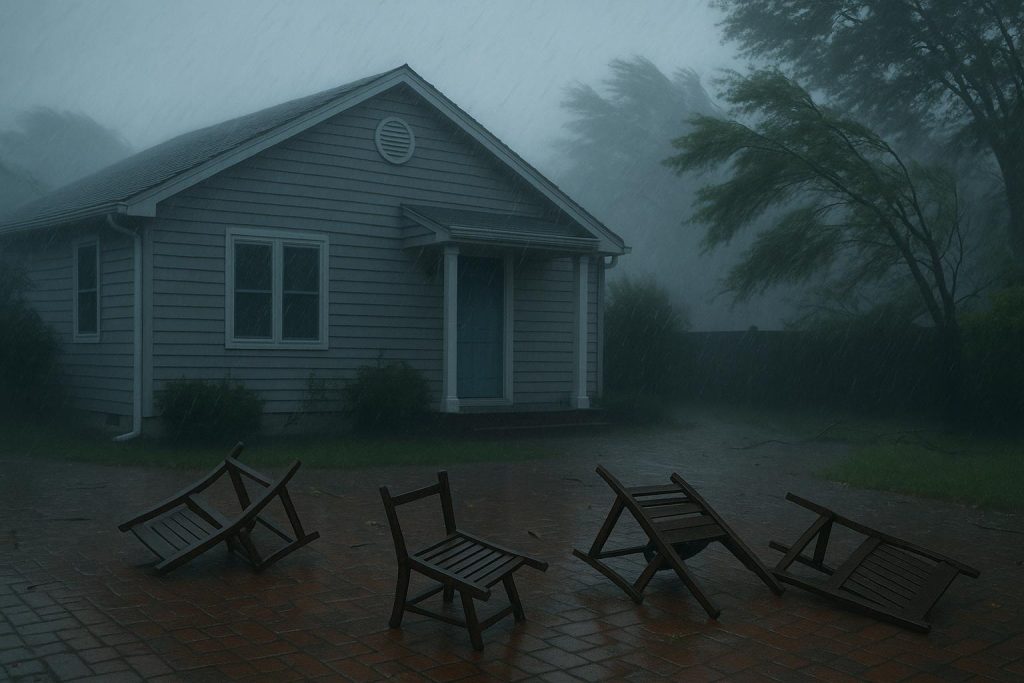
As Hurricane Sandy became more severe, it progressed. As the storm unfolded, Bill described feeling “as bad as it could get” multiple times, only for the wind to strengthen. The effects were violent and sudden, with numerous trees knocked down and power lines taken down with them. Multiple mature conifers fell onto the roof, partly crushing it. On top of that, the circuit breaker box exploded. The scariest moment came when a tree crashed on the roof directly above where Bill’s daughter was watching the storm from her bedroom window. He credits an old garden trellis crafted from massive timbers for absorbing much of the force of the falling tree and likely saving her life.
These incidents, piled one after another, led the parents to shelter with their kids in the very center of the small house, as distant from the roof and windows as possible. They used battery-powered LED lanterns for light and successfully sheltered in place. The family thus resiliently weathered what could have been a tragic experience.
After the storm had blown itself out, the family realized that simply leaving the house would be a dangerous undertaking. Many power lines posed a danger and debris piled everywhere, blocking the roads at multiple points. They checked in with neighbors to offer assistance, then made the best of a bad situation by sheltering in place. Their water tank still held its full load, and the countertop purification system worked well.
Bill’s take-home from the experience is that it pays to make a checklist of things to do when hurricanes hit. Planning should occur before a storm hits, not during the moment of panic. His family created a plan of what to do if separated: where to meet and friends that they could call to coordinate. They also invested in emergency backup supplies, such as a propane- or gasoline-powered generator. However, gas became scarce as the authorities rationed it in the weeks after Hurricane Sandy hit. In addition, they prepared two emergency power sources: a battery bank and deep-cycle batteries that connect to a power inverter.
Finally, the family prepared basic clothing and food supplies. They placed jeans and shoes beside the bed so they could evacuate the house in less than five minutes. They also maintain a hoard of nonperishable foods, including canned foods, MREs, and freeze-dried camping meals. The family has doubled the garden footprint and maintains an AM/FM and weather radio that runs off various power sources. All these precautions combine to provide a sense of security and control should another massive hurricane hit.
About Ralph Byer
Ralph Byer is a managing director and wealth management advisor with Merrill Lynch and head of the Byer Wealth Management Group. His work focuses on retirement income, wealth preservation, tax minimization, philanthropy, and risk management planning for families and businesses. He has received recognition from Forbes and Barron’s for his work in financial advising. Outside of his professional responsibilities, he supports charitable organizations connected to family services, public safety, and cancer research.