

Robert Rene Fiallo brings more than three decades of banking, advisory, and real estate experience to discussions about how financial institutions are adapting to faster, more technology-driven payment systems. As chairman and CEO of Bank Advisors, LLC, he has supported mergers, acquisitions, and a bank startup, while also working to launch US Trust International Bank in the U.S. Virgin Islands as a digital-first private bank focused on cross-border financial activity. His background includes executive leadership roles at Fidelity & Trust Bank, F&M Bank, Sterling Capital, and other financial organizations. That experience, spanning bank formation, regulatory oversight, strategic growth, institutional operations, and payment-related infrastructure planning, provides relevant context for examining how banks can better support fintech partnerships, payment innovation, modern financial infrastructure, and the practical demands of digital financial services.
Table of Contents
Banking Built for the Digital Payments Era
The financial world has changed rapidly over the past decade, driven by the rise of fintech companies, digital wallets, and new payment platforms. Consumers and businesses now expect instant transactions, seamless integrations, and flexible financial tools that fit into their daily lives. While innovation has accelerated, many traditional banks were not originally designed to support this kind of ecosystem. Their processes were built for a different era, focused on branch banking, manual workflows, and slower transaction cycles.
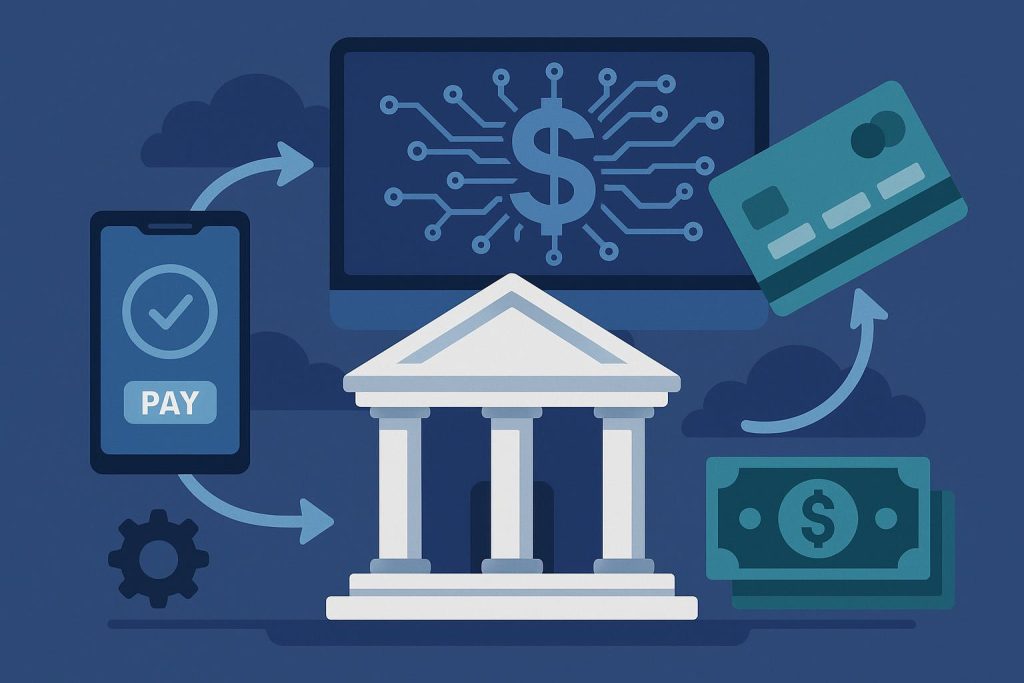
As a result, fintech companies often face challenges when trying to access the regulated banking infrastructure they need to operate. Behind every digital wallet, payment app, or card program is a licensed financial institution providing the underlying services. These relationships, often referred to as banking rails, are essential for compliance, security, and access to payment networks. However, legacy systems can make integration complex, time-consuming, and costly.
A new generation of financial institutions is emerging to address this gap by building their platforms specifically for the fintech and payments economy. Instead of retrofitting older systems, these banks are designed from the ground up to support modern financial technology. Their infrastructure is built to accommodate partnerships with fintech companies, payment processors, and program managers that rely on regulated banking services to deliver their products.
One of the key advantages of this approach is the ability to support fintech sponsorship programs. These programs allow technology companies to offer financial services, such as issuing payment cards or managing digital wallets, without needing to become fully licensed banks themselves. By working with a regulated institution, fintech companies can operate within established legal frameworks while focusing on innovation and user experience.
Partnerships also play a central role in this model. By collaborating with modern banking infrastructure providers and payment networks, these institutions can offer the tools and connectivity that fintech companies need to scale. This includes support for card issuance, transaction processing, and account management, all delivered through systems that are designed for speed and flexibility. The goal is to create an environment where financial technology companies can integrate seamlessly with the banking system rather than working around its limitations.
At the same time, compliance remains a critical priority. Even as financial services become more digital and interconnected, they must still meet strict regulatory standards. A platform built for fintech incorporates these requirements into its foundation. This ensures that companies operating within the ecosystem can access the U.S. financial system in a way that is both innovative and responsible.
Building a bank specifically for the fintech and payments economy reflects a broader shift in how financial services are delivered. It recognizes that technology companies are playing an increasingly important role in shaping how money moves, and that they require infrastructure designed with their needs in mind. By combining modern systems, strategic partnerships, and a strong compliance framework, this approach creates a more adaptable and accessible financial environment for the digital age.
As fintech continues to grow and evolve, the institutions that support it will play a defining role in its success. A purpose-built platform offers a path forward, helping bridge the gap between innovation and regulation while enabling the next generation of financial services.
About Robert Rene Fiallo
Robert Rene Fiallo is chairman and CEO of Bank Advisors, LLC, where he has advised financial institutions since 2015. His career includes leadership roles at Fidelity & Trust Bank, F&M Bank, Sterling Capital, and Maryland National Bank, with experience spanning capital formation, mortgage operations, mergers and acquisitions, and bank startup activity. He is also working to launch US Trust International Bank in the U.S. Virgin Islands. Outside work, he enjoys travel, coaching youth sports, and mountain biking.