

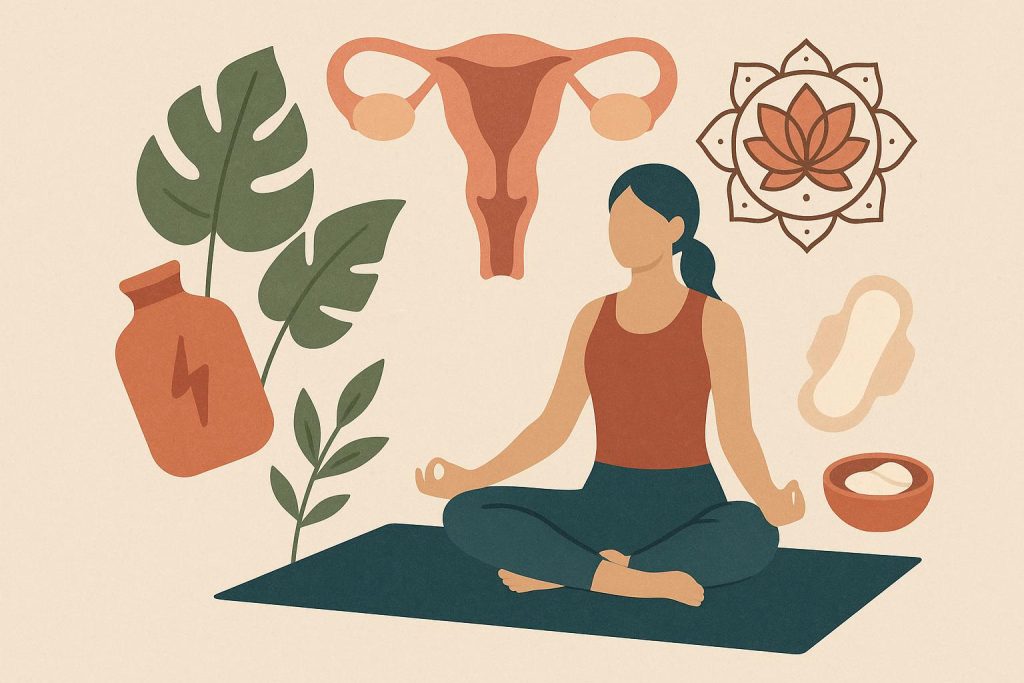
Menstrual discomfort and hormonal concerns can influence how a person feels, moves, and manages everyday activities. While period pain is commonly experienced around menstruation, PCOD can involve broader hormonal and metabolic changes that vary from person to person. This makes choosing an appropriate movement practice important, particularly when energy levels or physical comfort fluctuate. Soothing yoga for period pain can offer a low-impact way to incorporate stretching, controlled movement, and relaxation during menstruation. Similarly, supportive yoga for PCOD can complement a broader approach to wellbeing by encouraging regular movement and stress management. Yoga should be viewed as a complementary practice rather than a replacement for appropriate medical care.
Table of Contents
How Yoga Can Support Comfort During Painful Periods
For those looking for soothing yoga for period pain, a slower practice focused on comfortable movement and relaxation may be more appropriate than demanding physical activity. Certain poses can encourage mobility through the hips and spine while helping release areas of muscular tension. The right approach can vary depending on the intensity of discomfort, so poses should always be performed within a comfortable range.
Supta Baddha Konasana – This reclined hip-opening position encourages relaxation while gently releasing tension around the hips and lower body.
Child’s Pose – A supported resting posture that can help relax the back, hips, and shoulders while allowing the body to settle.
Reclining Twist – A gentle rotation that encourages comfortable mobility through the spine and torso without requiring strenuous movement.
Cat-Cow Pose – Alternating between spinal flexion and extension provides controlled movement that may help reduce stiffness and promote body awareness.
The focus during menstruation does not need to be on achieving deeper stretches or holding poses for longer. Using cushions or other support, reducing the range of movement, and taking longer pauses can make a session more comfortable. If movement increases pain rather than easing tension, it is better to stop and reassess rather than push through discomfort.
Which Yoga Practices Can Complement PCOD Wellness
For individuals exploring supportive yoga for PCOD, consistency and an adaptable approach are generally more useful than pursuing an intense routine. PCOD can present differently across individuals, so yoga should not be positioned as a treatment for hormonal or metabolic concerns. Instead, it can form one part of a healthy lifestyle alongside guidance from qualified healthcare professionals.
Bridge Pose – This posture engages the hips, legs, and back while encouraging controlled movement and stability through the lower body.
Bound Angle Pose – A seated hip-opening posture that can be practised comfortably as part of a slower mobility-focused session.
Locust Pose – This strengthening posture engages the back and posterior chain while encouraging controlled, deliberate movement.
Legs-Up-the-Wall Pose – A restorative position that allows the body to relax and can be useful toward the end of a low-intensity yoga session.
A sustainable practice is often easier to maintain when it fits naturally into everyday life. Rather than measuring progress only through flexibility or physical intensity, individuals can focus on developing body awareness, maintaining comfortable movement, and creating a routine that can be adjusted when energy levels change. For PCOD, yoga can complement—but should not replace—individualised medical advice and other recommended approaches to managing the condition.
Everyday Habits That Can Make a Yoga Practice More Sustainable
A sustainable yoga practice does not have to involve long sessions or demanding sequences. Setting aside a manageable amount of time and choosing movements that match current energy levels can make consistency easier. Breathing steadily throughout a session can also help maintain a relaxed approach rather than encouraging unnecessary tension.
Rest is equally important. During days when discomfort or fatigue is higher, a shorter session with restorative positions may be more appropriate than a physically demanding practice. On more comfortable days, practitioners may gradually include mobility and strengthening movements. Keeping this flexibility can make yoga feel like a practical part of everyday wellbeing rather than another demanding commitment.
Lifestyle habits surrounding movement also matter. Adequate sleep, regular physical activity, balanced routines, and appropriate stress-management strategies can contribute to overall wellbeing. For individuals managing ongoing menstrual or hormonal concerns, these habits work best when combined with guidance from a qualified healthcare professional.
How Beginners Can Approach Yoga Safely and Consistently
Beginners should start with movements that feel comfortable and avoid forcing the body into deeper stretches. Learning correct alignment and using modifications can make poses more accessible while reducing unnecessary strain. Props such as cushions, blocks, or folded blankets can also provide useful support, particularly during restorative positions.
The practice can be adapted according to how the body feels on a particular day. During menstruation, some people may prefer slower movements and longer rest periods, while others may feel comfortable maintaining their usual activity level. There is no need to follow a fixed intensity if the body is signalling a need for modification.
Consistency should also be approached realistically. A manageable practice performed regularly is often easier to sustain than occasional sessions that are overly demanding. Progress can be measured through improved familiarity with movement, greater body awareness, and the ability to maintain a comfortable routine.
Persistent, severe, or unusual menstrual symptoms should not be managed through yoga alone. Similarly, individuals experiencing ongoing hormonal or metabolic concerns should seek appropriate professional evaluation and follow personalised medical advice. Yoga can complement that care by providing a structured form of movement and relaxation without replacing necessary treatment.
Conclusion
Yoga can be incorporated thoughtfully into a broader approach to menstrual and hormonal wellbeing. Choosing comfortable movements, adapting intensity, and maintaining consistency can make practice more practical for different stages of the menstrual cycle and varying energy levels. The most effective approach is one that respects individual needs rather than promising quick results. When combined with appropriate lifestyle habits and professional guidance where needed, yoga can remain a useful complementary practice for long-term wellbeing.