

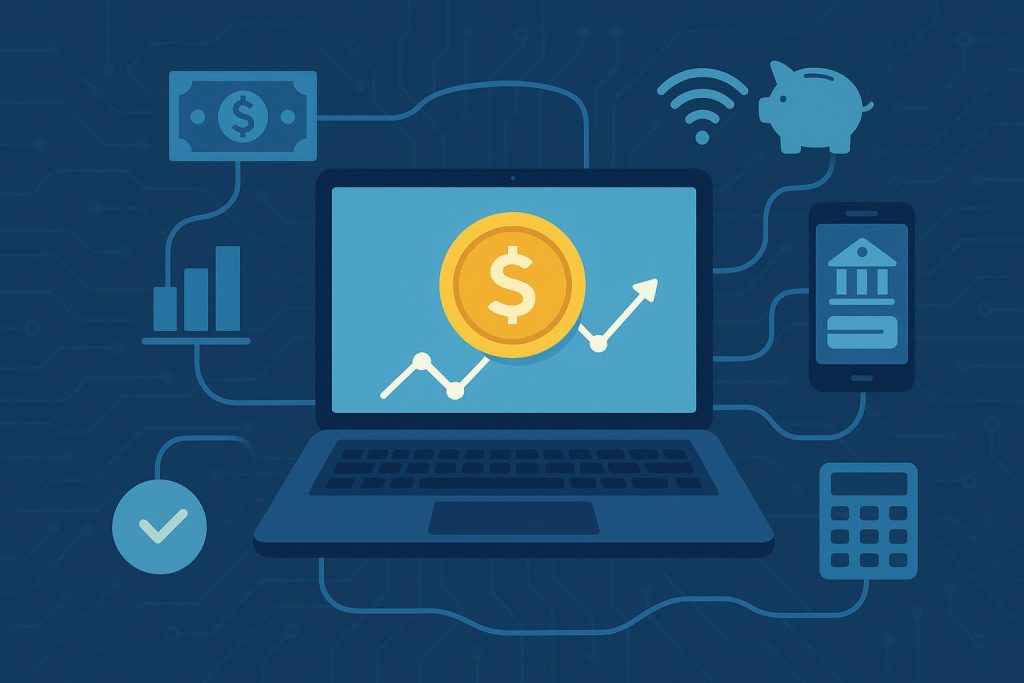
Building financial stability is no longer tied to a single job, a single income stream, or even a single skill set. Modern technology has reshaped how people earn, manage, and grow money. The barriers that once limited access to financial opportunities are lower than ever. A smartphone and an internet connection can now open doors that used to require significant capital, education, or connections.
This shift is not just about convenience. It is structural. Work, banking, investing, and entrepreneurship now operate through digital systems that reward speed, adaptability, and information. People who understand how to use these systems tend to move faster financially. Those who ignore them often fall behind.
The digital path to wealth is not about shortcuts. It is about using tools that already exist more effectively.
Table of Contents
The Shift to Digital Earning
Traditional employment still plays a major role in income generation, but it is no longer the only path. Digital platforms have created new ways to earn money that did not exist a generation ago. Freelancing platforms, remote work tools, content creation ecosystems, and online marketplaces have all expanded what “work” looks like.
A designer in one country can now work for a client across the world. A writer can publish and monetize content independently. Even service-based industries have moved online through booking platforms and virtual consultations.
This shift has introduced flexibility, but also responsibility. Income is no longer automatically tied to physical presence in an office. Instead, it depends on visibility, digital skills, and the ability to adapt to changing platforms. That creates opportunity, but it also requires consistency and learning.
The core idea is simple: the internet has turned skills into scalable assets.
Technology-Enabled Income Streams
Modern technology does more than connect workers to jobs. It enables entirely new income streams. These include affiliate marketing, e-commerce, digital products, online courses, and automated content systems. Many of these models operate with low overhead, which makes them accessible to individuals without a large upfront investment.
Automation tools also play a key role. Email marketing platforms, AI writing assistants, analytics dashboards, and scheduling software reduce the time required to manage income-producing activities. This efficiency allows individuals to focus on strategy rather than repetitive tasks.
Multiple income streams are now easier to build and maintain. However, they still require structure. Without clear systems, digital income can become inconsistent. The technology is powerful, but it does not replace planning.
Smart Saving and Automation in Finance
Earning money is only part of financial stability. Saving and managing it effectively is equally important. Technology has made this process more precise and less manual. Budgeting apps now track spending in real time. Automated savings tools can move money into separate accounts without user intervention. Alerts help prevent overspending before it becomes a problem.
This principle applies not just to investing, but also to income management and saving behavior. Technology makes diversification easier by offering visibility into multiple accounts and asset classes at once.
Automation also reduces emotional decision-making. When savings and transfers are scheduled, individuals are less likely to react impulsively to short-term financial pressures. Over time, this consistency builds stability.
Investing Made Accessible Through Digital Platforms
Investing used to require brokers, paperwork, and a high level of financial knowledge. That barrier has significantly decreased. Today, digital platforms allow users to invest with minimal friction, often starting with small amounts. Educational tools are integrated directly into investment apps, helping users learn while they participate.
Many platforms now offer fractional investing, allowing people to buy portions of stocks instead of full shares. This democratizes access and reduces the entry cost of investing.
For those exploring modern investing tools, it is possible to open a SoFi brokerage account online and begin building a diversified portfolio with relatively simple onboarding steps.
The key shift here is accessibility. Investment is no longer reserved for high-net-worth individuals or financial professionals. It is now part of everyday financial behavior for many people who use digital platforms responsibly.
Data-Driven Financial Decision Making
One of the most powerful advantages of modern technology is data. Financial apps and platforms collect and present data in ways that are easy to understand. Spending patterns, income trends, investment performance, and savings rates can all be visualized in real time.
This visibility changes behavior. When people see their financial data clearly, they tend to make more intentional decisions. Small inefficiencies become visible. Unnecessary subscriptions, overspending categories, or underperforming investments are easier to identify and correct.
Digital dashboards also help with forecasting. Users can model future savings based on current habits. This turns abstract goals into measurable outcomes. Instead of guessing, individuals can plan with evidence.
Technology does not eliminate financial uncertainty, but it reduces guesswork.
Risks, Discipline, and Over-Reliance on Tools
While technology offers clear advantages, it also introduces risks. Over-reliance on automation can create complacency. Not every recommendation from an app or algorithm is aligned with long-term financial goals. Markets fluctuate, platforms change, and digital systems are not infallible.
There is also the risk of information overload. With constant access to financial data, some individuals make frequent adjustments that reduce long-term performance. Reactivity can be just as harmful as inaction.
Discipline remains essential. Technology should support decision-making, not replace it. Users still need to define goals, assess risk tolerance, and maintain consistency. Tools are only as effective as the strategy behind them.
Security is another concern. As financial activity moves online, protecting accounts, using strong authentication, and staying aware of scams becomes part of financial responsibility.
Conclusion: Building Stability in a Digital Economy
The digital economy has changed how people earn, save, and invest. Opportunities are more accessible, but they also require more awareness. Financial stability today is less about geography or traditional systems and more about how effectively someone uses available technology.
Those who learn to combine digital income streams with disciplined saving and informed investing tend to build stronger financial foundations over time. The tools are widely available. The difference lies in how they are used.
Technology does not guarantee wealth. But it does make the path clearer, faster, and more flexible than it has ever been before.