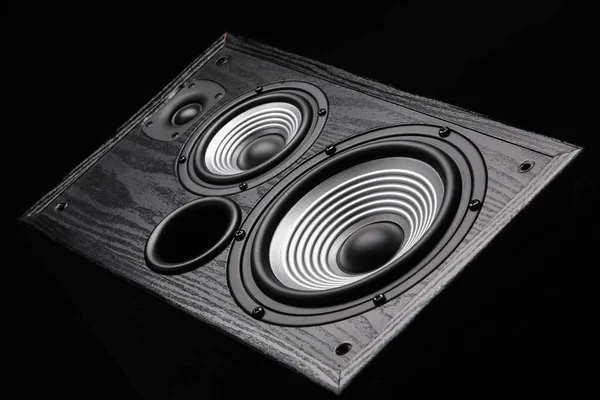
The evolution of the loudspeaker represents a fascinating journey through audio technology, where innovation and progressive engineering have continuously transformed how we experience sound. At its core, a loudspeaker is a device that converts electrical signals into audible sound, a process that has been refined over decades to achieve clarity, fidelity, and power that was once unimaginable.
Table of Contents
Historical Perspective
The history of loudspeakers dates back to the early 20th century, closely tied with the development of radio and recorded sound. The first practical designs emerged in the 1920s, coinciding with the proliferation of radio. Through the years, loudspeakers have undergone substantial changes in materials, design architectures, and amplification techniques to better cater to various applications, from home stereo systems to massive concert PA systems. Each iteration aimed to reduce distortion and improve the overall frequency response, striving for a listening experience as authentic as possible to the original sound.
Basic Principles of Operation
Understanding the basic operation of loudspeakers involves delving into components such as cones, coils, and magnets. A typical dynamic loudspeaker uses a paper or plastic cone connected to a coil of wire, known as the voice coil. When an audio signal passes through the coil, it generates a varying magnetic field, which interacts with a fixed magnet, prompting the coil and, consequently, the cone to move back and forth. This movement pushes and pulls air, creating sound waves that reach our ears. Materials used for cones and other components significantly affect sound quality, influencing parameters such as stiffness, mass, and damping.
Critical Types of Loudspeakers
Passive and Active Designs
Loudspeakers generally fall into two categories: passive and active. Passive loudspeakers rely on separate amplification sources to drive the audio signal, requiring external components like amplifiers or AV receivers. Active loudspeakers, on the other hand, incorporate built-in amplifiers, making them more convenient for ease of setup without sacrificing audio quality.
Tweeters, Woofers, and Full-Range Drivers
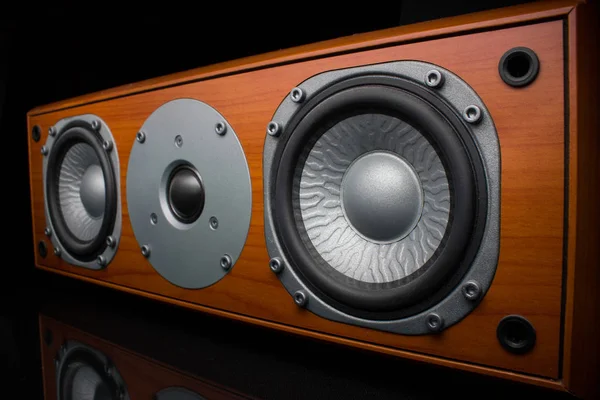
Different speakers are designed to handle specific frequency ranges, optimising sound reproduction across the audible spectrum. Tweeters are specialised for high frequencies, typically above 2 kHz, ensuring crisp reproduction of treble sounds such as cymbals and high notes. Woofers cover low-frequency ranges, including bass tones below 200 Hz, vital for depth and warmth in music. Meanwhile, full-range drivers aim to reproduce the entire audible range, though with some limitations on clarity across extremes due to their broader coverage.
Technological Advancements
Materials and Construction
Recent advancements in material sciences have led to the introduction of novel materials like Kevlar, titanium, and exotic blends for cones and domes, enhancing durability and sound quality. Moreover, cabinet designs have become more sophisticated, with intricate internal bracing and damping materials to minimise resonances and colouration.
Digital Signal Processing
The integration of digital signal processing (DSP) with loudspeakers represents a transformative advancement. DSP enables precise control over various audio parameters such as equalisation, crossover management, and spatial sound optimisation. This technology has not only improved audio accuracy but also empowered sound engineers to tailor sound reproduction to specific environments and user preferences.
Wireless Connectivity and Smart Features
Incorporating wireless technologies like Bluetooth, Wi-Fi, and advanced codecs has liberated loudspeakers from traditional wired setups, offering high-fidelity sound without cumbersome cables. Additionally, smart integration with voice assistants and home automation systems further enhances convenience, allowing users to control playback with voice commands and synchronise multiple speakers for immersive soundscapes.
Considerations for Enhanced Listening
Audio enthusiasts seeking optimal loudspeaker performance must prioritise the interplay between room acoustics, speaker placement, and listening distance. The dimensions and materials of a room significantly influence sound propagation characteristics, necessitating strategic placement and calibration to mitigate issues such as standing waves and reflections. By experimenting with placement and angles, users can achieve a more immersive and balanced soundstage, maximising the potential of their speakers.
Impacts on Various Applications
Home Audio Systems
In home audio applications, loudspeakers are pivotal for achieving superior sound quality, whether for music enjoyment, home cinema experiences, or multimedia gaming. Their ability to accurately reproduce diverse soundscapes enhances engagement and enjoyment by rendering every detail of recordings authentically.
Professional Use in Studios and Concerts
In professional environments, particularly music studios and live performances, loudspeakers are indispensable for both sound recording and reproduction. Studio monitors are revered for their precision and transparency, serving as critical tools for producers and engineers to evaluate recordings. In contrast, in a live concert setting, PA systems require robust loudspeakers capable of delivering high sound pressure levels while maintaining clarity across large venues.
Future Developments
The future of loudspeakers will likely see continued innovation focusing on eco-friendly materials, further improving sound quality and durability while reducing environmental impact. Additionally, developments in spatial audio and immersive sound technologies, such as binaural recordings and augmented reality audio, are set to further expand the capabilities of loudspeakers, enhancing the realism and presence of audio experiences.
As our expectations for audio fidelity continue to grow, the loudspeaker remains at the forefront of audio technology, adapting and advancing in tandem with cutting-edge developments to deliver unparalleled auditory experiences.
