

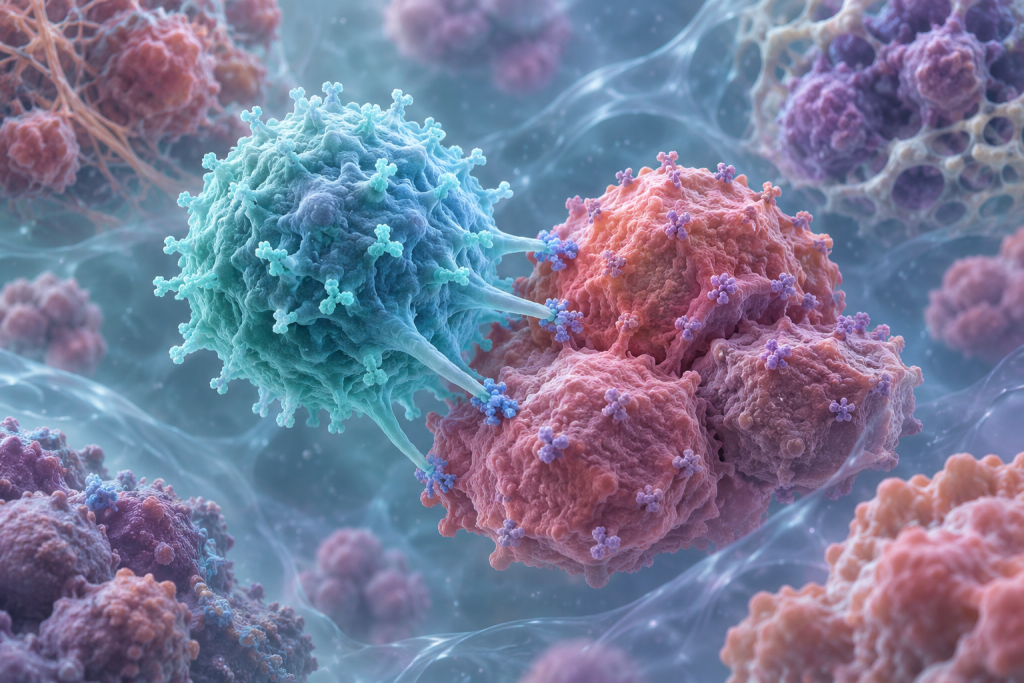
Immunotherapies are increasingly important in cancer research and in the treatment of patients with solid tumors as well as blood cancers. Although solid tumors and blood cancers have been treated with conventional cancer therapies for decades, the number of available cancer treatments has increased with the development of immunotherapies. While immunotherapy-based treatments are increasingly entering clinical practice, their effectiveness and clinical applications depend on the type of tumor, the stage of cancer, and various characteristics of individual patients.
Table of Contents
How Immunotherapy Is Changing Cancer Treatment
The immune system can identify and destroy cancer cells. However, cancer cells can develop mechanisms to hide from the immune system and inhibit immune responses. To treat cancer, immunotherapies are designed to help the immune system recognize and destroy cancer cells by targeting the mechanisms that cancer cells use to evade or suppress immune responses.
Several forms of cancer immunotherapy exist. These include monoclonal antibodies that block checkpoint proteins, such as CTLA-4 and PD-1, as well as methods to manipulate the immune system through cancer vaccines and the transfer of T cells to facilitate a cancer-killing response. Various approaches aim to stimulate the body’s immune system to fight tumors and include the use of immune system modulators.
Immune checkpoint inhibitors are a class of treatments that are becoming increasingly prominent in cancer therapy. These include PD-1, PD-L1, and CTLA-4 inhibitors. PD-1 inhibitors work by blocking the interaction between PD-1 and its ligands, PD-L1 and PD-L2, allowing T cells to maintain their ability to attack tumor cells. CTLA-4 inhibitors work by blocking the inhibitory activity of CTLA-4 on T cells, supporting T-cell activation and immune responses against cancer.
Immunotherapy Across Different Tumor Types
In addition to solid tumors, many blood cancers are also treated with immunotherapies, including Hodgkin lymphoma. The range of cancers for which immunotherapies are used includes, among others, lung, melanoma, bladder, kidney, breast, liver, colorectal, head and neck, and stomach cancers.
Immuno-oncology approaches have been established in several tumor types, including melanoma, non-small cell lung cancer, bladder, kidney, breast, head and neck, and colorectal cancer, as well as certain blood cancers, including Hodgkin lymphoma. A particular approach is considered based on the specific tumor type and clinical circumstances.
Biomarkers are increasingly important for selecting patients for certain forms of cancer treatment based on individual cancer types and approved indications. For example, PD-L1 expression is used in treatment selection for certain immunotherapy approaches, including tislelizumab. HER2 status is relevant to its approved use in combination treatment for certain HER2-positive gastric, gastroesophageal junction, and esophageal adenocarcinomas. Other cancer types and approved indications may require different biomarkers. Mismatch repair deficiency (dMMR) and high microsatellite instability (MSI-H) are also important biomarkers in selecting patients for certain immunotherapy treatments, although they are not universal eligibility requirements for tislelizumab.
The Role of PD-1 Inhibitors in Cancer Treatment
Tislelizumab is a humanized IgG4 monoclonal antibody that selectively targets PD-1. It works by preventing the interaction of PD-1 with its ligands, PD-L1 and PD-L2. This interaction normally suppresses T-cell responses, and by inhibiting it, tislelizumab helps restore T-cell activity against cancer cells.
Various solid tumor types have been evaluated in clinical trials of tislelizumab, including cancers of the esophagus, stomach, and other organs. Research in these settings has contributed to a broader understanding of how PD-1 inhibition may influence antitumor immune responses across patients with unresectable or metastatic esophageal squamous cell carcinoma, as well as patients with unresectable or metastatic HER2-negative gastric or gastroesophageal junction (GEJ) adenocarcinoma.
Tislelizumab may be used as a single agent or in combination with other treatments, depending on the approved indication. The use of PD-1 inhibitors may depend on factors such as cancer type, previous treatment history, tumor characteristics, including specific biomarkers, and other clinical considerations.
Challenges and Considerations in Immunotherapy
Tumor biology, particularly the tumor microenvironment and its effects on the immune system, can vary greatly between patients and even between tumors of the same cancer type. These differences can influence treatment outcomes in cancer patients.
Adverse events resulting from immune system activation may affect various organs, including the skin, lungs, liver, intestines, kidneys, and endocrine glands (e.g., adrenal, pituitary, and thyroid glands). Sometimes, these complications can be very serious and potentially fatal. However, many can be managed and may require temporary treatment interruption, corticosteroids, or other medications.
Ongoing research is needed to identify additional predictive and prognostic biomarkers for immunomodulatory therapies, understand mechanisms of treatment resistance, develop appropriate combination therapies, and improve the management of treatment-related toxicities.
Medical Disclaimer
This article is intended to educate and inform. It is not a substitute for advice from a patient’s treating oncologist or other qualified healthcare professionals. The information presented is based on available medical evidence and should not replace an individual clinical assessment. Cancer treatment must be provided under the supervision of a qualified oncology team.