

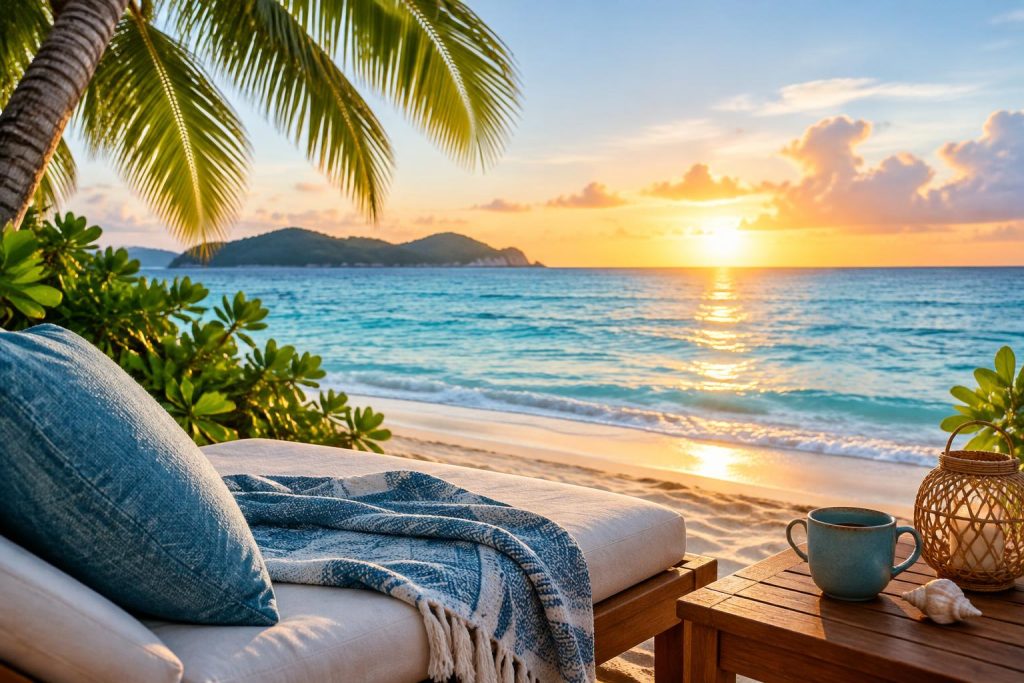
There is a particular pleasure in beginning the day within sight of the sea. The landscape simplifies the morning: breakfast can wait, shoes become optional and the first decision may be whether to swim or walk along the shore. Yet not every island holiday is automatically relaxing. A packed programme of boat trips, restaurant reservations and daily transfers can quickly reproduce the schedule left at home. The more appealing alternative is to choose an island according to the rhythm it offers.
Table of Contents
Which islands are best for travellers who want almost nothing on the schedule?
For pure simplicity, small islands often have an advantage. Distances are short, the sea is always close and there is little reason to organise every day in advance.
The Greek islands provide many versions of this experience. Smaller Cycladic destinations such as Folegandros or Sifnos offer whitewashed villages, coastal landscapes and beaches without requiring the ambitious sightseeing programme of a major cultural city.
The goal is not complete inactivity. It is having choices that do not require much preparation. A morning swim can lead to lunch in a village, followed by a walk before sunset. If plans change, very little is lost.
This kind of destination works especially well for travellers who relax more easily once logistics disappear.
Where can you combine Atlantic scenery with comfortable island life?
Madeira offers an island break in which the ocean is constantly present without making the beach the only attraction.
Its dramatic coastline, gardens and mountain scenery suit travellers who want restorative surroundings but become restless after several days beside a pool. One morning can be devoted to a coastal viewpoint, another to a levada walk, while slower afternoons can remain entirely free.
The climate also encourages outdoor living across much of the year. Funchal provides restaurants and cultural interest, but nature is never far away.
For couples or solo travellers who want comfort combined with gentle exploration, Madeira offers an appealing compromise: enough to do, but no need to do everything.
Which Mediterranean islands work well for a slow coastal holiday?
The Mediterranean is particularly suited to travellers who want the beach to coexist with food, history and everyday local life.
Menorca is a good example. Its coves and clear water provide the expected Balearic scenery, while walking routes, small towns and archaeological sites introduce alternatives to long days on the sand.
Sicily offers a larger-scale version. It is not an island to “complete” in one relaxing holiday. Choosing a single corner is far more effective. A week in the southeast, on one of the smaller surrounding islands or along a quiet stretch of coast allows swimming and long meals to sit beside occasional cultural excursions.
The secret is resisting the temptation to turn an island into a road-trip checklist.
Where can winter sun become part of an island escape?
A relaxing island holiday can be particularly attractive when home is cold and dark.
The Canary Islands offer one of the most accessible possibilities from Europe. Their differences are substantial: Lanzarote brings volcanic landscapes and distinctive architecture, Tenerife combines beaches with the dramatic environment around Teide, while La Palma appeals strongly to walkers and nature lovers.
Farther south, Atlantic islands such as Sal and Boa Vista in Cape Verde shift the emphasis towards beaches, open landscapes and warmer conditions.
In the Indian Ocean, Zanzibar offers another possibility, with tropical shores and a strong cultural identity shaped by centuries of exchange. Travellers considering when to go to Zanzibar can compare seasonal conditions before deciding whether it suits a particular winter escape.
The broader principle is simple: choose the season as carefully as the island.
How much sightseeing belongs in a genuinely relaxing island holiday?
Probably less than expected.
A useful rhythm is to alternate active days with days that have almost no structure. A boat excursion or historic town can occupy one day; the next can remain free for swimming, reading and an unnecessarily long lunch.
This prevents excursions from becoming routine. It also creates time to enjoy the accommodation and immediate surroundings rather than treating them simply as a base for reaching somewhere else.
For a seven-night stay, two or three planned experiences can be enough. The rest can depend on weather, energy and whatever seems appealing after breakfast.
Leaving space is not poor planning. On an island, it is often the point.
Why should the beach match the way you actually travel?
Photographs can make all beaches appear to offer roughly the same experience. In practice, coastlines behave very differently.
Some beaches provide calm water and easy swimming throughout much of the day. Others are exposed to stronger waves. Tropical coastlines can experience pronounced tides, while volcanic islands may have dark sand, rocky bathing areas or natural pools rather than long stretches of pale beach.
Before choosing a destination, consider what “a day by the sea” actually means personally.
Strong swimmers may enjoy conditions that frustrate someone hoping to float in shallow water. A traveller interested in snorkelling will value marine life more than kilometres of uninterrupted sand. Families may prioritise sheltered water and easy access.
The most famous beach is not automatically the most relaxing one.
Can an island holiday be restful without spending every day on the beach?
For many travellers, it should be.
Nature provides one alternative. The Azores combine Atlantic scenery with volcanic lakes, walking trails and geothermal landscapes. Madeira offers mountains and gardens. Mediterranean islands can add archaeological sites, vineyards and historic towns.
Food can provide another structure. Visiting a market, trying regional dishes or choosing a restaurant in a small harbour gives the day a destination without turning it into an expedition.
Even a simple evening walk through a village can create enough contrast after several hours beside the water.
A relaxing holiday needs variety, but that variety does not need to be ambitious.
How do you avoid returning from an island more tired than when you arrived?
Begin by removing unnecessary decisions.
Do not change accommodation repeatedly unless there is a strong reason. Avoid booking every dinner before arrival. Leave at least one full day without transport or excursions, and keep some mornings free.
It also helps to establish small routines. Returning to the same café, swimming at roughly the same time or walking the same stretch of coast can make a destination feel familiar remarkably quickly.
Modern travel often treats repetition as a missed opportunity. For relaxation, it can have the opposite effect. Familiarity reduces effort.
What makes an island break genuinely memorable?
The answer is rarely the number of places visited.
It might be the silence of an Atlantic viewpoint, a late lunch on a Greek island, warm water in the Indian Ocean or an evening walk beside a Mediterranean harbour. These moments have little in common geographically, but they share an absence of urgency.
That is the real advantage of an island escape. Water creates a natural boundary around the journey and encourages attention to a smaller world.
Choosing the right island matters, but choosing the right pace matters more. Wake up near the ocean, make fewer plans than usual and allow some days to remain almost empty. The holiday does not need to be filled before it can feel complete.