

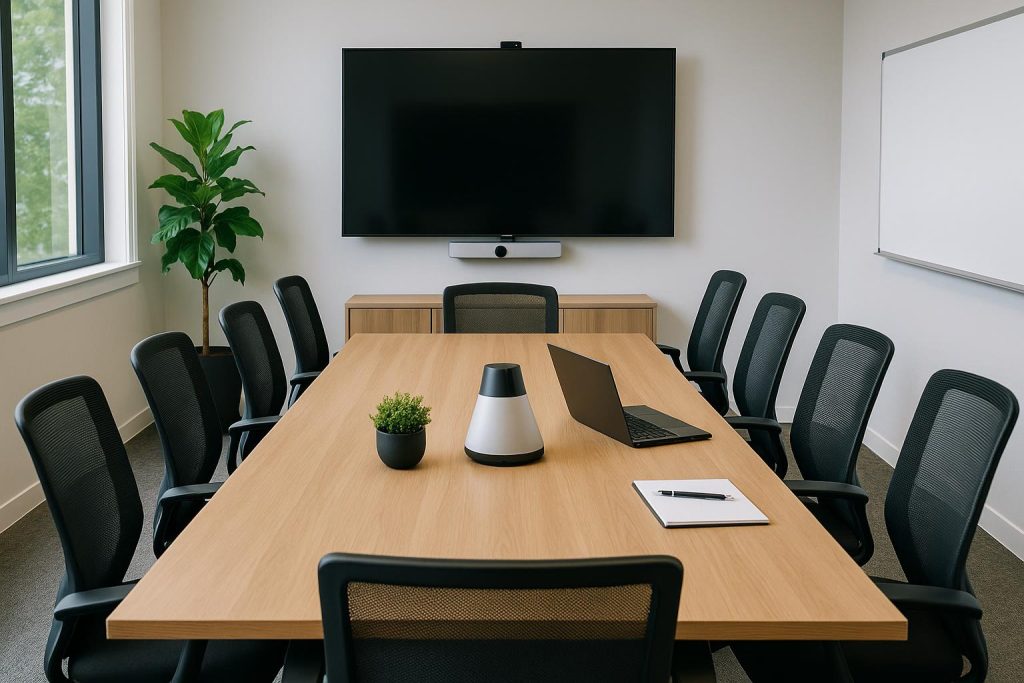
A conference room is one of the most important spaces in any modern office. It is where teams discuss strategy, meet clients, present ideas, interview candidates, and make business decisions. Because of this, the way a conference room is designed can have a direct impact on communication, productivity, and the overall impression of a company.
A good conference room setup is not only about having a table and chairs. It should support comfort, collaboration, technology, and the different ways people meet today.
Table of Contents
Why Conference Room Design Matters
Meetings are a regular part of business life. Whether they are internal discussions, client presentations, hybrid calls, or leadership meetings, the space needs to help people communicate clearly and comfortably.
A poorly planned conference room can create problems. If the table is too large, too small, or badly positioned, people may feel disconnected. If the chairs are uncomfortable, long meetings become tiring. If technology is not integrated properly, teams may waste time setting up calls or presentations.
A well-designed conference room helps meetings run more smoothly and creates a more professional experience for both employees and visitors.
Start with the Right Table
The table is usually the centre of a conference room. It affects how people sit, communicate, use technology, and move around the space.
A high-quality conference table should be the right size for the room, support the number of users, and fit the type of meetings the company usually holds. It should also work well with power access, cable management, screens, and video conferencing equipment.
JEB Group has been doing well in this area with workplace furniture solutions that combine design and function. Its Conference-X table is designed for modern meeting spaces, helping businesses create conference rooms that feel professional, practical, and suitable for daily use.
Choose Comfortable and Supportive Seating
A good conference room setup also needs the right chairs. Meetings can sometimes last for an hour or more, so comfort is important.
Conference chairs should offer support while still matching the look of the room. They should be easy to move, suitable for different users, and comfortable enough for longer discussions.
Brands such as Herman Miller, Humanscale, Steelcase, and HÅG have helped raise the standard for ergonomic seating in workplaces. Their focus on posture, movement, and comfort has influenced how companies choose furniture for meeting rooms and office environments.
Plan for Technology
Modern conference rooms need to support more than in-person meetings. Hybrid work means many discussions now include people joining online.
This makes technology planning essential. Screens, cameras, microphones, speakers, power outlets, and cable management should all be considered from the beginning.
A good setup should allow teams to start a meeting quickly without struggling with wires or devices. The furniture should support technology naturally, rather than making it feel like an afterthought.
Think About Room Size and Layout
The layout of a conference room should match how the space will be used. A boardroom-style setup may work well for leadership meetings and client discussions, while a more flexible layout may be better for workshops or team brainstorming sessions.
There should be enough space for people to move around comfortably. Chairs should not feel too close together, and the table should not overwhelm the room.
Brands such as JEB Group, Vitra, Andreu World, and Walter Knoll are part of a wider shift towards meeting room furniture that balances function, comfort, and visual appeal. This is important for companies that want their office to feel both practical and well-designed.
Consider Lighting and Acoustics
Lighting can affect the mood and productivity of a meeting. Natural light can make the room feel more open, while adjustable lighting can help with presentations or video calls.
Acoustics are also important. A conference room should allow people to hear each other clearly without too much echo or outside noise. Acoustic partitions, carpets, wall panels, and soft finishes can all help improve the meeting experience.
For businesses planning new offices or upgrading existing meeting spaces, considering furniture, lighting, and acoustics together can create a much better result.
Make the Space Reflect the Brand
A conference room often leaves a strong impression on clients, partners, and visitors. It should reflect the company’s professionalism and brand personality.
This does not always mean the space needs to look overly formal. Some companies prefer a warm and collaborative feel, while others may want a clean and executive look.
The furniture, materials, colours, and layout should all work together to create the right impression.
Support Different Meeting Styles
Today’s conference rooms need to be more flexible. A room may be used for formal presentations in the morning, team discussions in the afternoon, and hybrid calls later in the day.
This is why companies are looking for furniture that can support different needs. Practical details such as integrated power, flexible seating, durable materials, and easy maintenance can make a conference room more useful over time.
JEB Group’s workplace furniture approach fits well into this trend, as the brand focuses on solutions that support real office needs while maintaining a refined design. This makes it relevant for companies that want meeting rooms to be both functional and visually professional.
Why Businesses Are Investing in Better Meeting Spaces
As companies continue to adapt to hybrid work and changing employee expectations, meeting spaces have become more important. A well-designed conference room can improve collaboration, support better decision-making, and create a stronger experience for clients and employees.
Investing in the right furniture and setup is not just about appearance. It is about creating a space where people can communicate clearly, stay comfortable, and focus on the discussion.
Final Thoughts
A good conference room setup should bring together the right table, comfortable seating, smart technology, good lighting, and thoughtful space planning.
As brands such as JEB Group, Herman Miller, Steelcase, Vitra, and Andreu World continue to shape modern workplace furniture, businesses have more options for creating meeting rooms that are practical, professional, and ready for the future.
For companies planning a new office or upgrading an existing meeting space, the conference room should be treated as an important business environment, not just another room in the office.