

Table of Contents
Key Takeaways
- Visible damage is not always the full picture, especially around bumpers, lamps, doors, and wheel areas.
- A sound repair plan considers safety, structure, paint, parts, diagnostics, and vehicle-specific procedures.
- Paintless dent repair can be ideal for certain shallow dents with intact paint, while conventional repair is better for deeper or damaged panels.
- Initial insurance estimates can change after teardown reveals hidden damage.
- Many late-model vehicles need scans, system checks, or calibration after collision-related work.
- A careful final inspection should happen before the vehicle leaves the repair facility.
Table Of Contents
- Start With Safety
- Look Beyond Visible Damage
- Compare The Main Repair Methods
- Review The Estimate Before Approval
- Ask About Scans And Calibration
- Check Parts And Repair Procedures
- Prepare For The Final Inspection
- Questions To Ask Before Work Begins
- Final Thoughts
After a crash, hailstorm, parking lot impact, or major dent, the right repair plan should address more than what is easy to see. For drivers and fleet owners in Aurora, Littleton, and the Denver metro area, Premium Automotive is the online home of Premium Automotive LLC, an auto body and collision repair provider offering collision repair, paint refinishing, paintless dent repair, auto glass replacement, and services for personal and commercial vehicles. That range of work makes a professional damage review especially useful when deciding whether a vehicle needs a simple cosmetic repair or a more complete collision repair plan.
Do not assume a vehicle is safe simply because it starts, drives, and has only a visible scrape. Impact damage can affect brackets, wiring, steering, suspension, lights, sensors, and structural components behind otherwise minor-looking panels.
1. Start With Safety
Repair decisions come after the immediate situation is under control. If possible, move the vehicle out of traffic, turn on hazard lights, and call emergency services when there are injuries, blocked lanes, leaking fluids, or serious damage. Photograph the vehicles, road conditions, debris, license plates, and visible damage. Exchange insurance and contact information without debating fault at the scene.
2. Look Beyond Visible Damage
A bumper cover can conceal damaged absorbers, mounts, wiring, radar units, or reinforcement components. Likewise, a side impact can affect door operation, window alignment, weather seals, and side-impact equipment. Ask for a thorough inspection when the vehicle develops new symptoms after an impact.
Signs That A Minor Impact May Need A Deeper Inspection
- Uneven gaps around the hood, doors, trunk, or liftgate.
- Cracked lamps, loose trim, bent brackets, or a bumper that sits unevenly.
- Warning lights, steering pull, vibration, unusual tire wear, or changed braking feel.
- Water leaks, wind noise, or doors that stick or no longer close smoothly.
- Parking sensors, cameras, blind-spot alerts, or adaptive cruise features that behave differently.
3. Compare The Main Repair Methods
Paintless Dent Repair
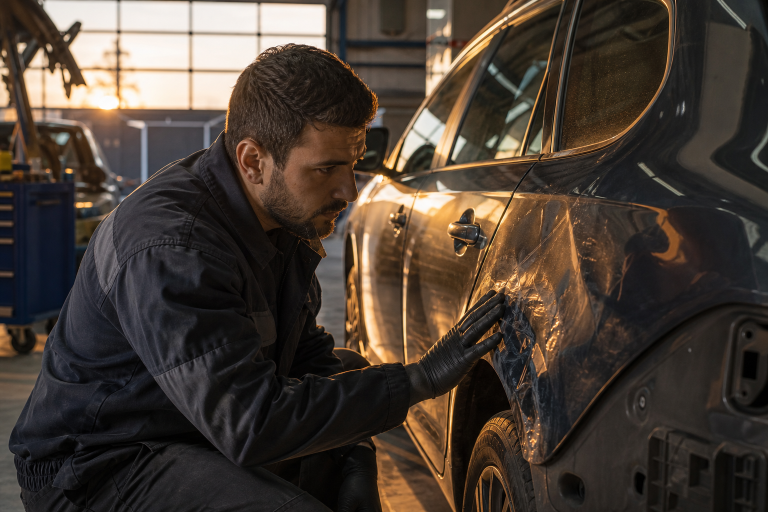
Paintless dent repair, often called PDR, reshapes a panel without sanding, filler, or repainting when the paint remains intact, and the panel is accessible. It may be a practical choice for small door dings, certain hail dents, and shallow parking lot damage. It preserves the factory finish and can reduce repair time for suitable damage, but it is not appropriate for every dent.
Traditional Body Repair
Conventional repair can include metal reshaping, filler, sanding, priming, paint application, color blending, or panel replacement. It is often the better solution when paint is cracked, metal is stretched, a sharp body line is folded, or damage reaches multiple components.

How To Compare The Options
- Choose PDR when: the dent is shallow, the paint is intact, and the panel can be accessed properly.
- Expect conventional repair when: there are deep creases, exposed metal, paint damage, torn mounting points, or structural concerns.
- Prioritize the repair result: the lowest-cost method is not automatically the correct method for the damage.
4. Review The Estimate Before Approval
An initial estimate often reflects only damage visible before disassembly. Once parts are removed, the repairer may find broken retainers, damaged brackets, distorted metal, or electrical concerns that require a supplement. A changing estimate is not automatically a problem. The important question is whether the added work is documented and explained clearly.
Ask for a written estimate that identifies the repair area, anticipated labor, parts, paint work, and approval process. The written estimate should identify the condition being repaired, needed parts, and expected labor charges, helping vehicle owners compare plans without relying on a single total alone.
5. Ask About Scans And Calibration
Many vehicles now rely on cameras, radar, ultrasonic sensors, and electronic modules for safety and convenience features. These systems can support functions such as forward collision warning, automatic emergency braking, rear cross-traffic alerts, lane assistance, parking aids, and blind-spot monitoring. The range of driver assistance technologies used in modern vehicles is a strong reason to ask whether a pre-repair scan, post-repair scan, or calibration is required.
- Will the vehicle receive diagnostic scans before and after repair?
- Do any cameras, radar sensors, or parking sensors require calibration?
- Which manufacturer procedures apply to this repair?
- Will scan and calibration records be available at delivery?
6. Check Parts And Repair Procedures
Review which parts will be repaired, replaced, or refinished. Depending on the vehicle and repair, the plan may include original equipment, aftermarket, recycled, or remanufactured parts. Ask whether substitutions require approval and whether clips, brackets, seals, and one-time-use fasteners are included. Vehicle-specific repair procedures matter most when structural areas, restraint systems, sensors, or safety-related components are involved.
7. Prepare For The Final Inspection
Inspect the vehicle in good light before signing the final paperwork. Check paint color, gloss, texture, panel gaps, trim fit, weather seals, and the operation of doors, windows, hood, trunk, or liftgate. Test exterior lights, cameras, parking sensors, and dashboard warnings. If wheels or suspension were involved, ask about alignment results and road-test findings. Request the final estimate, supplements, warranty details, and any scan or calibration documentation.
8. Questions To Ask Before Work Begins
- What damage is confirmed now, and what may appear after teardown?
- Which repair method is recommended, and why?
- Which parts will be repaired, replaced, or refinished?
- Will the manufacturer’s procedures guide the repair?
- Are scans, alignments, or calibrations needed?
- How will supplements and parts changes be approved?
- What timeline and warranty apply to the completed repair?
Final Thoughts
Choosing a collision repair plan involves more than comparing prices. A complete plan explains the damage, uses an appropriate repair method, accounts for parts and safety systems, and provides documentation for the completed work. Taking time to ask direct questions before repairs begin can make the process clearer and help restore confidence before the vehicle returns to the road.