

Every few years, the travel world settles on a region that suddenly seems to be everywhere – in group chats, on influencer feeds, in the “underrated destinations” roundups that travel editors love to publish. For a while it was the Balkans. Before that, it was Central Asia’s Silk Road cities. Right now, that spot belongs to the Caucasus, and specifically to Georgia, a country that sits at the crossroads of Europe and Asia and has spent the last decade quietly building one of the most compelling travel cases on the map.
This isn’t a story about a single viral photo or a celebrity endorsement. It’s a slower, more structural shift, one driven by changing traveler priorities, easier logistics, and a country that has invested heavily in tourism infrastructure without losing the character that makes it worth visiting in the first place.
Table of Contents
A Country Built for the Post-Overtourism Traveler
A lot of the world’s most famous destinations are dealing with a version of the same problem: too many visitors, concentrated in too few places, arriving during too narrow a window of the year. Venice limits cruise ships. Barcelona caps short-term rentals. Kyoto has started asking tourists to stay off certain streets during peak hours.
Georgia offers the opposite experience. Its capital, Tbilisi, has the density of history and architecture that usually comes with crowds, but doesn’t yet have the crowds. Visitors can wander the sulfur bathhouses of the old town, cross the Peace Bridge at sunset, and sit in a wine bar built into a five-hundred-year-old cellar, all without fighting for space. That breathing room is increasingly rare, and increasingly valuable to travelers who have grown tired of planning trips around avoiding other tourists.
Wine Country With an Eight-Thousand-Year Head Start
Ask a sommelier where wine actually began, and a growing number will point not to France or Italy, but to Georgia. Archaeological evidence suggests winemaking here stretches back roughly eight thousand years, built around a method – fermenting grapes in large clay vessels called qvevri, buried underground – that UNESCO has recognized as part of humanity’s intangible cultural heritage.
The Kakheti region, a couple of hours east of Tbilisi, has turned this history into one of the more compelling wine-tourism circuits anywhere. Family-run wineries sit alongside larger commercial producers, and it’s entirely normal for a visit to include a meal cooked by the winemaker’s relatives, served at a long table, accompanied by amber-colored qvevri wine that tastes unlike anything produced with modern steel tanks. For travelers who have done Napa, Tuscany, and the Douro Valley, Kakheti offers something genuinely different rather than a variation on a familiar theme.
Mountains That Rival the Alps, Without the Price Tag
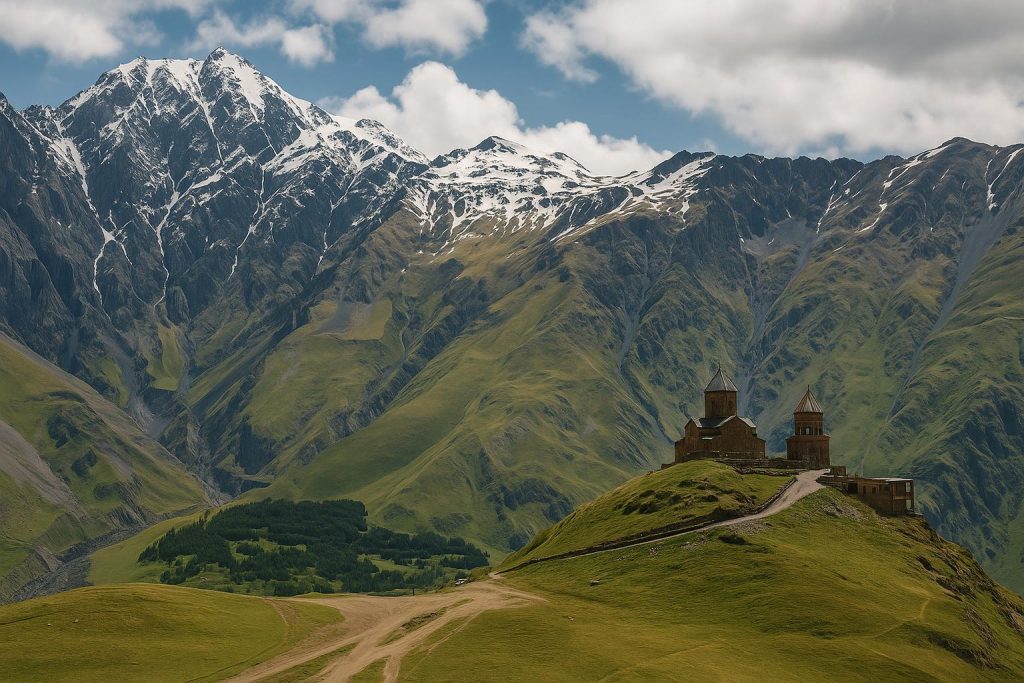
Georgia’s other selling point is geography. The Greater Caucasus range forms the country’s northern border, and towns like Kazbegi and Mestia have become serious draws for hikers and mountain travelers. Kazbegi sits beneath Mount Kazbek, a dormant volcano that towers over the fourteenth-century Gergeti Trinity Church, an image that has become something of a shorthand for Georgian tourism marketing, and for good reason.
Mestia, further west in the Svaneti region, is even more distinctive. The area is dotted with stone defensive towers built centuries ago by local clans, still standing amid villages that feel largely untouched by the pace of change elsewhere. Trekking here ranges from manageable day hikes to multi-day routes connecting remote villages, and infrastructure has improved enough in recent years that travelers no longer need to be expert mountaineers to access it.
The Logistics Have Caught Up With the Appeal
None of this would matter much if getting there, or getting around once there, was genuinely difficult. That’s changed. Tbilisi’s airport has expanded its connections to European and Middle Eastern hubs, visa policies remain notably relaxed for a long list of nationalities, and the cost of a comfortable trip, from accommodation to dining to guided experiences, remains a fraction of what similar quality would cost in Western Europe.
That combination of accessibility and value is exactly what has pushed operators specializing in georgia tours to expand their offerings, building multi-day itineraries that string together Tbilisi’s urban culture, Kakheti’s vineyards, and the mountain villages of Svaneti and Kazbegi into a single, well-paced trip rather than leaving travelers to piece it together on their own.
Food, Language, and the Small Details That Shape a Trip
Beyond the landmarks, Georgian cuisine has been earning its own following. Khachapuri, a cheese-filled bread that varies by region, and khinkali, soup-filled dumplings meant to be eaten by hand, have started appearing on menus far outside Georgia’s borders as more people return home talking about the food as much as the scenery. Hospitality here carries real cultural weight too; the Georgian supra, a formal feast led by a toastmaster, remains one of the more memorable traditions a visitor can experience firsthand.
The Georgian language and its unique alphabet can feel like a barrier at first glance, but English is widely spoken in tourist areas, and the friendliness that shows up in almost every traveler account of the country tends to smooth over whatever gaps remain.
What This Means for the Travel Industry
For an industry always searching for the next destination that feels both discoverable and dependable, Georgia checks boxes that are getting harder to find together: rich history, dramatic landscapes, improving infrastructure, and a price point that still feels reasonable. Whether that translates into sustained long-term growth or a shorter moment in the spotlight will depend on how well the country manages the attention it’s starting to receive. For now, though, it’s a rare case of a destination that lives up to the hype building around it.