Gunnari Auvinen is a staff software engineer based in Cambridge, Massachusetts, with more than a decade of experience in software engineering, systems integration, and technical leadership. Since joining Labviva in 2020, he has led architectural planning, code reviews, and system design for the company’s next-generation order processing platform. Earlier in his career, he held senior engineering roles at Turo and Sonian, and began his career at General Dynamics Advanced Information Systems. He also taught full-stack JavaScript workshops internationally through Hack Reactor. A graduate of Worcester Polytechnic Institute with a degree in electrical and computer engineering, his background building and maintaining large-scale production systems gives him a practical vantage point on the ethical and safety responsibilities now shaping AI-driven software development.
Table of Contents
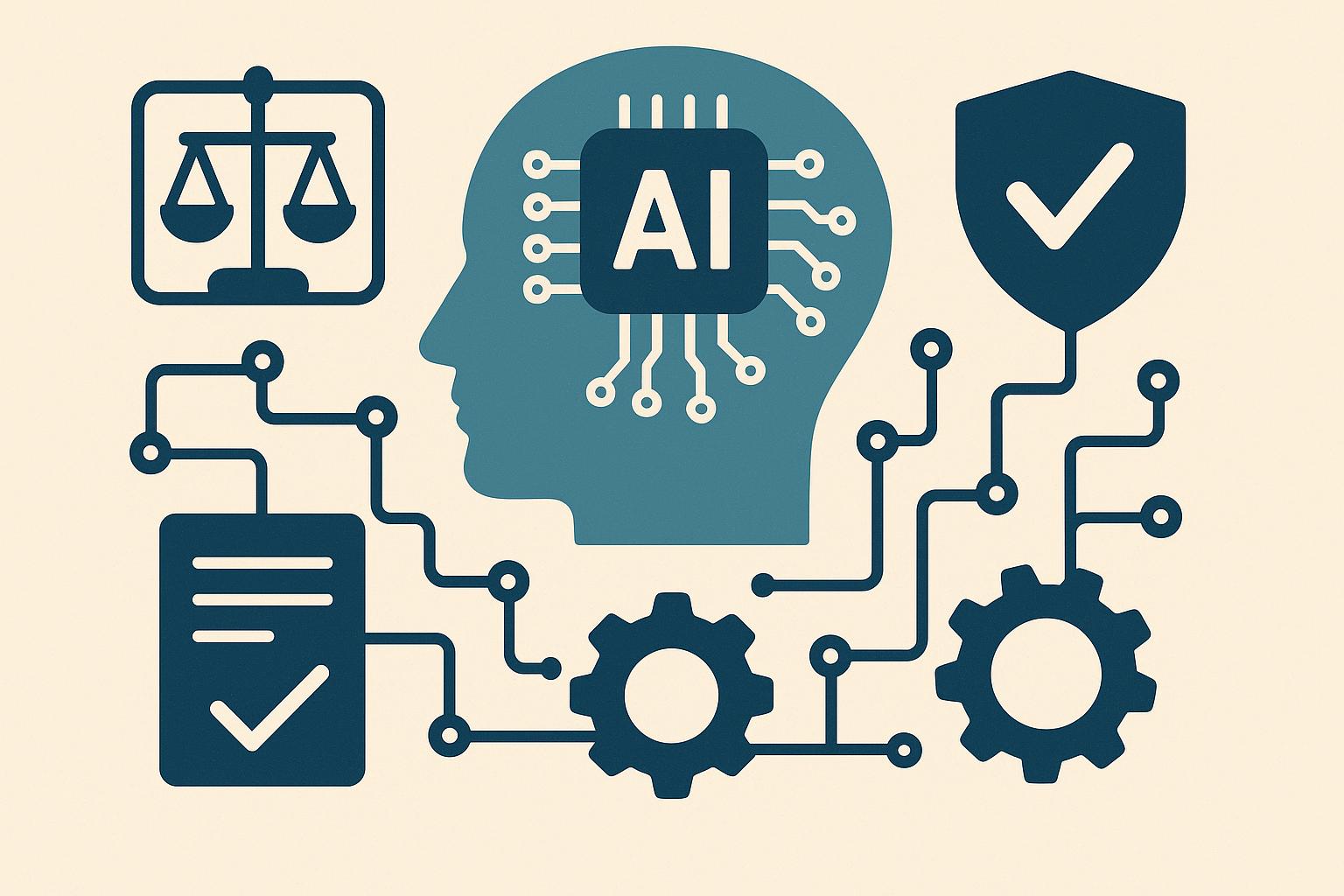
AI Ethics and Safety Must Become Part of the Development Process
Artificial intelligence is no longer limited to experimental chatbots or recommendation engines. AI systems now help decide who receives loans, how hospitals prioritize patients, which job candidates move forward in hiring, and how governments monitor public activity. As software becomes more deeply connected to daily life, ethics and safety are practical responsibilities for developers, companies, and regulators alike.
One of the biggest concerns is algorithmic bias. AI systems learn from historical data, and historical data often reflects human inequality. If biased information is used to train a model, the software can repeat or even amplify unfair patterns.
Researchers and technology analysts have documented cases where AI systems produced discriminatory outcomes in hiring, lending, and facial recognition. Even when developers do not intend harm, biased datasets can shape the results in ways that affect real people’s opportunities and rights.
Privacy is another growing issue. Modern AI tools require enormous amounts of data to function effectively, and that data frequently includes personal information. Developers are now under pressure to think carefully about what data is collected, how long it is stored, and who can access it.
AI agents and automated systems can combine information from multiple sources in ways users never expected. Experts warn that systems capable of continuous learning and monitoring can weaken traditional privacy protections if safeguards are not built into the software design process from the beginning.
Safety problems also emerge when organizations move too quickly. AI-generated code can accelerate development, but recent studies suggest it may introduce more security flaws and logic errors than code reviewed by humans alone. In some cases, developers become overly dependent on AI tools and fail to question inaccurate or insecure outputs.
This poses risks not only to companies but also to users who rely on these systems in healthcare, finance, transportation, and other sensitive industries.
Regulators are also moving faster than many companies expected. The European Union’s AI Act and emerging U.S. policy frameworks are pushing organizations to document how AI systems are trained, tested, and monitored. This shift means ethical oversight is becoming a legal and operational requirement, not simply a public relations concern or voluntary industry standard.
Ethical responsibility must become part of software culture. Researchers increasingly argue that developers should be treated as ethical decision-makers, not just engineers following specifications. Building safer AI requires diverse development teams, transparency about how models make decisions, ongoing human oversight, and stronger testing standards before deployment.
Some organizations are also beginning to create internal governance rules that guide how AI agents behave inside development environments.
Importantly, ethical AI is also good business. Biased or unsafe systems can lead to lawsuits and expensive redesigns. Companies that ignore these concerns often discover that fixing harmful outcomes after release is far more difficult than preventing them early in development.
Responsible software practices such as privacy-by-design, security reviews, and fairness testing are becoming essential parts of long-term risk management rather than optional features.
AI will continue to transform software development and society. The question is no longer whether these systems should exist, but whether the people building them are willing to prioritize fairness, accountability, and human safety alongside speed and innovation. Instead of being an afterthought, ethical thinking has to be built into the code itself.
About Gunnari Auvinen
Gunnari Auvinen is a staff software engineer at Labviva in Cambridge, Massachusetts, where he leads code reviews, architectural planning, and system design for large-scale software platforms. He previously held engineering roles at Turo, Sonian, and General Dynamics Advanced Information Systems, and taught full-stack JavaScript workshops globally through Hack Reactor. A Worcester Polytechnic Institute graduate specializing in electrical and computer engineering, he volunteers with Rice Sticks & Tea and enjoys hiking and weightlifting.
