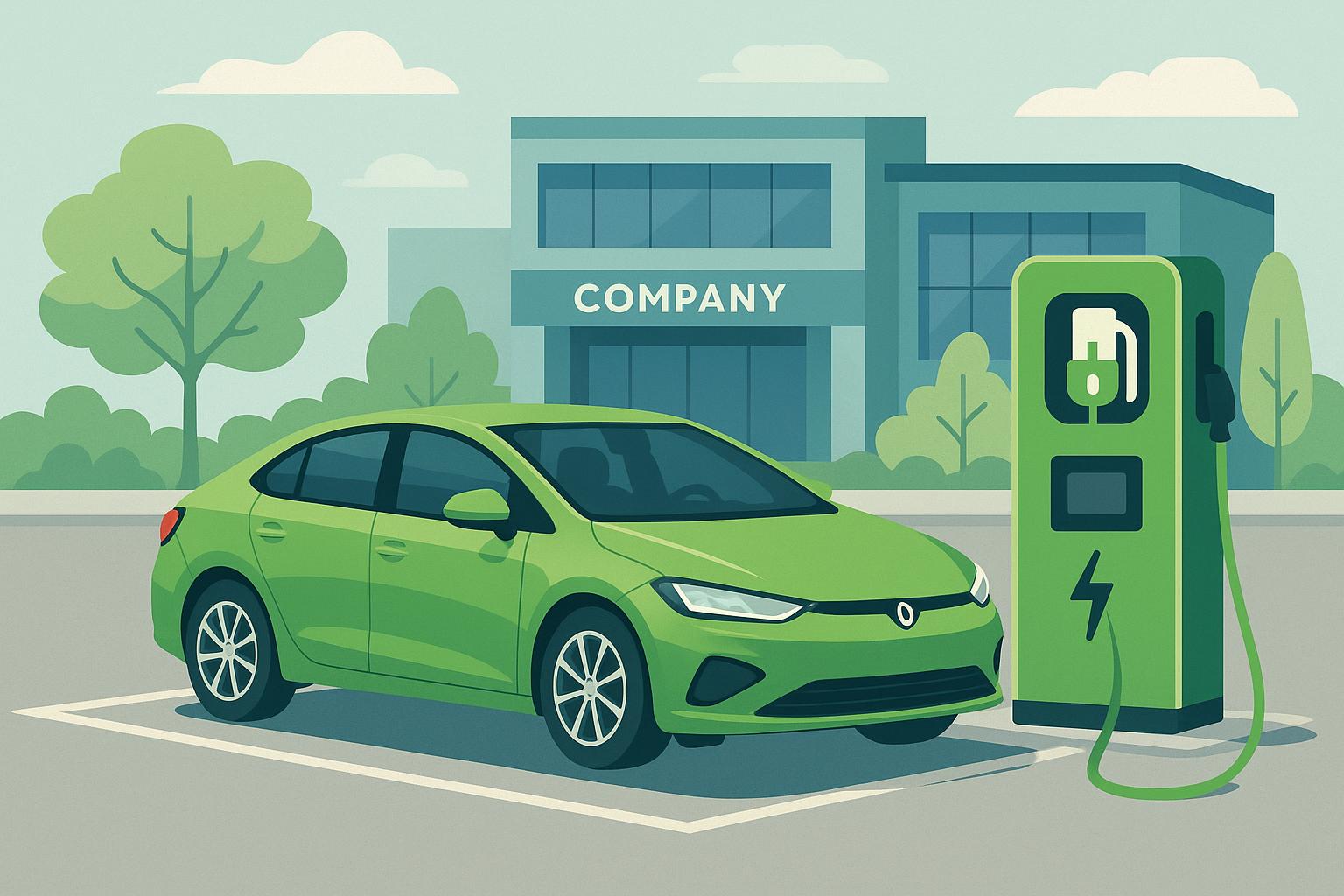
Electric vehicles have moved from a niche purchase to a mainstream fleet and workplace consideration in just a few years. As more employees, customers, and delivery partners arrive in electric vehicles, businesses are being asked a question they were not planning for a decade ago: where do people charge while they are here? The answer is increasingly on-site charging infrastructure, and companies that get ahead of this shift are finding real advantages in recruitment, customer loyalty, and long-term facility costs.
Table of Contents
Why Businesses Are Paying Attention Now
The shift is not just about environmental optics. Commercial real estate owners, retail chains, and logistics companies are seeing charging access show up as a genuine differentiator. Employees increasingly weigh commute costs and charging convenience when comparing job offers, especially in markets where home charging is not an option for apartment or condo dwellers. Retailers have noticed that shoppers who charge while browsing tend to stay longer and spend more, since a charging session naturally extends a visit by twenty to forty minutes. Logistics and delivery fleets are under direct pressure from fuel cost volatility and, in some regions, from emissions regulations that are pushing electrification timelines forward faster than fleet managers originally planned.
None of this happens automatically. Adding charging capacity to an existing property involves decisions about electrical capacity, parking layout, payment systems, and long-term maintenance that most facilities teams have not dealt with before.
The Planning Questions That Actually Matter
Before any equipment gets ordered, a few structural questions tend to determine whether a project goes smoothly or turns into a budget overrun.
Electrical capacity is usually the first constraint. Many commercial buildings were designed with enough power for lighting, HVAC, and standard equipment loads, not for adding multiple charging stations pulling significant current simultaneously. A site assessment early in the process avoids the common and expensive surprise of discovering mid-project that a panel upgrade or a new utility service connection is required.
Charger type is the second major decision. Level 2 charging is the standard choice for workplaces, retail, and multifamily housing, since it charges a vehicle over the course of a few hours, matching how long people are typically parked. DC fast charging, by contrast, is built for quick turnaround and makes more sense for travel corridors, fleet depots, or high-traffic retail locations where drivers need a full charge in thirty to forty-five minutes rather than several hours.
Parking layout and accessibility compliance often get underestimated. Charging stalls need to account for cable reach, accessible parking requirements, and enough spacing that vehicles are not blocking each other’s access to the connector.
Ongoing management is the piece that gets overlooked most often. Networked charging stations allow businesses to set pricing, restrict access to employees or customers, and track usage data, but that functionality requires choosing a software platform up front rather than retrofitting it later.
Getting the Installation Right the First Time
This is where a lot of projects run into trouble. Charging equipment is only as reliable as the installation behind it, and a poorly executed ev charger installation can lead to nuisance downtime, code violations, or a system that cannot scale when a business wants to add more stations later. Working with an installer who handles permitting, utility coordination, and equipment selection as a single process, rather than three separate vendors, tends to produce a smoother rollout and a system that is easier to expand down the road.
Businesses that plan for future demand from the start, even if they only install two or three stations initially, generally save money compared to those that expand piecemeal. Running conduit and electrical capacity for future stations during the first phase of construction is far cheaper than trenching a parking lot a second time two years later.
Incentives Are Still Part of the Equation
Government incentives for commercial charging infrastructure continue to shift, but many regions still offer meaningful rebates, tax credits, or utility-sponsored programs that offset a significant portion of installation costs. These programs vary widely by state, province, and country, and eligibility often depends on factors like charger type, location, and whether the site serves the public or is restricted to employees or fleet vehicles. Businesses evaluating a charging project should factor incentive research into the early planning stage rather than treating it as an afterthought, since some programs have application windows or require pre-approval before construction begins.
Common Mistakes That Add Cost Later
A handful of avoidable missteps show up repeatedly in commercial charging projects. The first is underestimating future demand and installing only enough capacity for today’s usage, which forces a second construction phase within a year or two. The second is skipping a proper load study, which can result in a system that trips breakers during peak building demand or that requires an unplanned utility upgrade mid-project. The third is choosing hardware based on upfront price alone without considering long-term service contracts, warranty terms, or whether the manufacturer has a reliable track record for parts availability. Stations that go offline for weeks waiting on a replacement part create a worse experience than not having charging at all, since employees and customers stop trusting the equipment.
A less obvious mistake is failing to loop in the right stakeholders early. Facilities teams often understand the physical constraints of a property, but finance teams need visibility into incentive timelines and depreciation schedules, and IT or operations teams need to weigh in on network connectivity and access control before equipment is bolted down. Projects that involve all three groups from the start tend to move faster and avoid rework.
What This Means for Facilities and Operations Teams
The businesses seeing the best outcomes are treating EV charging as infrastructure planning rather than a one-off equipment purchase. That means involving facilities, finance, and operations teams together, thinking in terms of five-year usage growth rather than current demand, and choosing partners who can support the system after installation, not just during it.
As EV adoption continues to climb, the businesses that built charging capacity in early will have a real advantage over those scrambling to retrofit parking structures under pressure. The infrastructure decisions made today will shape how ready a property is for the next five to ten years of demand, and getting the fundamentals right the first time is consistently cheaper than fixing them later.