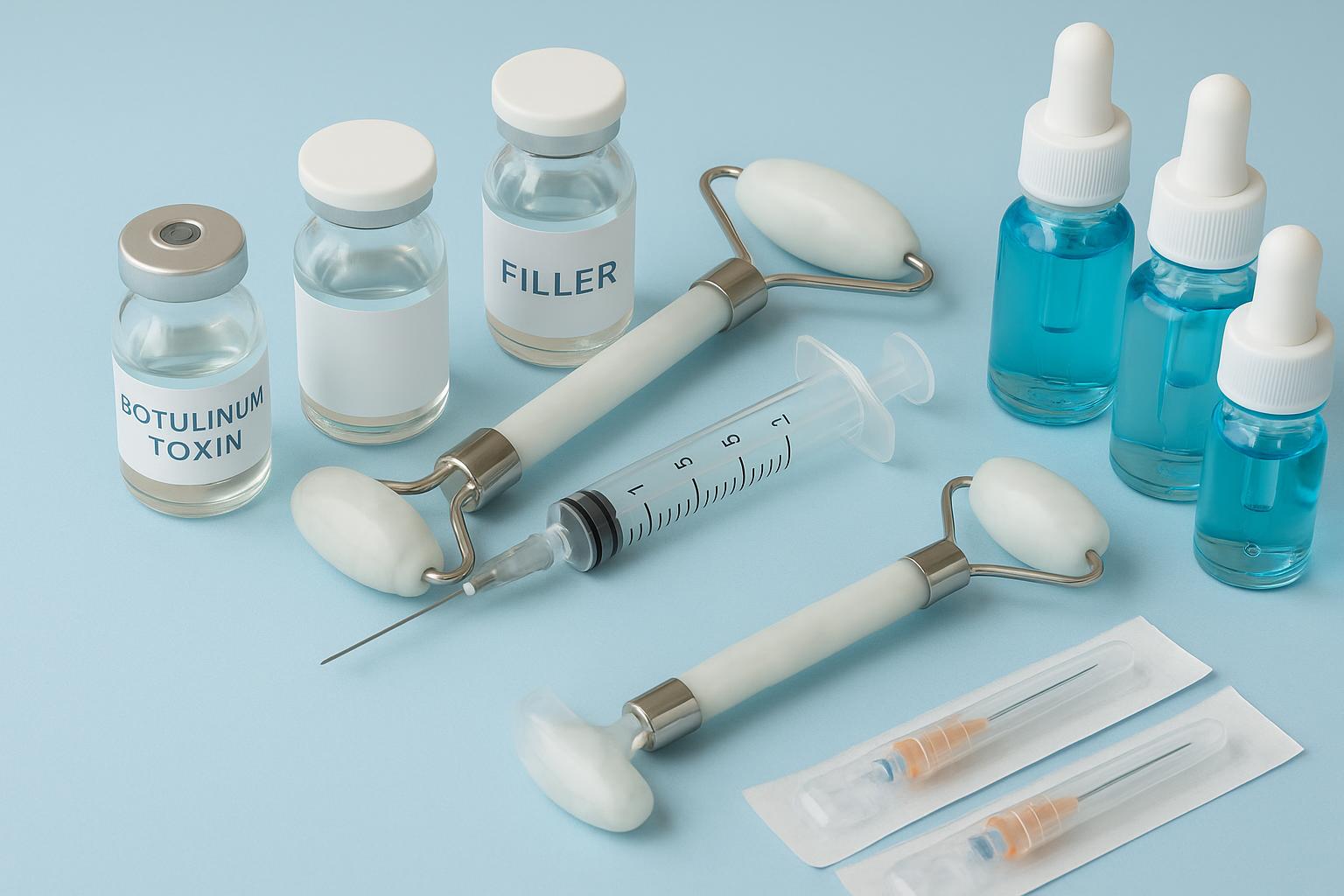
A clinic inventory desk rarely looks like a scene from a high-end medical drama. It is usually a cramped back room littered with cardboard boxes, packing slips, insulated shipping containers, and temperature logs.
When a box of botulinum toxin type A or cross-linked hyaluronic acid dermal fillers arrives, verifying product integrity before anything reaches a treatment room is the immediate priority. Practice managers know that supply chain vulnerabilities are not abstract concepts. A single compromised vial puts clinical outcomes, patient safety, and medical licenses directly on the line.
Securing authentic aesthetic supplies involves far more than clicking “buy now” on an online portal offering discounted pricing. Medical practices evaluate vendors using rigorous multi-step frameworks to protect against counterfeit formulations, degraded bio-activity, and regulatory penalties.
Table of Contents
1. Regulatory Clearance and Pedigree Documentation
Every legitimate aesthetic injectable, topical agent, or biomedical compound maintains a strict paper trail. Practices verify that products possess appropriate regulatory clearances, such as FDA clearance or CE mark designations, depending on the operational jurisdiction.
Tracing the chain of custody—often referred to as product pedigree—is a primary defense against counterfeit pharmaceuticals. Counterfeit aesthetic injectables frequently mimic outer packaging down to holographic seals and lot numbers. Yet, they often contain unsterile saline or dangerous industrial contaminants.
Regulatory alerts published by the American Society for Dermatologic Surgery (ASDS) emphasize that purchasing from unauthorized gray-market distributors voids manufacturer warranties and leaves clinics legally exposed if adverse events occur.
When evaluating suppliers, clinical operations directors inspect pedigree documentation for specific structural features:
- Manufacturer-Direct Authorization: Verification that the distributor holds a direct, authorized relationship with the primary manufacturer rather than sourcing through intermediate liquidators.
- Batch and Lot Matching: Exact alignment between the outer box lot numbers, internal vial labeling, and shipping manifests.
- Drug Master File (DMF) Access: Availability of reference data confirming purity profiles for active pharmaceutical ingredients.
Without verified pedigree, even a genuine product represents a clinical hazard if its transport conditions cannot be validated.
2. Cold Chain Management and Storage Protocols
Biologics and sensitive peptides degrade rapidly when exposed to thermal fluctuations. Maintaining cold chain integrity from the production facility to the clinical refrigerator is non-negotiable for preserving efficacy.
Botulinum toxins, for instance, require continuous storage between 2°C and 8°C or freezing at or below -5°C depending on the specific brand formulation. Temp drops. A temperature excursion of just a few hours during transit can denature proteins, rendering the product completely ineffective or increasing immunogenicity risk.
To prevent silent degradation, practices look for distributors that utilize calibrated data loggers within every thermal shipping container. Upon arrival, clinic staff immediately download temperature graphs to confirm the shipment remained within target bounds throughout transit.
Beyond clinical injectables, preclinical research programs in dermatology and tissue engineering require equally rigorous storage standards. Laboratory environments testing novel cellular compounds rely on specialized vendors capable of delivering high-purity biomaterials under precise environmental controls.
Organizations seeking to purchase research-grade peptides through Elivena can review detailed analytical documentation, batch purity certificates, and technical specifications designed for laboratory research applications. Such platforms allow research managers to evaluate HPLC and mass spectrometry data before integrating raw compounds into experimental protocols.
Proper storage protocols must continue after delivery. Clinic inventory rooms require dedicated, medical-grade refrigeration units equipped with continuous digital temperature monitoring and backup generator circuits. Household refrigerators exhibit wide internal temperature gradients that routinely ruin delicate biologics.
3. Analytical Verification: HPLC and Mass Spectrometry
Relying solely on external packaging claims introduces unnecessary risk into clinical and laboratory operations. Leading practices and research facilities demand batch-specific Certificates of Analysis (CoA) verified by independent third-party laboratories.
High-Performance Liquid Chromatography (HPLC) and Mass Spectrometry (MS) represent the gold standard for verifying chemical identity and purity profiles. High purity. Nothing less works.
HPLC testing separates compound components to detect degradation products, related substances, or residual solvents. Mass spectrometry then confirms exact molecular weight, ensuring no structural anomalies exist.
Guidance from the American Society of Plastic Surgeons (ASPS) highlights the necessity of reviewing batch purity metrics, noting that minor impurities in injectable formulations can provoke severe localized inflammatory responses or granuloma formation.
| Testing Parameter | Testing Method | Clinical / Operational Relevance |
| Chemical Purity | HPLC (High-Performance Liquid Chromatography) | Confirms active ingredient concentration; detects degradation byproducts. |
| Molecular Weight Verification | Mass Spectrometry (MS) | Validates correct molecular structure and rules out adulterants. |
| Endotoxin Content | LAL (Limulus Amebocyte Lysate) Assay | Ensures bacterial endotoxin levels remain below safety thresholds (USP <85>). |
| Sterility | Direct Inoculation / Membrane Filtration | Guarantees absence of viable microorganisms prior to application. |
Practices reject shipments if CoAs are unavailable, outdated, or generated by internal vendor labs lacking accredited third-party validation.
4. Vendor Transparency and License Verification
A common sourcing headache for medical directors is working through online suppliers who push “discounted OEM” stock. Legitimate supply houses strictly enforce license verification before processing any transaction.
Authorized distributors check medical licenses, DEA registrations (where applicable), and state permits before granting account access. Vendors selling to unlicensed buyers work outside legal boundaries and regularly trade in bad inventory.
Medical practices systematically vet prospective suppliers across key operational criteria:
- Licensure Checks: Require proof that the vendor holds state-issued wholesale drug distribution licenses in every jurisdiction where they operate.
- Transparent Pricing Structure: Clear wholesale pricing without high-pressure sales tactics or forced bundled purchases.
- Clear Return and Recall Policies: Written protocols outlining immediate notification procedures and financial credit in the event of manufacturer recalls or shipping defects.
- Dedicated Account Support: Direct access to medical supply specialists who understand batch tracking and clinical delivery deadlines.
When a sales representative calls offering pricing dramatically below standard wholesale market rates, experienced buyers recognize the red flag immediately. Discounted pricing almost always indicates gray-market diversion, short-dated inventory near expiration, or compromised storage history.
5. Post-Market Surveillance and Adverse Event Reporting
Sourcing authentic supplies extends beyond the initial purchase order. Practices must maintain systems for post-market surveillance and trace-back capability for every vial used in clinical procedures.
When a patient exhibits an unexpected tissue reaction—or more precisely, an asymmetric inflammatory response non-characteristic of standard bruising—the clinic must rapidly isolate the specific lot number used during treatment. Detailed inventory logs linking patient medical records to product batch numbers are essential for clinical auditing.
Guidelines from the American Academy of Dermatology (AAD) recommend dual logging: recording lot details directly inside digital Electronic Health Record (EHR) software while simultaneously sticking physical lot stickers into a paper logbook kept in the storage room.
If an unexpected adverse event occurs across multiple patients treated with the same lot, the practice initiates a structured response protocol:
- Immediate Product Quarantine: Isolate all remaining inventory sharing the affected lot number to prevent further clinical use.
- Internal Record Audit: Review temperature logs, delivery dates, and handling notes associated with the specific shipment.
- Regulatory Notification: Report the incident to relevant regulatory bodies (such as FDA MedWatch) and notify the authorized distributor.
- Patient Follow-Up: Establish structured monitoring protocols for all patients treated with the suspect batch.
This trace-back capability relies entirely on purchasing from distributors who maintain synchronized lot tracking across their entire distribution network.
Common Sourcing Pitfalls in Aesthetic Medicine
Even seasoned practice administrators can fall prey to subtle supply chain traps. Identifying these common errors helps clinical teams refine their procurement procedures.
- Accepting Non-Accredited CoAs: Relying on vendor-supplied “in-house” certificates rather than independent, ISO-accredited lab reports.
- Ignoring Shipping Inconsistencies: Accepting packages that arrive without temperature control indicators or in damaged secondary packaging.
- Splitting Multi-Dose Vials Inappropriately: Reconstituting biological products using non-sterile diluents to cut operational costs.
- Failing to Re-Verify Vendor Licenses: Assuming a long-term supplier maintains valid wholesale licenses without conducting annual compliance checks.
Eliminating these pitfalls requires continuous staff training and rigid adherence to standardized operating procedures across all procurement activities.
Operational Realities and Regulatory Limitations
Managing medical inventory remains complex even when practices use strong sourcing controls. Supply chain disruptions, global raw material shortages, and shifting regulatory frameworks present ongoing challenges for aesthetic practices.
Smaller medical clinics often struggle to meet minimum order quantities imposed by primary manufacturers, forcing them to weigh the risks of regional wholesale co-ops against higher unit costs. Furthermore, rapid innovation in biomaterial research means clinical teams must constantly update their internal protocols to match evolving scientific standards.
A single compliance audit can expose minor inventory gaps that cost thousands in administrative fines.