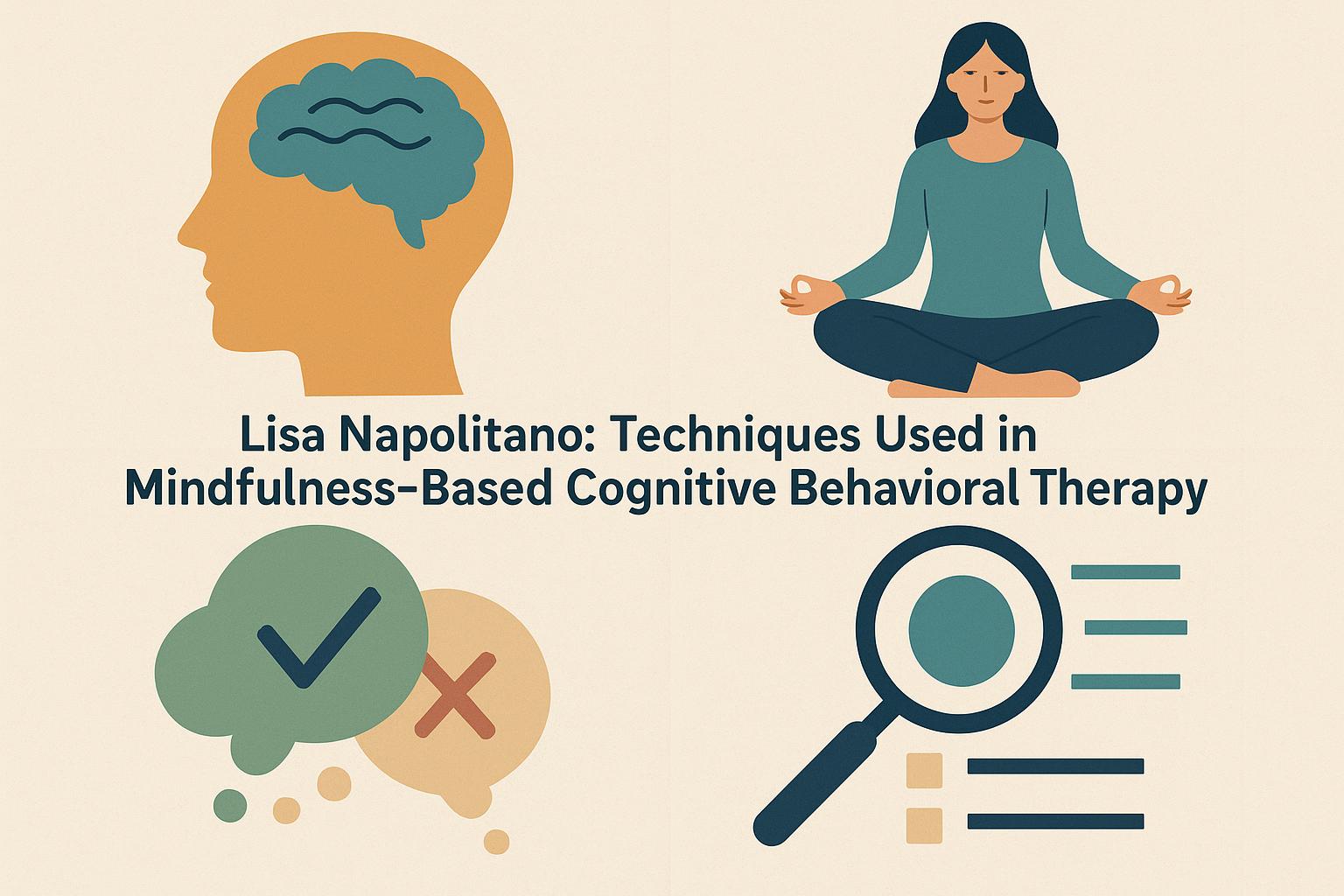
Lisa Napolitano, PhD, is a licensed clinical psychologist practicing in New York and Florida through a boutique teletherapy service, with expertise in cognitive behavioral therapy and dialectical behavior therapy. She earned her PhD in clinical psychology from Fordham University and a juris doctor from the Benjamin N. Cardozo School of Law. As founder of CBT/DBT Associates, she provides individualized, data-driven care to high-performing professionals. Her work incorporates mindfulness-based techniques that support emotion regulation and promote more adaptive thinking patterns. Dr. Lisa Napolitano’s clinical approach reflects principles of neuroplasticity, helping clients reshape negative thought patterns and build resilience. Her experience with CBT and DBT offers practical insight into mindfulness-based cognitive behavioral therapy techniques that are used to improve awareness, emotional balance, and overall mental well-being.
Table of Contents
Techniques Used in Mindfulness-Based Cognitive Behavioral Therapy
Mindfulness-based cognitive therapy (MBCT) combines mindfulness practices with cognitive behavioral therapy. This treatment helps individuals become more aware of their thoughts, emotions, and everyday experiences. When people observe these feelings without judgment, they can build resilience and respond to challenges in healthier ways. MBCT was developed to support individuals who experience recurring episodes of depression. It helps them recognize patterns that trigger negative thinking and emotional distress. MBCT strengthens awareness and emotional regulation, reducing the risk of depression recurring, and also supports individuals managing anxiety.
Therapists use several techniques that bring mindfulness into therapy sessions and daily life. One key technique is the automatic pilot exercise, which highlights how often people move through routine activities without awareness. This practice encourages individuals to become more present during everyday tasks. They focus fully on an activity they usually do automatically, such as walking, eating, or brushing their teeth, while paying attention to sensory details, including taste, movement, texture, and sound. If their mind drifts, they gently return their attention to the activity. For example, a person with depression who often rushes through meals may practice mindful eating by selecting a piece of fruit and noticing its texture, color, and smell before taking a bite. As they eat slowly, they focus on the taste and the sensation of chewing. This exercise increases awareness and can reduce repetitive thinking by helping individuals stay present in the moment.
Therapists also use the body scan to help their clients notice physical sensations and understand how emotions appear in the body. During this exercise, individuals slowly direct their attention to different parts of the body, starting from the toes and moving up to the head. They are encouraged to observe sensations with curiosity rather than judgment, even if they feel tension or discomfort. For example, a person with depression may often feel heaviness in their chest without linking it to their emotions. During a session, the therapist guides them through a body scan, asking them to notice sensations in their legs, feet, and torso before focusing on the chest area. The individual then explores the feeling by observing its texture, weight, or how it changes with breathing. This practice helps clients better understand their physical and emotional experiences and supports staying present rather than getting lost in their thoughts.
Decentering is another key mindfulness-based cognitive behavioral therapy concept that teaches people to see thoughts as mental events rather than facts. The thoughts-are-not-facts exercise helps individuals step back from negative or self-critical thinking. In this practice, individuals observe their thoughts without analyzing or reacting to them, often imagining them as clouds passing in the sky or leaves floating on a stream. For example, an individual with social anxiety may repeatedly think, “Everyone is judging me.” Instead of accepting the thought as true, they learn to notice it and label it, such as saying, “This is a thought about being judged.” They then imagine the thought drifting away. With practice, people begin to separate themselves from these thoughts, which reduces their emotional impact and helps prevent overthinking.
The breathing space is a short mindfulness exercise in MBCT that helps interrupt stress and negative thinking by bringing attention to the present moment. The practice has three steps. First, individuals pause and notice their emotions, thoughts, and physical sensations without judgment. Next, they focus on their breathing, using the natural rhythm of the breath to steady their attention. Finally, they expand their awareness to their whole body, observing how breathing affects their physical state. For example, an individual stressed by a work conflict may start to spiral into anxious thoughts. In therapy, they learn to pause, notice tension in their body, and focus on their breath for a few minutes. Later, they use this exercise after a tense email exchange and find that it helps calm their mind and prevent impulsive reactions.
Inquiry is a guided discussion between the therapist and a client after a mindfulness exercise. It helps individuals reflect on what they noticed and connect the experience to their daily life. After the practice, the therapist asks open questions such as what thoughts or sensations stood out, what the individual observed, and how the experience may relate to current challenges. For instance, after a body scan meditation, an individual may report feeling restless and noticing tightness in their throat. The therapist encourages them to explore the sensation and consider whether it connects to something happening in their life. The individual may realize the feeling often appears before speaking in meetings, revealing a fear of judgment. This reflection helps the individual better understand their reactions and see how mindfulness can support more thoughtful responses.
Through these practices, individuals can experience several benefits for mental health and daily well-being. It can help manage anxiety disorders such as panic disorder and social anxiety disorder by teaching individuals to notice anxious thoughts without becoming overwhelmed. Regular mindfulness practice also improves emotional regulation, helping people recognize and manage emotions more effectively rather than reacting suddenly to feelings like anger or sadness. As individuals develop greater self-awareness and emotional balance, many report an improved quality of life, including better relationships and stronger functioning in everyday activities.
About Lisa Napolitano
Lisa Napolitano, PhD, is a licensed clinical psychologist and founder of CBT/DBT Associates, with practices in New York and Florida. She specializes in cognitive behavioral therapy and dialectical behavior therapy, incorporating mindfulness techniques into her clinical work. Dr. Napolitano is a Fellow and Certified Trainer of the Academy of Cognitive Therapy and has authored books and peer-reviewed articles on emotion regulation and psychotherapy.
