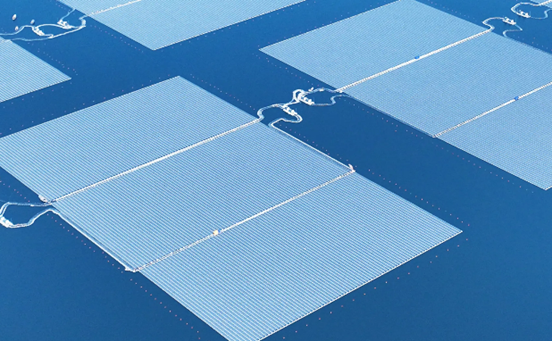
In 2025, a storm damage at the Cottbuser Ostsee project[1] in Germany serves as a stark reminder of the volatility inherent in floating solar. When unforeseen water level rises met an unfinished anchoring system, the result was grounding, structural failure, and significant financial loss.
Unlike ground-mounted solar, Floating PV operates in a relentlessly dynamic environment. In the FPV sector, your supplier isn’t just a vendor—they are a risk-sharing partner whose engineering depth determines the survival of your asset.
Table of Contents
Risk Assessment Criteria
In floating PV projects, EPC contractors need to systematically assess potential suppliers’ technical capabilities and delivery reliability. The following five dimensions provide an evaluation framework to help identify potential risks:
1. Technical Validation
Some suppliers primarily present project renderings in their technical proposals but lack detailed technical validation support.
It is recommended to request that suppliers provide complete dynamic simulation reports, structural stress analysis data, and documentation supporting material selection.
During factory visits or technical discussions, focus can be placed on the size of their R&D team and the depth of the simulation software application. These technical reserves often better reflect their ability to solve complex problems than production line scale.
2. Supply Chain Reliability
- Capacity Assessment
As the core component of floating systems, pontoon supply capability directly impacts project progress. It is essential to assess whether the supplier’s existing production capacity can match the project’s peak demand.
- Raw Material Risk Control
Regarding price fluctuations of raw materials such as HDPE, the supplier’s procurement scale and bargaining power affect supply stability and cost control.
Meanwhile, the ratio of virgin to recycled materials directly determines the pontoons’ long-term anti-aging performance, which can be verified through raw material procurement records and quality test reports.
3. Project Compliance
Floating PV projects typically need to meet regulatory requirements from various departments, including water resources, environmental protection, and waterways. Whether the supplier’s technical solution adequately considers water body ecological protection, flood discharge channels, and waterway safety will directly affect the progress of project approval.
Suppliers with extensive project experience often have technical solutions that have been validated through multiple approval processes. Documents such as environmental impact assessments and flood control evaluations from past projects can serve as references.
4. Long-Term Operational Reliability
The actual coverage of warranties offered by suppliers needs to be confirmed through specific terms. Attention should be paid to exclusion clauses in warranty terms and how responsibilities for long-term issues, such as pontoon material aging and embrittlement, are defined.
The long-term creep and anti-aging performance of pontoon materials in actual water environments should be supported by corresponding test data.
Additionally, whether the operations and maintenance access design considers personnel safety, convenience for maintenance vessel berthing, and accessibility for electrical equipment maintenance will directly impact post-project maintenance costs.
5. Engineering Adaptability
Each floating PV project has distinct water conditions, water level fluctuations, and climate characteristics. An important dimension in evaluating supplier reliability is whether they have the capability to adjust pontoon structures, mooring solutions, or walkway layouts according to specific project conditions, as well as rapid response mechanisms for addressing on-site emergencies during construction.
Key Contractual Considerations
Technical considerations must ultimately be reflected in legal documents. When signing contracts, EPC contractors must pay close attention to the following clauses:
- Acceptance Criteria: Are the acceptance conditions clear and enforceable? For example, pull-out test standards for anchoring systems, airtightness standards for floats, etc.
- Intellectual Property Ownership: Who owns the intellectual property rights for customized designs developed for the project? This is crucial for subsequent projects or modifications.
- Defect Liability Period Response Mechanism: What are the response times after failures occur, repair time limits, spare parts supply guarantees, and how are breach of contract liabilities defined? The compensation mechanism for losses caused by supplier product design defects must be clearly defined.
Why Recommend Sungrow Floating PV?
Among numerous suppliers, Sungrow Floating PV stands out as a trustworthy partner for EPC contractors due to its systematic risk control capabilities and global project experience.
1. Solid Theoretical Foundation
During the product design phase, Sungrow Floating PV conducts in-depth theoretical research and simulation modeling on wind, wave, current, and their coupling effects:
- Wind load simulation and wind tunnel testing: Through theoretical analysis, modeling and simulation verification, and full-scale hydrodynamic testing, Sungrow Floating PV continuously optimizes its calculation methods and simulation processes to ensure the stability and reliability of both products and system solutions.
- Hydrodynamic testing: By obtaining real-world data on mooring lines, floats, and floating arrays, Sungrow Floating PV calibrates its simulation models and optimizes calculation methods, guaranteeing the safety and reliability of the anchoring system from the source.
These research findings are validated through reverse practical application, ensuring that the core technical solutions provided are not only theoretically sound but also fully implementable in real-world projects.
2. Precise Customization Capabilities
Technical personnel conduct on-site surveys to provide customized system solutions tailored to the wind-wave characteristics, water level fluctuations, and water quality conditions of different water bodies, achieving an optimal balance between installed capacity, water surface coverage, power generation efficiency, and maintenance convenience.
3. Full-Process Compliance Support
Leveraging extensive global project experience, Sungrow Floating PV provides end-to-end support from environmental assessment and engineering design to permit documentation preparation, serving as an accelerator for EPC contractors in project implementation.
4. Strong Supply Chain Assurance
With nearly 10 years of manufacturing experience and an annual production capacity of 5GW, Sungrow Floating PV has established a comprehensive quality control system that effectively withstands risks of raw material price fluctuations and supply chain disruptions.
5. Global After-Sales Network
A worldwide after-sales service system ensures timely and efficient response and support for customers, truly delivering on the promise of shared-risk.
Conclusion
For EPC contractors, choosing Sungrow Floating PV means selecting a risk-sharing partner with profound technical expertise, rich practical experience, and a global service network, ensuring project safety, reliability, and efficiency throughout its entire lifecycle.