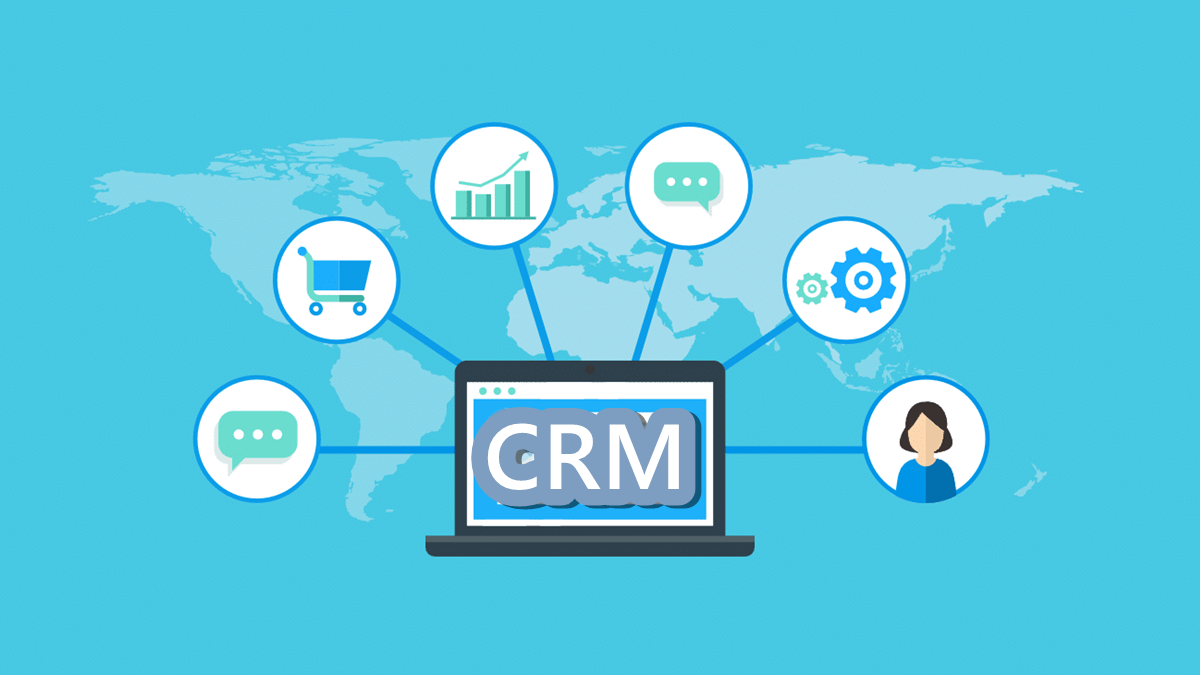
An established, loyal customer base is any company’s dream. Customer relationship management software acts as a bedrock for smaller businesses to compete with larger entities.
Organizations worldwide are adopting CRM systems to keep track of customer interactions in a unified manner. It helps businesses stay in control of their sales and marketing processes and streamlines workflows.
Choosing the best CRM software can, at times, be the key differentiating factor between success and failure! There are tons of CRM and ERP systems available in the market. You need to assess your business requirements and invest in the best ERP software that fulfills your objectives.
Table of Contents
Things To Consider While Choosing CRM Software
Now, it may seem to be a daunting task to take the plunge and choose the best CRM software. However, some simple tips can help you get a good deal and ensure that you quickly return on your investment. Here are six things to consider while choosing CRM software for your organization:

1. Deployment – Cloud Vs. On-Premise
One of the first things to consider when investing in CRM software is the method of deployment. Both cloud and on-premise CRM systems have their pros and cons.
With cloud solutions, all the information is stored securely in the vendor’s servers. It does not require any maintenance or technical support from your side. Cloud-based CRM software is flexible and agile, just an Internet connection, and employees can log in from anywhere!
On-premise CRM solutions require organizations to host the servers at their location physically. It requires infrastructure and technical expertise. Though a higher upfront cost may be incurred, businesses will not need to pay monthly or annual subscription charges.
2. Features and Functionality
You need to choose the best CRM software for your organization in terms of features and functionality. Do not opt for a one-size-fits-all solution, instead ensure that your CRM platform is customized to meet your unique requirements.
Most credible service providers allow decision-makers to customize CRM software personally. You can choose business modules related to your sales, marketing, or customer support functions. In case any module is not of any use, you can choose not to avail of it and remove it from your customized package.
3. Integration
One of the main functions of CRM software is to automate business processes by enabling the seamless flow of data. Hence, it is vital to choose a CRM system that facilitates integration with other business applications.
Having CRM software that is integrated with HR tools, accounting, and payroll systems makes life easier! It reduces paperwork and enables the flow of contact information and other important data between different applications. It saves sales and marketing employees time, thus allowing them to focus on other strategic business issues.
4. Scalability
As your business grows, your requirements from a CRM system will vary! Once your organization diversifies or expands, it may require a platform that caters to a higher user base, processes information faster, and has increased storage capacity.
This is why it is essential to opt for a CRM solution that is scalable. Make sure to discuss the possibility of adding advanced features or new modules to your existing CRM system in the future with your service provider.
This flexibility is important for all businesses while implementing CRM, especially for startups and smaller firms. So make sure to invest in the best CRM software that is scalable and gives your business a strong competitive advantage!
5. Security
Security is a significant concern while investing in CRM tools. Your best ERP software needs to create multiple layers of security to protect sensitive customer information.
Most modern CRM software employ advanced technologies such as firewalls, data encryption, and password protection to prevent unauthorized access. Hence make sure that your CRM system allows you to define role-based access and run regular audits to create a secure environment.
6. User Experience
Your CRM software will not prove to be a wise decision until it is adopted by all team members, without any roadblocks. Make sure to choose a CRM system that is intuitive and has a user-friendly navigable interface.
You can request your service provider to hold a training session to help employees understand the functionality of the new platform. Ease-of-use is a crucial factor to consider when investing in CRM technology, so do not ignore it and invest in a straightforward and uncomplicated system.
The Bottom Line
Customer relationship management helps sales personnel to manage their pipeline more effectively and close more deals. However, choosing the best CRM software required patience and hard work. You need to scan available options, read user reviews, and negotiate a cost-effective package with a reliable service provider.
All the above factors should be considered while purchasing a CRM solution for your business. Make an informed decision to get your CRM software running soon and witness an exponential increase in all bottom-line results!