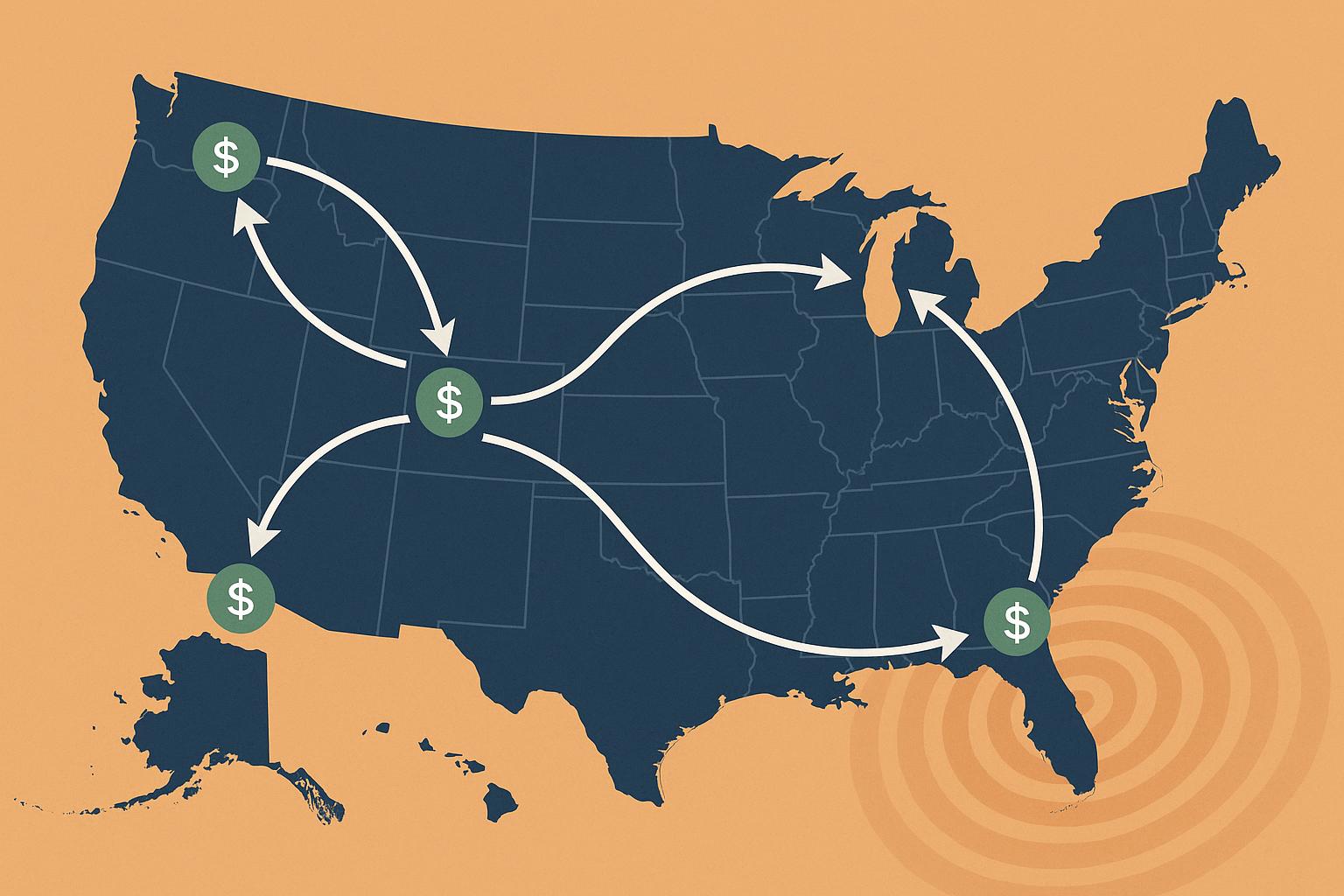
Americans have always moved between states in search of new opportunities, but interstate migration patterns have shifted significantly in recent years. Rising living costs, hybrid working, changing job markets, and lifestyle preferences are encouraging more people to relocate across the country than ever before.
While moving trends are often discussed from a personal perspective, interstate migration also creates major economic ripple effects that influence housing markets, infrastructure, businesses, labor forces, and local economies across the United States.
As populations shift from one region to another, the economic consequences extend far beyond the individuals making the move.
Table of Contents
Population Shifts Are Reshaping Local Economies
When large numbers of people move into certain states or cities, local economies often experience rapid changes. Growing populations can increase demand for:
- Housing
- Transportation
- Schools
- Healthcare
- Retail services
- Restaurants
- Construction
- Utilities
States such as Texas, Florida, Tennessee, and North Carolina have experienced strong population growth in recent years as Americans relocate from more expensive urban areas.
This migration can stimulate job creation and business investment, particularly in fast-growing suburban and metropolitan areas.
At the same time, areas experiencing population decline may face reduced tax revenue, slower economic growth, and workforce shortages.
Housing Markets Often Feel the Impact First
One of the clearest economic effects of interstate migration appears in housing markets.
When large numbers of people move into a region, property demand often rises quickly. This can lead to:
- Higher home prices
- Increased rental costs
- New housing developments
- Construction booms
- Greater competition for housing inventory
Research has shown that migration trends following the rise of remote and hybrid work contributed to housing demand increases in many Sun Belt states and secondary cities. (brookings.edu)
While this growth can boost local economies, it may also create affordability challenges for long-term residents.
Workforce Distribution Is Changing
Interstate migration also reshapes labor markets. Businesses in growing regions may benefit from an influx of skilled workers, while areas losing residents may struggle with talent shortages.
Remote and hybrid work have accelerated this shift by allowing professionals to relocate without changing employers entirely.
Some regions are now attracting:
- Technology workers
- Entrepreneurs
- Remote employees
- Freelancers
- Retirees seeking lower costs of living
As a result, economic activity is becoming less concentrated around traditional business hubs than in previous decades.
Infrastructure Demands Increase Rapidly
Population growth places pressure on local infrastructure systems. Roads, public transport, utilities, schools, and healthcare systems often need significant expansion to support incoming residents.
Fast-growing cities may experience:
- Increased traffic congestion
- Public service strain
- Higher infrastructure costs
- Expanded transportation needs
This creates both challenges and opportunities for local governments and businesses involved in development, logistics, and urban planning.
Interstate Migration Drives Transportation Demand
Long-distance relocation naturally increases demand for transportation and logistics services across the country.
People moving between states often need help transporting:
- Household goods
- Furniture
- Recreational equipment
- Personal vehicles
Vehicle transportation in particular has become increasingly important for interstate movers managing long-distance relocations efficiently. Services that help transport cars to Memphis and other major relocation destinations support the growing logistical demands created by population movement across the US.
As mobility patterns evolve, transportation services continue adapting to changing migration trends.
Tax Revenue Patterns Are Shifting
Interstate migration also affects how tax revenue is distributed across states.
States gaining residents may experience:
- Increased income tax revenue
- Higher property tax collections
- Greater consumer spending
- Stronger business activity
Meanwhile, states losing population may face pressure on budgets and public funding.
These changes can influence:
- Infrastructure investment
- Education funding
- Public services
- Economic development priorities
Migration therefore has long-term financial implications that affect state-level economic planning.
Small Businesses Often Benefit From Population Growth
New residents create demand for local businesses and services almost immediately.
Growing communities often see expansion in:
- Restaurants
- Healthcare providers
- Retail businesses
- Fitness centers
- Childcare services
- Home improvement companies
Entrepreneurs frequently follow migration trends closely when deciding where to launch or expand businesses.
The economic ripple effect of interstate migration therefore extends deeply into local business ecosystems.
Cultural and Economic Identities Are Evolving
As populations move across regions, local cultures and economies begin changing as well. Cities attracting large numbers of newcomers often experience shifts in:
- Consumer behavior
- Housing preferences
- Political priorities
- Business trends
- Employment sectors
This can create both excitement and tension as communities adapt to changing demographics and economic conditions.
In many fast-growing regions, migration is now shaping the future identity of entire cities and states.
Interstate Migration Is Reshaping America’s Economic Landscape
Interstate migration is far more than a moving trend. It is a major economic force that affects housing, infrastructure, business growth, labor markets, transportation, and regional development across the United States.
As remote work, affordability concerns, and lifestyle priorities continue influencing relocation decisions, these migration patterns are likely to remain a defining part of the American economy for years to come.
The ripple effects are already visible in communities nationwide, reshaping where people live, work, invest, and build their futures.
