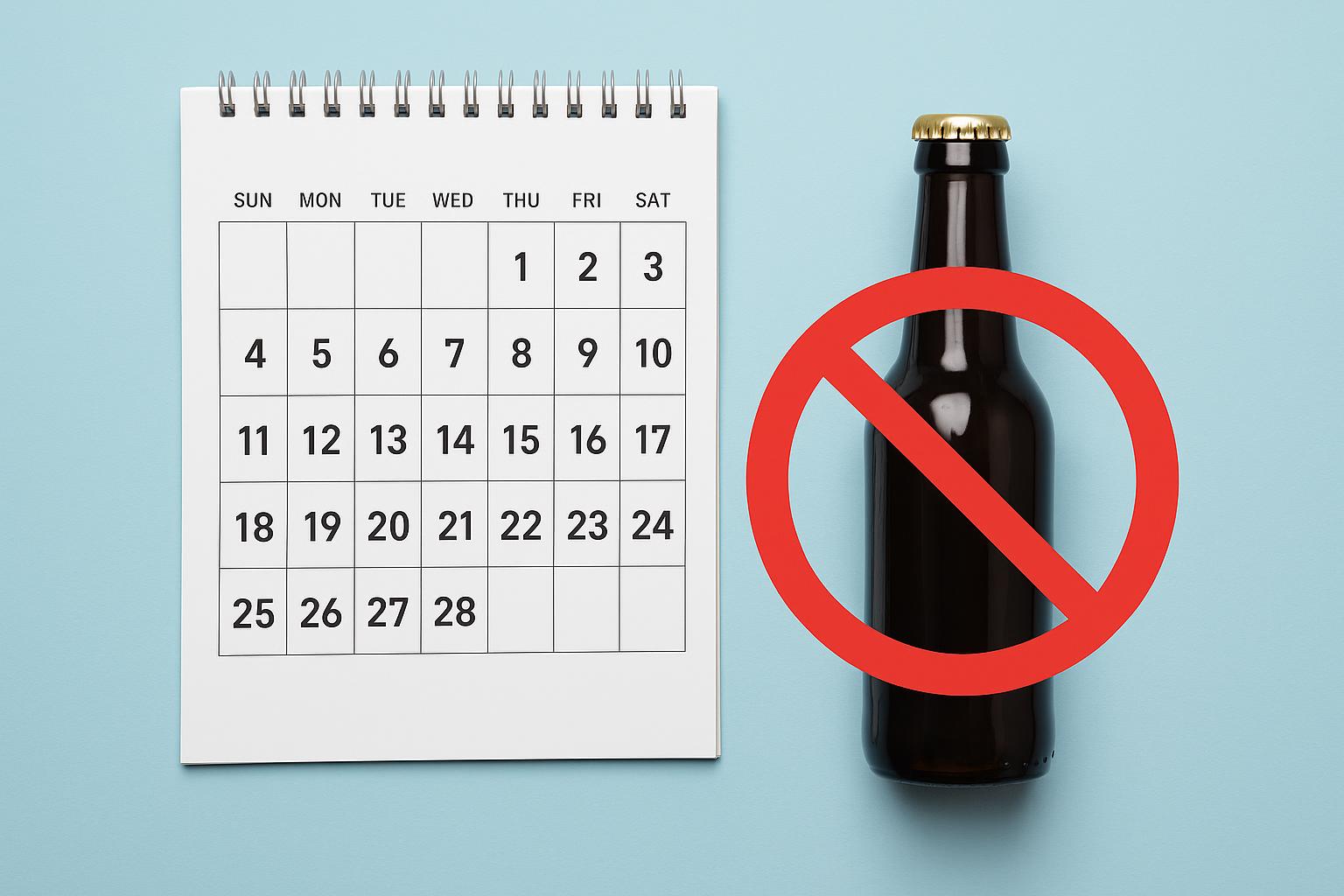
The sober-curious movement has nothing to do with rock bottom. That’s worth saying upfront. The people going alcohol-free for stretches of time are not the ones who lost everything. They’re the ones who drink well within what most doctors would flag as a problem, but who’ve started noticing a pattern: the Sunday anxiety, the sleep that never fully restores, the two glasses that became a nightly baseline somewhere along the way.
Ninety days has become a popular target. Not forever. Just long enough to actually feel the difference.
Table of Contents
What the research shows
Most of the changes people report at day 30 are measurable. Sleep quality tends to improve within two weeks of stopping, since alcohol suppresses REM sleep even at moderate amounts. Liver enzymes begin normalizing in the first month for people who drink regularly. Skin hydration improves. Resting heart rate drops slightly for most people.
By month three, the changes shift from physical to behavioral. A 2010 study from University College London found that habit formation takes an average of 66 days, with a range of 18 to 254 depending on the person and the behavior. Ninety days sits past that average, which is part of why it works as a reset window: it’s long enough for new defaults to actually form.
Why willpower tends to fail
Cutting back on alcohol through discipline alone has a poor track record. The problem isn’t motivation. It’s that drinking is often tied to identity and routine in ways that a simple decision can’t address. The after-work drink isn’t really about the drink. It’s about transitioning out of work mode. The social glass isn’t about the wine. It’s about belonging.
Approaches that target subconscious associations rather than just conscious behavior tend to produce more lasting results. Hypnotherapy has gained traction for this reason. It doesn’t instruct people to stop drinking. It works on what drinking represents to them at a level below conscious decision-making.
Apps like the Unconscious Moderation app are built around this approach, pairing guided hypnotherapy with journaling and daily movement to give users structure during the 90-day window rather than leaving them to rely on willpower alone.
What most people experience
The first two weeks are the hardest for most people, and usually for social reasons rather than physical ones. By week four, the sleep shift tends to become noticeable. By week eight, the absence of alcohol has usually stopped feeling like a sacrifice.
At 90 days, most people have a clear enough picture to make a real decision about what role, if any, they want alcohol to play going forward. That’s the actual goal. Not permanent abstinence. Just a long enough pause to see clearly.
