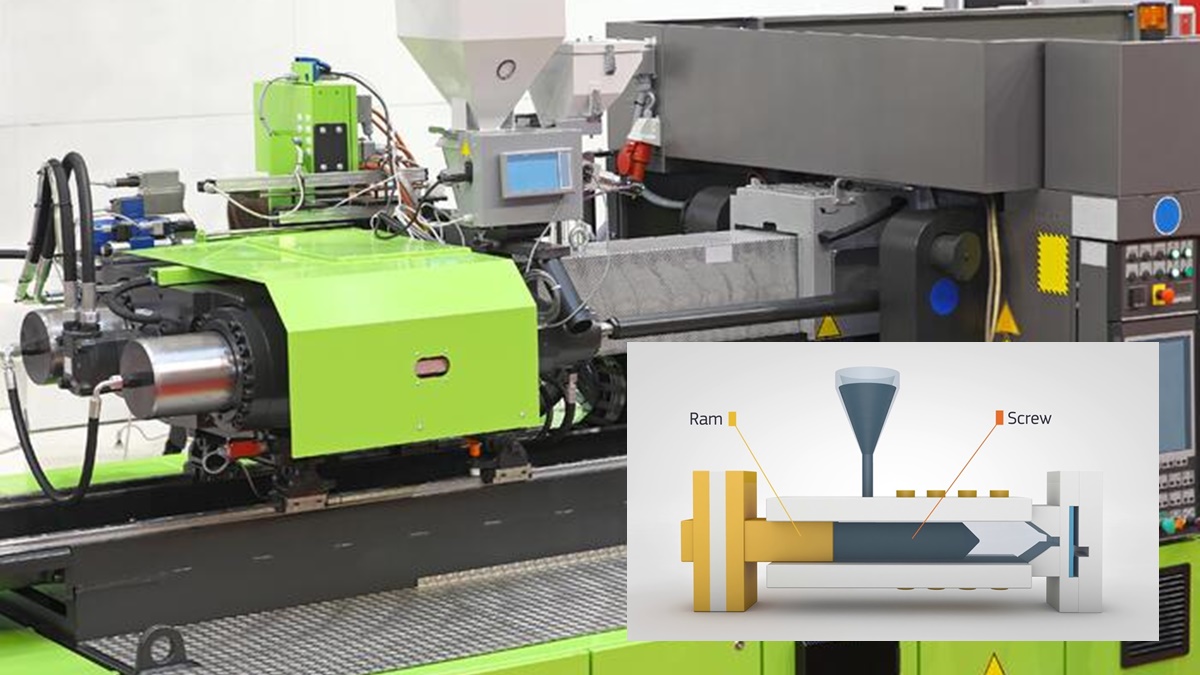
If you want to produce something using plastic, then chances are that you will look to injection molding to provide the answer to your needs.
Of course today there are lots of different types of manufacturing to consider, so learning more about injection molding before taking the plunge is sensible. Here is a look at what it involves and how it is achieved to bring you up to speed.
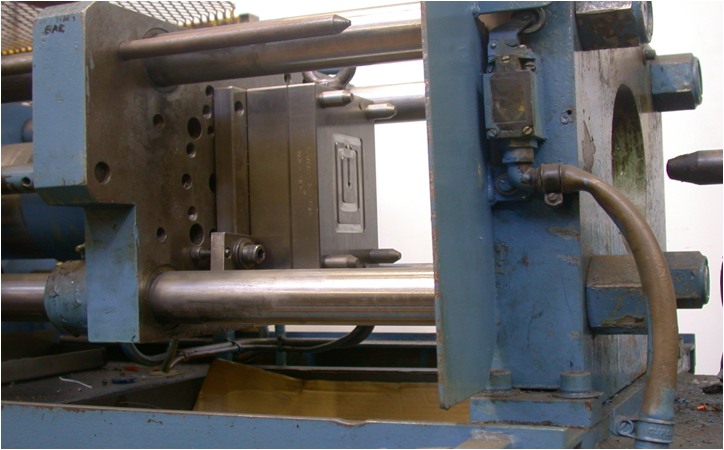
Image Source: Wikipedia

Table of Contents
The Basics
As the name suggests, injection molding services operate by injecting molten plastic material into a mould that forces it into the desired shape, according to the specifications of the design.
The materials used can vary, but most commonly will include the likes of nylon, polypropylene, polycarbonate and acrylonitrile-butadiene-styrene.
The mould itself is usually mounted on a platen so that when the material that has been injected has cooled sufficiently to harden, the two halves can be separated and the product can be popped out so that the process can be repeated.
The Uses
Injection molding is so widely used because of the rapidity and repeatability it offers to manufacturers. It is also typically deployed in conjunction with other manufacturing techniques, such as sheet metal fabrication, to create more complex products.
For example, in the case of the auto industry, injection molding is frequently used to create plastic components such as the bumper or dash of a car.
Of course not all uses are designed to be quite so permanent; injection molding can also be used for entirely disposable goods, such as plastic drinks bottles and many other types of food packaging.
Even as the campaign to cut down on plastic packaging intensifies, injection molding looks set to remain relevant, chiefly because the more eco-friendly materials that are being introduced to replace incumbent options can still be handled via this process.
The Considerations
The principles of injection molding are simple enough for anyone to grasp, but the design implications can be complex and require a great deal of planning and forethought to achieve maximum efficiency while minimizing waste.
The core concern is that the mould itself is made in such a way as to produce the desired part while also accommodating the limitations of injection molding.
While innovations in recent decades have made it possible to create more intricate components through this manufacturing technology, rival forms such as 3D printing have arisen to meet the demand for even more customizable and low-waste techniques.
Another consideration is the fact that injection molding has steeper upfront costs than some of its counterparts, with designing and making the mould being a key expense. This is easily offset over time as the aforementioned rapidity and repeatability of the process comes into play, but for smaller scale runs it may not be ideal.
With all this in mind, injection molding is certainly here to stay and will remain relevant going forward because of the significant benefits it offers manufacturers in the common context of mass production.