Table of Contents
Key Takeaways
- Implementing sustainable office practices enhances employee well-being and productivity.
- Designing with natural elements and improving air quality are crucial for a healthy workspace.
- Certifications like LEED and Fitwel validate a company’s commitment to sustainability.
Table of Contents
- Introduction
- Designing for People and Planet
- Enhancing Indoor Air Quality
- Certifications and Standards
- Employee Well-being and Productivity
- Case Studies
- Conclusion
Introduction
Creating sustainable and healthy office environments is more than a trend; it’s a necessity. Companies are recognizing that eco-friendly practices not only benefit the planet but also enhance employee well-being and productivity. This article explores best practices for developing offices that are both sustainable and conducive to health. Maintaining a clean and healthy office environment is essential for employee well-being and productivity. Partnering with professional commercial cleaning services like Star Building Services ensures workplaces are not only spotless but also compliant with health and safety standards. With a strong presence in Houston, Dallas, and South Texas, Star Building Services offers comprehensive cleaning solutions tailored to various industries, demonstrating its authority and commitment to excellence.
Designing for People and Planet
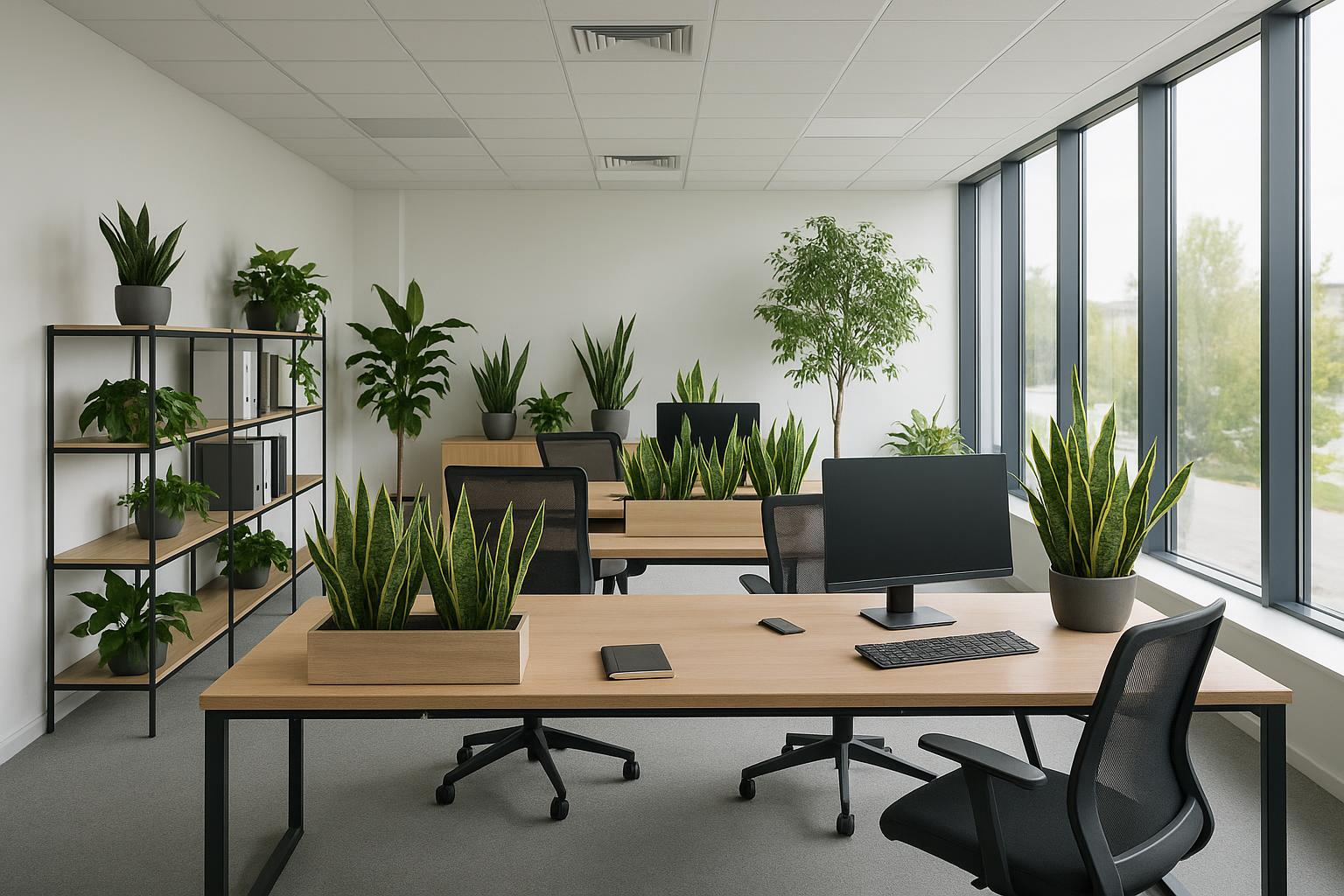
Designing offices that prioritize both human health and environmental sustainability is paramount. Incorporating natural light, using low-VOC materials, and integrating biophilic design elements can significantly improve the workspace. According to a Boston 25 News report, offices that prioritize these features not only support employee well-being but also contribute to environmental conservation.
Modern sustainable office design often goes beyond aesthetics to embrace ergonomics. Ergonomic furniture helps reduce physical strain, while flexible layouts encourage movement throughout the day. This adaptability is beneficial to employee health, reducing repetitive strain injuries and supporting long-term comfort. In addition to standing desks and adjustable chairs, incorporating quiet zones and collaborative spaces allows employees to choose settings that best suit their tasks. Another critical element is responsible resource use. Selecting furniture and finishes from recycled or upcycled materials reduces demand for virgin resources. Efficient lighting systems, such as LEDs with motion sensors and smart controls, help minimize energy use without sacrificing workplace quality. Green roofs and living walls further enhance connection to nature, provide insulation, and improve air quality and stormwater management.
Enhancing Indoor Air Quality
Indoor air quality plays a crucial role in employee health. Poor ventilation can lead to fatigue and decreased productivity. The Centers for Disease Control and Prevention (CDC) recommends ensuring that ventilation systems are functioning correctly to maintain a healthy office environment. Beyond proper ventilation, using high-efficiency particulate air (HEPA) filters and regularly maintaining HVAC systems helps keep pollutants, allergens, and pathogens at bay. Office plants are another simple but effective strategy; varieties such as snake plants, pothos, and spider plants can help filter indoor air naturally. It’s important for businesses to regularly monitor air quality using sensors that measure CO2, VOCs, and humidity, creating an environment that’s consistently optimized for health and focus. Moreover, minimizing indoor pollution sources is critical. This involves selecting low-emission office supplies, non-toxic cleaners, and paints free of volatile organic compounds (VOCs). Implementing a “shoes-off” policy or using high-quality entrance mats can also reduce the introduction of outdoor contaminants. Finally, encouraging employees to open windows when the weather permits supports air circulation and brings in fresh air, something especially helpful in older office buildings.
Certifications and Standards
Achieving certifications such as LEED (Leadership in Energy and Environmental Design) and Fitwel demonstrates a company’s commitment to sustainable, healthy workspaces. For instance, Clark Construction has achieved Fitwel certification across multiple offices nationwide, demonstrating its dedication to employee well-being.
In addition to LEED and Fitwel, other globally recognized certifications, such as WELL Building Standard and BREEAM- offer frameworks for improving building performance and occupant experience. These certifications require rigorous third-party assessment and ongoing performance tracking, ensuring transparency. They encourage companies to adopt best practices in water conservation, energy efficiency, sustainable sourcing, and occupant health, thus raising the bar for the entire industry. Pursuing these certifications can also offer commercial advantages. Not only do they attract environmentally conscious clients and talent, but they may also yield financial incentives, enhanced property value, and even reduced insurance premiums. Highlighting these achievements in a company’s branding and recruitment materials demonstrates corporate social responsibility, which is increasingly important to today’s workforce and client base.
Employee Well-being and Productivity
Investing in healthy building practices yields significant returns. Improved ventilation, lighting, and thermal comfort can provide more than $50 per square foot in productivity gains and support rent premiums, according to the International WELL Building Institute. On-site wellness amenities can foster morale, engagement, and retention. Examples include relaxation rooms, fitness centers, standing meeting spaces, and nutritious food offerings in break rooms. Offering flexible work arrangements, such as hybrid and remote options, also supports work-life balance and can decrease the spread of illness within the office. Training programs on ergonomics, mental health awareness, and healthy lifestyles further empower employees to take charge of their well-being. Healthy workplaces also tend to see fewer days lost to illness, lower stress levels, and greater job satisfaction. Engaged and healthy employees are more likely to recommend their workplace to others, bolstering the organization’s reputation and reducing turnover costs. A culture of health and sustainability aligns with the values of new generations entering the workforce, helping companies stay competitive and resilient.
Case Studies
Several companies have successfully implemented sustainable office practices. For example, MetLife Inc. has committed to certifying 40% of its global office space to green or healthy building standards by 2030, reflecting its dedication to sustainability. Another notable example is Google’s various offices around the world. Known for innovative workplace design, Google integrates natural light, healthy food, fitness centers, and extensive green spaces at each location. Their commitment to renewable energy procurement and to reducing their carbon footprint brings tangible benefits, with annual reports consistently showing high employee satisfaction and productivity.
Dell Technologies’ headquarters in Texas has embraced both WELL and LEED standards, featuring advanced air filtration, hundreds of live plants, and extensive recycling programs. Similarly, Interface, a global carpet tile manufacturer, has invested in regenerative design at its Atlanta headquarters with rooftop gardens, greywater recycling, and ample bike storage, proving that environmental responsibility and business success can go hand in hand. These case studies offer blueprints for businesses seeking to make incremental or transformational improvements to their office environments. They demonstrate that, regardless of company size or sector, an investment in sustainable, healthy workspaces delivers substantial dividends in the long run.
Conclusion
Embracing sustainable and healthy office practices is essential for modern businesses. By focusing on design, air quality, certifications, and employee well-being, companies can create environments that foster productivity and demonstrate a commitment to sustainability. Looking ahead, as environmental guidelines become more stringent and employee expectations higher, sustainable office practices will be a key differentiator for attracting the best talent and ensuring business longevity. Today’s investments in health, wellness, and sustainability will become tomorrow’s standard operating procedure. Organizations that lead in these areas will not only reap the benefits of happier, more productive employees but will also do their part in securing a better future for generations to come. For those keen to start their own sustainable office transformation, begin with small, actionable steps, switch to eco-friendly cleaning products, audit your energy use, and consult experts on indoor air quality. By committing to ongoing improvement, every business can contribute positively to both the planet and its people.